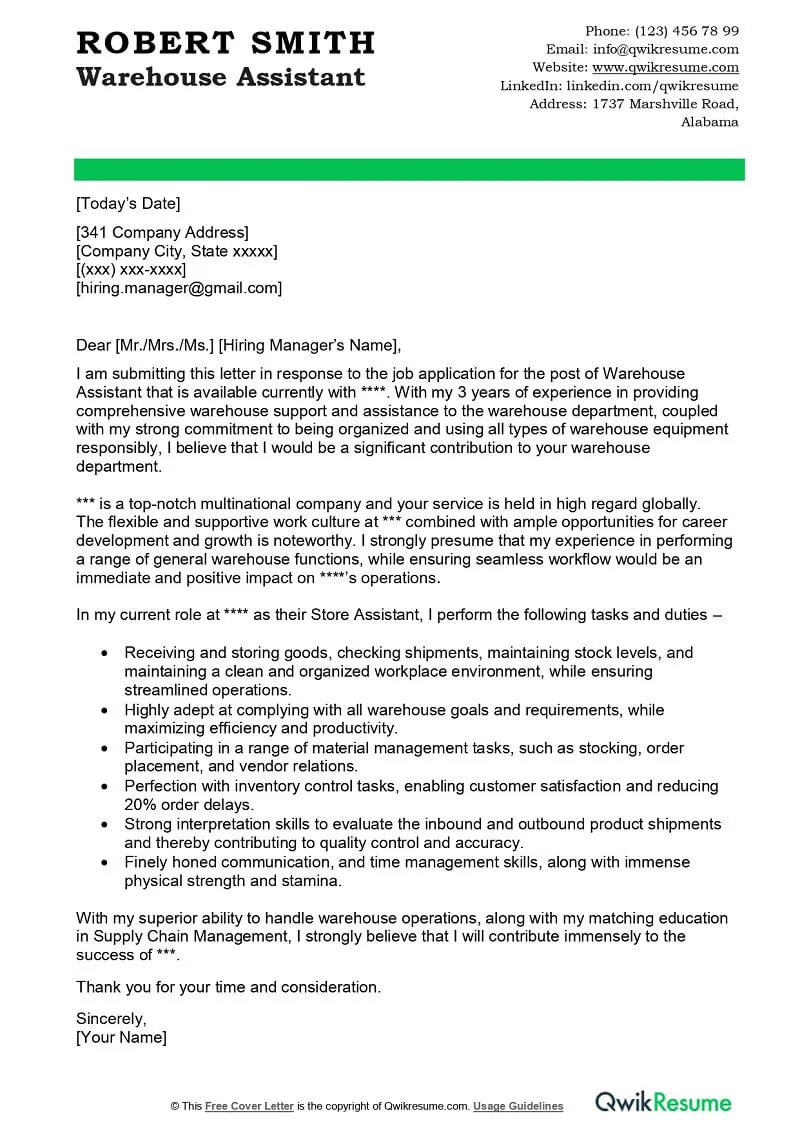
Understanding the Warehouse Job Market
The warehouse job market is a vital part of the supply chain, experiencing consistent demand. With the rise of e-commerce and the need for efficient logistics, warehouses are constantly seeking reliable and skilled workers. Understanding the basics of this industry is the first step in your job search, including the various roles available and the skills employers are looking for. Preparing a strong cover letter is your key to standing out from the crowd.
Importance of a Cover Letter
A cover letter serves as your personal introduction to a potential employer. It’s your opportunity to showcase your personality, enthusiasm, and how you fit the role. Unlike a resume, which lists your qualifications, a cover letter allows you to elaborate on your skills and experience, explaining why you are the ideal candidate for the warehouse job. A well-written cover letter can significantly increase your chances of getting an interview, setting you apart from candidates who only submit a resume.
Key Elements of a Cover Letter for Warehouse Jobs

A strong cover letter must contain key elements that effectively communicate your qualifications. These elements work together to present you as a suitable candidate. Each section plays a crucial role in making a positive impression on the hiring manager, demonstrating your attention to detail and commitment to the job. Structuring your letter properly and including all the necessary information is essential.
Your Contact Information
At the top of your cover letter, include your full name, address, phone number, and email address. This information is vital for the employer to contact you if they are interested in your application. Ensure your email address is professional and appropriate for a job application. Double-check that your phone number is accurate and up-to-date, so the employer can reach you without any issue. Always use a professional-looking email address.
Date and Recipient Information
Below your contact information, include the date and the recipient’s details. If possible, address the letter to a specific person, like the hiring manager. Researching the company website or LinkedIn can help you find this information. If a specific person is not listed, you may use a generic title such as ‘Hiring Manager’. Always include the date to make sure your letter is up to date.
Professional Salutation

Start your cover letter with a professional salutation, such as ‘Dear Mr./Ms. [Last Name]’ if you know the hiring manager’s name. If you do not know the name, use ‘Dear Hiring Manager’. Avoid generic salutations like ‘To Whom It May Concern’, as these can make your letter feel impersonal. Using a professional greeting sets the tone for the rest of the letter and shows respect for the recipient.
Opening Paragraph
In your opening paragraph, state the position you are applying for and how you learned about the job. Briefly mention your key qualifications and why you are interested in the role and the company. This paragraph should immediately grab the reader’s attention and make them want to continue reading. Express your enthusiasm for the position and highlight your strongest relevant skills to create a positive first impression.
Highlighting Relevant Skills
Warehouse jobs require a range of skills, so highlight those most relevant to the position. Provide specific examples of how you have demonstrated these skills in past roles. Focus on the skills that are listed in the job description, such as attention to detail, teamwork, and physical stamina. Quantify your achievements whenever possible to show the impact you have made in previous positions. This shows you’re ready to contribute.
Physical Stamina and Strength

Warehouse jobs often involve heavy lifting, standing for long periods, and physical exertion. Mention your ability to handle these tasks. If you have experience lifting heavy objects or working in physically demanding environments, be sure to include this information. Emphasize your commitment to maintaining a high level of physical fitness and your understanding of workplace safety.
Attention to Detail and Accuracy
Accuracy in inventory management, order fulfillment, and other tasks is crucial. Provide examples of how you’ve maintained a high level of accuracy in your previous roles. Mention any experience with data entry, order processing, or other tasks requiring attention to detail. Emphasize your ability to follow instructions and work efficiently to minimize errors.
Teamwork and Communication
Warehouse work often involves teamwork. Highlight your ability to work well with others and communicate effectively. Describe your experience collaborating with colleagues to achieve common goals. Mention your skills in communicating clearly and concisely, whether it’s with team members, supervisors, or customers. Emphasize your ability to contribute to a positive and productive work environment.
Mentioning Relevant Experience

If you have experience in a warehouse or similar role, include details about your responsibilities and accomplishments. Even if your experience is in a different field, highlight any transferable skills such as organization, time management, or problem-solving. Provide specific examples of how you have succeeded in past roles, emphasizing your achievements and contributions.
Warehouse Experience
If you have worked in a warehouse before, highlight your experience in receiving, shipping, inventory management, or order fulfillment. Describe the size and type of warehouse you worked in and the specific tasks you performed. Mention any experience with warehouse management systems (WMS) or other relevant software. Highlight any achievements, such as reducing errors, improving efficiency, or exceeding targets.
Equipment Operation
Mention any experience you have operating forklifts, pallet jacks, or other warehouse equipment. Include any certifications you hold, such as forklift certifications. If you have experience with safety protocols and procedures, be sure to include this information. Emphasize your commitment to operating equipment safely and efficiently to prevent accidents and damage.
Inventory Management

If you have experience with inventory management, describe your responsibilities and achievements. Mention any experience you have with stocktaking, cycle counting, or other inventory control procedures. Highlight your ability to maintain accurate inventory records and prevent stockouts. Emphasize your understanding of the importance of efficient inventory management for warehouse operations.
Demonstrating Enthusiasm and Fit
Show your enthusiasm for the specific job and the company. Research the company and mention something that interests you about their products, services, or values. Explain why you believe you would be a good fit for their team. Personalize your cover letter to show you’re not just sending out a generic application. This shows you are genuinely interested in the opportunity.
Call to Action and Closing
In your closing paragraph, reiterate your interest in the position and thank the employer for their time and consideration. Include a call to action, such as stating that you are available for an interview and eager to discuss your qualifications further. Use a professional closing, such as ‘Sincerely’ or ‘Respectfully’, followed by your typed name. Make sure to proofread your closing to avoid any errors.
Proofreading and Formatting

Before submitting your cover letter, carefully proofread it for any errors in grammar, spelling, and punctuation. Ensure your cover letter is well-formatted and easy to read, using a professional font and consistent spacing. Use a word processor’s spell-check and grammar-check tools, but also read the letter multiple times yourself. A clean and polished cover letter demonstrates your attention to detail and professionalism.
Additional Tips for a Strong Cover Letter
To maximize your chances of success, consider these additional tips. A well-crafted cover letter goes beyond the basics, making you stand out from the competition. Pay attention to the nuances of writing a professional letter. Tailor your letter to each job and thoroughly review all details before submitting your application. These tips help you showcase your strengths effectively.
Tailoring to the Specific Job
Customize your cover letter for each job you apply for. Read the job description carefully and identify the key requirements and qualifications the employer is looking for. Highlight the skills and experience that match those requirements. Use the same keywords from the job description in your cover letter to show you meet their needs. Tailoring your letter shows that you are truly interested in the role and have taken the time to understand it.
Keywords from the Job Description
Incorporate relevant keywords from the job description throughout your cover letter. This helps your application pass through applicant tracking systems (ATS) and demonstrates that you have the required skills and experience. Identify the most important keywords and use them naturally in your writing. Avoid keyword stuffing; focus on using the keywords in context, so your letter flows well.
Showcasing Achievements
Instead of just listing your responsibilities, showcase your achievements. Use the STAR method (Situation, Task, Action, Result) to describe how you achieved positive outcomes in previous roles. Quantify your achievements whenever possible, using numbers to demonstrate the impact you made. Highlighting your successes shows the employer the value you can bring to their organization.
Reviewing Your Cover Letter
Before submitting your cover letter, have a friend or career advisor review it. Ask them to check for any errors in grammar, spelling, and punctuation. Make sure your letter is clear, concise, and effectively conveys your qualifications. Getting a second opinion can help you catch mistakes you might have missed. A fresh set of eyes can help you improve the overall quality of your letter.
Common Mistakes to Avoid
Avoid common mistakes that can undermine your application. These mistakes can make a negative impression on the hiring manager and reduce your chances of getting an interview. Ensuring your letter is free of errors and mistakes is very important. By knowing and avoiding these pitfalls, you can significantly improve your cover letter.
Some common mistakes to avoid include generic cover letters, typos and grammatical errors, excessive length, and failing to tailor your letter to the specific job. Do not use clichés or jargon. Ensure that the information provided is accurate, and the tone is positive and professional. Finally, be sure your contact information is correct and up to date, and your letter looks polished.