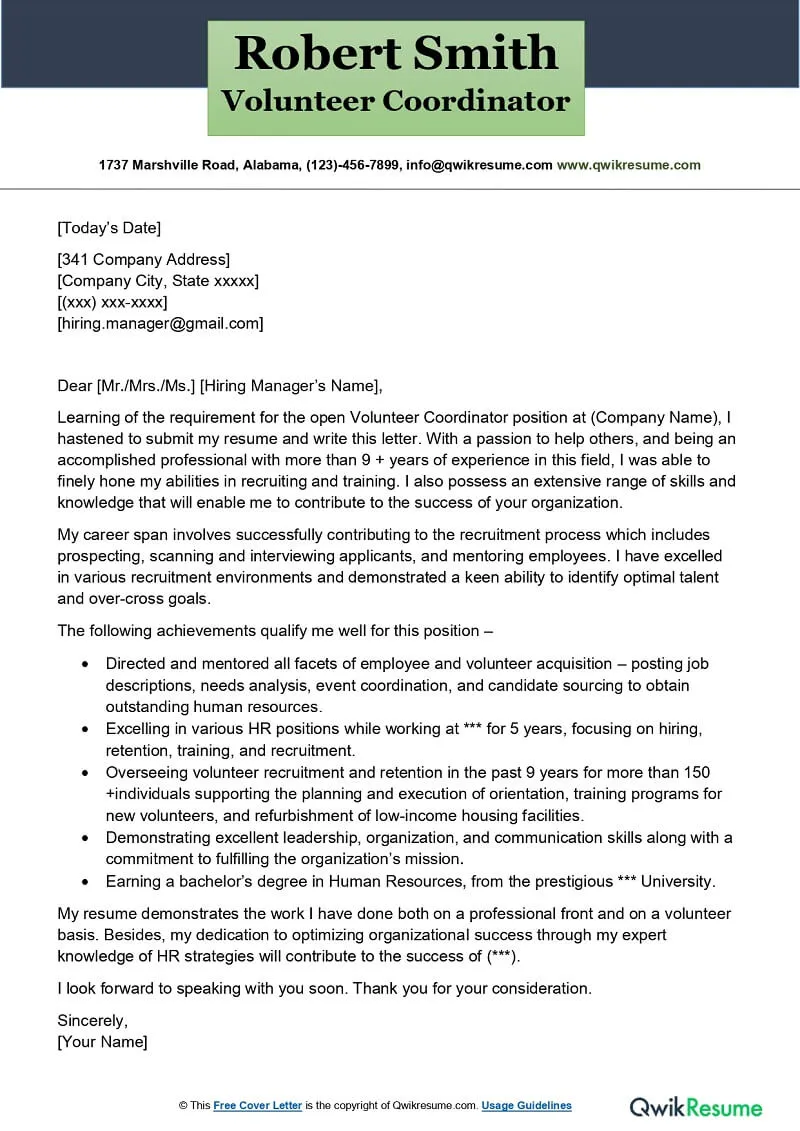
Understanding the Purpose of a Volunteer Cover Letter
A volunteer cover letter is more than just a formality it is your first introduction to the organization and a crucial tool for making a positive impression. It’s your chance to communicate your passion for the cause, highlight your relevant skills and experiences, and explain why you are the ideal candidate for the volunteer position. Unlike a resume which is a factual summary of your background, a cover letter allows you to express your personality, enthusiasm, and specific motivations for volunteering. Think of it as a personalized narrative that complements your resume, providing context and depth to your application. A well-crafted cover letter can significantly increase your chances of getting selected, even if your resume isn’t packed with directly related experience. It’s your chance to showcase your unique value proposition and why you are the right fit.
Why Is a Cover Letter Important?
Cover letters are important because they offer a platform to express your genuine interest in the volunteer role and the organization’s mission. They enable you to elaborate on your skills and experiences, showing how they align with the organization’s needs. This personalized approach helps you stand out from other applicants and demonstrates that you’ve taken the time to understand the role and what it entails. A well-written cover letter provides an opportunity to address any potential gaps in your resume, such as a lack of formal experience, by emphasizing transferable skills and your willingness to learn. This proactive approach showcases your initiative and dedication. The cover letter allows you to provide context to your experiences, connecting your skills to the specific requirements of the volunteer role and the values of the organization.
Highlighting Your Skills and Experiences

In your cover letter, focus on highlighting skills that are relevant to the volunteer position. This could include communication, teamwork, problem-solving, organization, or any other abilities that would make you a valuable asset to the organization. Go beyond simply listing your skills; provide specific examples of how you’ve used these skills in the past. This helps the reader understand the practical value you bring. Quantify your achievements whenever possible, using numbers to demonstrate the impact of your work. For instance, if you’ve managed a project, mention the number of people involved or the results achieved. Show how your experiences align with the volunteer role, demonstrating your ability to perform the tasks required and contribute effectively.
What Skills Are Most Valuable for Volunteer Roles?
Several skills are universally valuable in volunteer roles. Communication skills are essential for effectively interacting with staff, other volunteers, and the people you’re serving. Teamwork is crucial in most volunteer settings, where collaboration is key to achieving goals. Problem-solving skills are needed to navigate challenges and find solutions. Organization and time management are vital for handling tasks efficiently, and adaptability is key to quickly adjust to different situations. Empathy and compassion are crucial for showing understanding and support. Leadership skills can be an asset, even in entry-level roles, as they demonstrate initiative and the ability to guide others.
Showcasing Relevant Experiences
When showcasing your experiences, don’t just list them; explain their relevance to the volunteer role you’re applying for. Highlight how your past experiences have prepared you for the tasks and responsibilities of the position. If you’ve held a leadership position, describe how you managed a team or project. If you’ve volunteered previously, explain what tasks you undertook and the results you achieved. Include specific examples to demonstrate your abilities in action. If you lack direct experience, focus on transferable skills gained from other roles, such as customer service experience from a retail job that can be applied to a role involving public interaction. Always emphasize how your experiences have equipped you with the skills necessary to excel in the volunteer position. By connecting your past experiences to the current role’s requirements, you make a compelling case for your candidacy.
Formatting Your Cover Letter for Impact

The format of your cover letter is just as crucial as its content. A well-formatted letter is easy to read, visually appealing, and demonstrates professionalism. Use a clear and professional font, such as Times New Roman, Arial, or Calibri, and ensure the font size is between 11 and 12 points for readability. Maintain consistent formatting throughout the document, including headings, spacing, and bullet points. Avoid using excessive colors, bolding, or underlining, as this can distract the reader. Make sure your cover letter is properly aligned, typically left-aligned with a flush left margin. Proofread carefully for any formatting errors. A clean and professional format makes a positive first impression and shows that you pay attention to detail.
Essential Formatting Elements
Begin with your contact information, including your name, address, phone number, and email. Then, include the date and the organization’s contact information. Use a professional salutation, such as ‘Dear [Hiring Manager Name]’ or ‘Dear [Organization Name]’. Structure your letter with clear paragraphs, each addressing a specific point. Use concise language and avoid overly long sentences. Break up large blocks of text with bullet points or numbered lists to improve readability. Ensure there’s adequate white space between paragraphs and sections. Use a professional closing, such as ‘Sincerely’ or ‘Best regards’. Finally, proofread your cover letter for any formatting errors, and if possible, ask someone else to review it.
Choosing the Right Tone
The tone of your cover letter should be professional, enthusiastic, and respectful. Avoid using overly casual or informal language. Show your genuine interest in the organization and the volunteer role by expressing enthusiasm for their mission and values. Be positive and optimistic, but avoid sounding overly eager. The tone should reflect your personality while maintaining a sense of professionalism. Show respect for the organization and the recipient by using proper grammar, spelling, and punctuation. Tailor the tone to the specific organization and the nature of the volunteer role. For a more formal organization, maintain a slightly more conservative tone, whereas for a community-based organization, you may be able to adopt a slightly warmer approach. Your tone should reflect your sincere interest and commitment.
Key Sections to Include in Your Cover Letter

A strong cover letter should include the following sections your contact information, the date, and the recipient’s contact information. The opening paragraph should state your purpose for writing, mention the specific volunteer role you are applying for, and express your interest in the organization. The body paragraphs should highlight your skills and experiences, providing specific examples of how you’ve demonstrated those skills in the past. Show how your experiences align with the requirements of the volunteer position. Include a paragraph on why you are particularly interested in the organization, demonstrating that you understand their mission and values. Make it clear why you are a good fit for their volunteer team. End with a strong closing expressing your enthusiasm for the opportunity and a call to action, such as an invitation to contact you. Close with a professional sign-off and your name.
Personalizing Your Cover Letter
Personalization is crucial for making a strong impression. Avoid using generic templates. Tailor your letter to each specific volunteer position and organization. Address the letter to the individual responsible for volunteer recruitment, if possible, rather than using a generic salutation. Reference the organization’s mission, values, or recent activities to show that you’ve done your research and understand their work. Instead of simply restating your resume, provide context and depth, connecting your skills and experiences to the specific requirements of the volunteer role. Show genuine enthusiasm for the organization’s mission and explain why you are motivated to volunteer. The more personalized your cover letter, the more likely it is to stand out from the crowd and demonstrate your genuine interest in the opportunity.
Researching the Organization
Researching the organization is an essential part of the cover letter writing process. Visit the organization’s website to learn about their mission, values, programs, and recent activities. Read their ‘About Us’ page and any press releases to get a sense of their current initiatives and goals. Search for the organization on social media platforms to understand their online presence and engage with their content. Look for news articles or media coverage about the organization to learn about their impact and achievements. Identify the specific requirements and expectations for the volunteer role. Use this information to tailor your cover letter, demonstrating that you understand the organization’s work and why you are interested in volunteering. The research demonstrates that you are serious about the opportunity and invested in their mission.
Tailoring Your Letter to the Role

Tailoring your cover letter to the specific role is crucial to making a compelling case. Carefully review the volunteer role description and identify the key skills and qualifications the organization is seeking. Use the same keywords and phrases from the job description throughout your cover letter. Highlight your experiences and skills that align with the role’s requirements. Provide specific examples of how you have demonstrated these skills in the past. Explain how your qualifications align with the tasks and responsibilities outlined in the role description. Show that you understand the role’s demands and the contributions you can make. Demonstrate your understanding of the organization’s needs and how you can help them achieve their goals. Tailoring your cover letter demonstrates that you are a well-suited candidate and shows your commitment to the position.
Common Mistakes to Avoid
Avoiding common mistakes is key to ensuring your cover letter makes a positive impression. Proofread your cover letter for any errors. These mistakes can undermine your credibility and professionalism. Use a generic template without tailoring it to the specific volunteer position. Failure to research the organization and understand their mission, values, and programs. Not highlighting your skills, experiences, and how they relate to the volunteer role. An excessively long cover letter that does not focus on the most important points. Making the cover letter too casual or informal. The best way to avoid these mistakes is to review your cover letter multiple times and ask someone else to read it.
Typos and Grammatical Errors
Typos and grammatical errors are easily avoidable and can severely impact your application. Proofread your cover letter carefully for spelling mistakes, punctuation errors, and grammatical inaccuracies. Use a spell checker and grammar checker, but don’t rely on them completely. Errors can make you appear careless and can detract from your qualifications. Read your cover letter aloud to catch errors you might miss when reading silently. Ask a friend, family member, or career advisor to review your cover letter for errors. A second pair of eyes can often catch mistakes you may have overlooked. Even small errors can create a negative impression and should be avoided.
Generic Cover Letters

A generic cover letter is one that is not tailored to a specific volunteer role or organization. Using the same cover letter for multiple applications shows a lack of effort and can make you appear less interested in the position. Avoid using a generic template without making significant changes. Each application should be unique. Customize your cover letter to each organization. Research the organization and tailor your letter to show that you understand their mission, values, and programs. Highlight the skills and experiences that are most relevant to the specific volunteer role. Address the letter to the individual responsible for volunteer recruitment, if possible. Personalization will demonstrate your genuine interest and make your application more compelling.
Overstating Your Abilities
Overstating your abilities or exaggerating your experiences can create a negative impression. Be truthful and honest in your cover letter. Only include information that is accurate and verifiable. Exaggerating your accomplishments can damage your credibility, and it can also backfire if the organization discovers inaccuracies. Focus on your strengths, but do so realistically. Provide specific examples to demonstrate your skills and experiences. If you lack direct experience, focus on transferable skills and your willingness to learn. Emphasize your enthusiasm for the role and the organization. If your statements are later found to be false, it could undermine your application. Honesty is key.
Writing a Strong Closing
Your closing paragraph is your final opportunity to make a positive impression. Express your enthusiasm for the volunteer opportunity and reiterate your interest in the organization. Reiterate your commitment to the cause and the value you can bring. Include a call to action, such as inviting the reader to contact you to schedule an interview or discuss your application further. Express your appreciation for their time and consideration. Use a professional sign-off, such as ‘Sincerely’ or ‘Best regards’, followed by your name. Ensure your closing is enthusiastic and professional, leaving a lasting impression on the reader.
Expressing Your Enthusiasm

Expressing your enthusiasm is crucial to making your cover letter stand out. Demonstrate your genuine interest in the volunteer opportunity and the organization’s mission. Reference the organization’s activities or recent accomplishments to show that you’ve done your research and understand their work. Highlight your commitment to the cause. Explain why you are passionate about the organization’s work and how you are eager to contribute. Use positive language and a tone that reflects your excitement. Tailor your enthusiasm to the specific role and organization, and be genuine in your expression. Your enthusiasm is a key part of showing your value.
Including a Call to Action
A call to action encourages the reader to take the next step. Invite the reader to contact you to schedule an interview or discuss your application further. Make it easy for them to respond. Include your contact information in a clear and concise manner. Express your appreciation for their time and consideration. You can also state your availability for the role. The call to action should be clear and direct, leaving the reader with a clear understanding of what you want them to do next. A call to action significantly increases the chances of a response.