Understanding the Importance of a Teacher Cover Letter
A well-crafted cover letter is your first opportunity to make a strong impression on a potential employer and secure a teaching position. It serves as more than just a formality; it’s a crucial marketing tool that allows you to showcase your personality, teaching philosophy, and relevant experience in a way that a resume alone cannot. Your cover letter is an introduction to the school’s administration. It highlights your passion for education and your unique qualifications. A compelling cover letter can significantly increase your chances of landing an interview and ultimately, your dream job. It is a place to explain your aspirations. Without a strong cover letter, you’re missing a valuable opportunity to connect with the hiring team on a personal level and distinguish yourself from other applicants. This is where you get to sell yourself. Show them how passionate you are.
Key Components to Include in Your Cover Letter
To create an effective cover letter, you should include a few key components that together will help you to shine above the other candidates. These elements collectively present a clear and compelling case for your candidacy. Attention to detail is very important. Let’s dive into these essential elements for a standout cover letter, so it highlights your skills and makes you stand out to the hiring manager.
Header Information Contact Details

Your cover letter should begin with a professional header that includes your full name, address, phone number, and email address. This ensures that the hiring manager can easily contact you. Make sure to include the date and the recipient’s information, including the principal or hiring manager’s name, title, and the school’s address. Ensure that your contact information is current and professional. Use a clear, readable font, and maintain consistent formatting with your resume to present a polished image. Your header provides the first glimpse of your professionalism. See the image: teacher-cover-letter-header.webp
Professional Greeting
Address your cover letter to a specific person whenever possible. ‘Dear Mr./Ms. [Last Name]’ shows that you’ve done your research and taken the time to find out who will be reading the application. If you cannot find a specific name, you may use a general greeting such as ‘Dear Hiring Committee’. Avoid generic greetings like ‘To Whom It May Concern,’ as they lack a personal touch. Personalizing your greeting demonstrates your attention to detail and commitment to the role, making your cover letter more engaging. Making sure you greet the reader properly is a vital step. It’s important to follow professional standards.
Body Paragraphs Showcasing Skills
The body of your cover letter is where you will show off your skills and experience. The first paragraph should briefly introduce yourself and state the position you are applying for. The subsequent paragraphs should elaborate on your qualifications and experiences, highlighting key skills and accomplishments relevant to the job description. You will discuss how you have developed these skills to make you a great candidate. You can use different strategies and tips to help you in this stage. This is the most important part of your cover letter so write like a pro. Focus on relevant experience and how it matches the job description. See the image: teacher-skills-and-experience.webp
Highlighting Relevant Experience

When describing your experience, focus on the roles and achievements that are most relevant to the teaching position you are applying for. Start by mentioning your most recent or relevant positions. Briefly describe your responsibilities in each role, but concentrate on your accomplishments and the results you achieved. Instead of simply listing your duties, quantify your achievements whenever possible. For example, instead of saying ‘Managed classroom activities,’ state ‘Successfully implemented classroom management strategies that increased student engagement by 20%.’ This will demonstrate the impact of your work and provide the hiring manager with concrete evidence of your abilities. See the image: teacher-skills-and-experience.webp
Tailoring Your Cover Letter to the Specific Job
Always customize your cover letter for each job application. Review the job description carefully and identify the key requirements and preferred qualifications. Then, tailor your cover letter to demonstrate how your skills and experience align with those requirements. This may involve emphasizing certain experiences, using keywords from the job description, or adjusting the structure of your letter to match the school’s priorities. Generic cover letters are easy to spot, and they often fail to make a strong impression. A tailored cover letter shows that you have invested time and effort to understand the school’s needs. It will help you land the job and also give you a head start. See the image: tailoring-cover-letter.webp
Showcasing Your Personality and Passion
Your cover letter is an opportunity to let your personality shine through. While maintaining a professional tone, incorporate details that reflect your enthusiasm for teaching and your unique approach to education. Share your teaching philosophy or a brief anecdote that illustrates your commitment to students. Highlight any special skills or interests that make you stand out. Your passion is contagious, and it can make your application memorable. These personal touches can help you connect with the hiring manager on a deeper level and demonstrate why you are a good fit for the school’s culture. Showing how you think will give you an edge. See the image: teacher-personality-passion.webp
Using Action Verbs to Describe Accomplishments

Use strong action verbs to describe your accomplishments. Verbs such as ‘developed,’ ‘implemented,’ ‘managed,’ ‘created,’ and ‘achieved’ are more impactful than passive language. For example, instead of saying ‘Was responsible for lesson planning,’ say ‘Developed and implemented engaging lesson plans.’ Action verbs make your accomplishments more vivid and compelling. They help to quantify your achievements and showcase your impact. This makes it easy for the hiring team to see how you would make a difference in their school. This ensures your application is action-packed and demonstrates your drive.
Formatting and Design Best Practices
The formatting and design of your cover letter can significantly impact how it’s perceived. A well-formatted cover letter is easy to read and visually appealing, while a poorly formatted one can be difficult to navigate and can leave a negative impression. Let’s look at some best practices for ensuring that your cover letter looks professional and polished. Make sure to use professional formatting to give the best impression. Remember to use a clear and simple format.
Choosing the Right Font and Font Size
Select a professional, easy-to-read font such as Times New Roman, Arial, or Calibri. Avoid overly decorative or unusual fonts, as they can be distracting. Use a font size between 10 and 12 points for the body of your letter. This ensures that your text is legible without appearing cramped or overly large. Consistent font choice and size throughout the document create a cohesive and professional appearance. This adds to the overall readability of your cover letter. Make it easy to digest. See the image: cover-letter-formatting.webp
Maintaining Concise and Clear Language
Keep your language clear, concise, and easy to understand. Avoid using jargon or overly complex sentences. Your cover letter should be easy to read and understand. Get straight to the point. Make sure that every word serves a purpose. Use short paragraphs and bullet points to break up large blocks of text. This increases readability and makes your cover letter more engaging. This will help the hiring manager to quickly grasp the most important information. Aim for clarity and brevity.
Proofreading and Editing
Proofread your cover letter carefully for any grammatical errors, typos, or spelling mistakes. Errors can undermine your credibility and make you look unprofessional. It is also a good idea to have someone else review your cover letter. It is important to find a person to proofread it and give it another look for clarity. A fresh pair of eyes can catch mistakes you might have missed. Proofreading is a key part of your process and it should not be overlooked. Attention to detail is crucial in teaching, and your cover letter reflects your ability to be thorough. Make sure you don’t leave any mistakes that may cost you the job.
5 Teacher Cover Letter Tips
Here are five practical tips to help you craft a stellar teacher cover letter and boost your chances of landing your dream job. These tips will help you create the perfect cover letter.
Tip 1 Research the School and Position

Before you start writing, research the school, its mission, values, and any specific programs or initiatives it has. Understanding the school’s culture will help you tailor your letter to demonstrate your suitability for the role. This may involve visiting the school’s website, reading any available literature, or even contacting current teachers or staff. This will help you present yourself in the best way. Show how your skills and experience align with the school’s needs. See the image: teacher-cover-letter-research.webp
Tip 2 Tailor Your Letter to the Job Description
Carefully review the job description and highlight how your skills and experience match the requirements. Use keywords from the job description to demonstrate that you are a perfect fit. Customize each cover letter to showcase how you meet the specific needs of the position. This shows that you have taken the time to understand the role and are genuinely interested in it. When the hiring manager sees these details it will show how much you care. Make sure you are the right fit.
Tip 3 Quantify Your Achievements
Instead of simply listing your responsibilities, quantify your achievements with data and statistics. Use numbers to show the impact of your work. Instead of saying ‘Improved student engagement,’ say ‘Increased student engagement by 20% through the implementation of interactive lesson plans.’ This shows the hiring manager that your skills and experience have results. This will help you gain recognition and get the job. Show off your skills in a way that gives the hiring manager concrete evidence of your abilities.
Tip 4 Highlight Your Teaching Philosophy

Briefly share your teaching philosophy, including your beliefs about education, student learning, and classroom management. This will demonstrate your approach to teaching and your values as an educator. Show that you have given consideration to these key questions. Your philosophy helps hiring managers understand your perspective on teaching. Your teaching philosophy shows your passion.
Tip 5 Proofread Carefully
Always proofread your cover letter meticulously before submitting it. Check for any grammatical errors, typos, or spelling mistakes. Errors can make you appear unprofessional. Have someone else review your cover letter as well. A fresh pair of eyes can catch errors that you might have missed. This is a vital step to make sure your application is in its best condition. Attention to detail is a key aspect of teaching. Make sure you are presenting your application in the best way possible.
Cover Letter Examples for Different Teaching Scenarios
Different teaching positions require different skills and experiences. To tailor your cover letter effectively, you can use templates and examples for specific situations.
Example Cover Letter for Elementary School Teacher
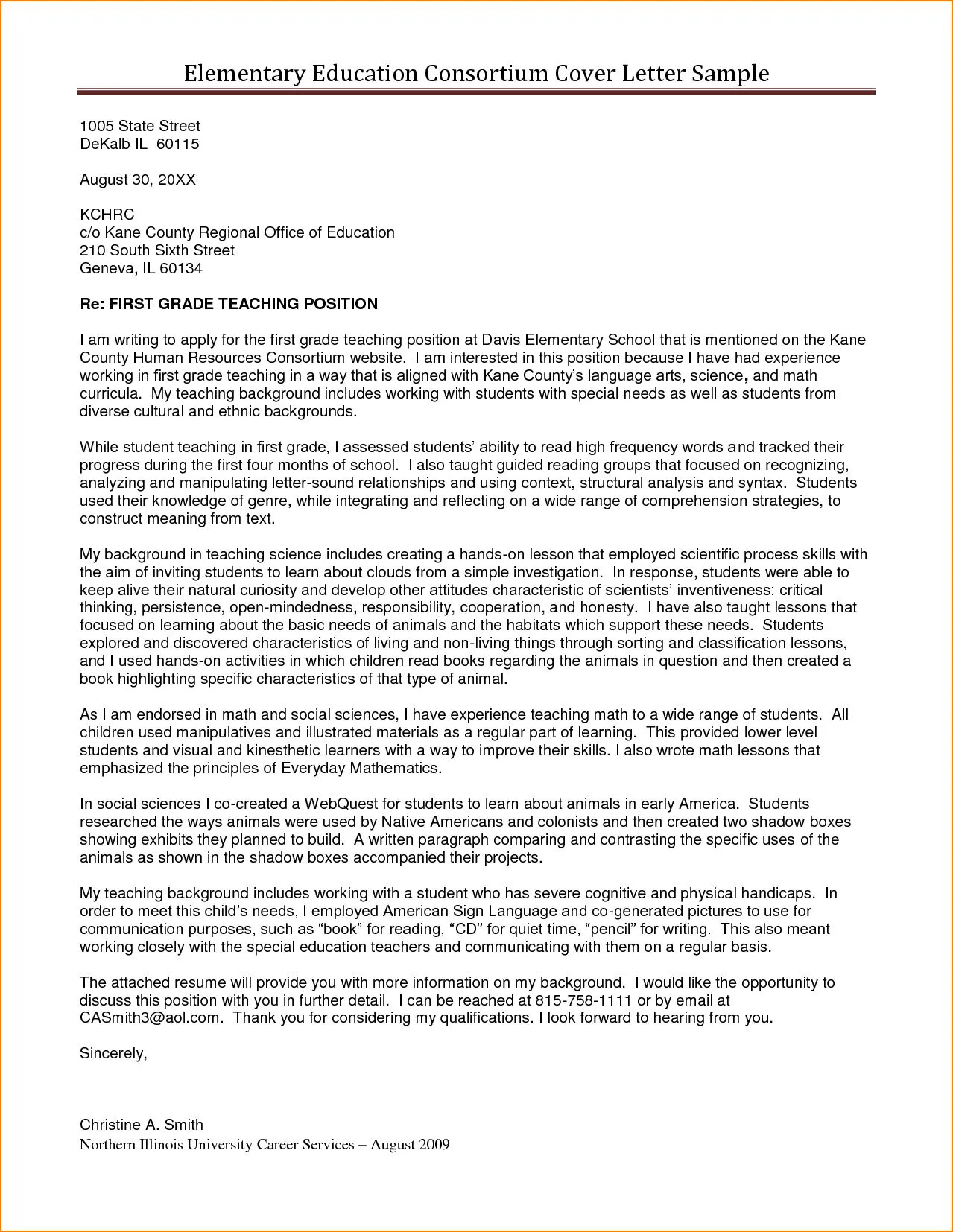
Your letter should highlight your ability to create a nurturing and engaging learning environment for young children. Emphasize your experience with early childhood education methodologies and your ability to differentiate instruction. Showcase your enthusiasm for fostering a love of learning in young students. Mention specific skills such as classroom management, communication, and collaboration. Make sure to talk about creating a happy and safe classroom environment. See the image: elementary-school-cover-letter.webp
Example Cover Letter for High School Teacher
Focus on your experience in teaching a specific subject and your ability to engage older students. Discuss your proficiency in incorporating technology, facilitating critical thinking, and creating a rigorous curriculum. Show your capability to challenge students and prepare them for college or career. Share your experience on mentoring students. Make sure to highlight your specialized experience to make it stand out. This helps show off your unique skills.
Example Cover Letter for Special Education Teacher
Highlight your knowledge of special education laws, and your experience in creating individualized education programs (IEPs). Show off your patience and empathy with working with students with diverse needs. Mention your strategies for differentiating instructions and for building a supportive classroom environment. Showcase your skills in collaborating with parents, administrators, and other special education staff. Talk about how you help the students reach their potential.
Conclusion Summarizing Key Takeaways
A well-crafted cover letter is your most important step when applying for a teaching position. This guide has provided you with all the insights and examples you need to create an effective cover letter. Make sure you are following all the key elements, including highlighting your skills and making sure you format it well. By following these tips, you can increase your chances of securing an interview. Good luck with your applications!