Highlighting Transferable Skills
Even without direct teaching experience, you possess a wealth of transferable skills that are highly valuable in the classroom. These are skills you’ve honed through various life experiences, such as volunteering, internships, part-time jobs, and academic projects. The key is to identify these skills and demonstrate how they align with the requirements of a teaching role. Your cover letter is the perfect platform to showcase these attributes and make a compelling case for your candidacy, even if you lack a traditional teaching background. It’s about showing the hiring committee that you have the potential to be a great teacher.
Identifying Your Skills
Begin by creating a comprehensive list of your skills. Think beyond obvious ones like communication and organization. Consider leadership abilities, problem-solving skills, adaptability, empathy, patience, and the capacity to work collaboratively. Reflect on past experiences, both professional and personal, to pinpoint specific instances where you demonstrated these skills. For example, if you led a project in college, highlight your leadership and organizational capabilities. If you volunteered at a community center, describe how you interacted with diverse groups, showcasing your communication and interpersonal skills. This self-assessment will provide the raw materials you need to shape a winning cover letter.
Showcasing relevant experiences

Once you have a strong grasp of your skills, start detailing your relevant experiences. If you have experience working with children, even in a non-teaching role, be sure to emphasize it. This could include tutoring, mentoring, coaching, or assisting with youth programs. For each experience, clearly describe your role and responsibilities, and provide concrete examples of how you utilized your transferable skills. Use the STAR method (Situation, Task, Action, Result) to structure your descriptions. For instance, describe a situation where you encountered a challenge, the task you undertook, the specific actions you took, and the positive outcome you achieved. This approach helps bring your qualifications to life, making them more relatable and impressive to the hiring committee.
Structuring the Teacher Cover Letter
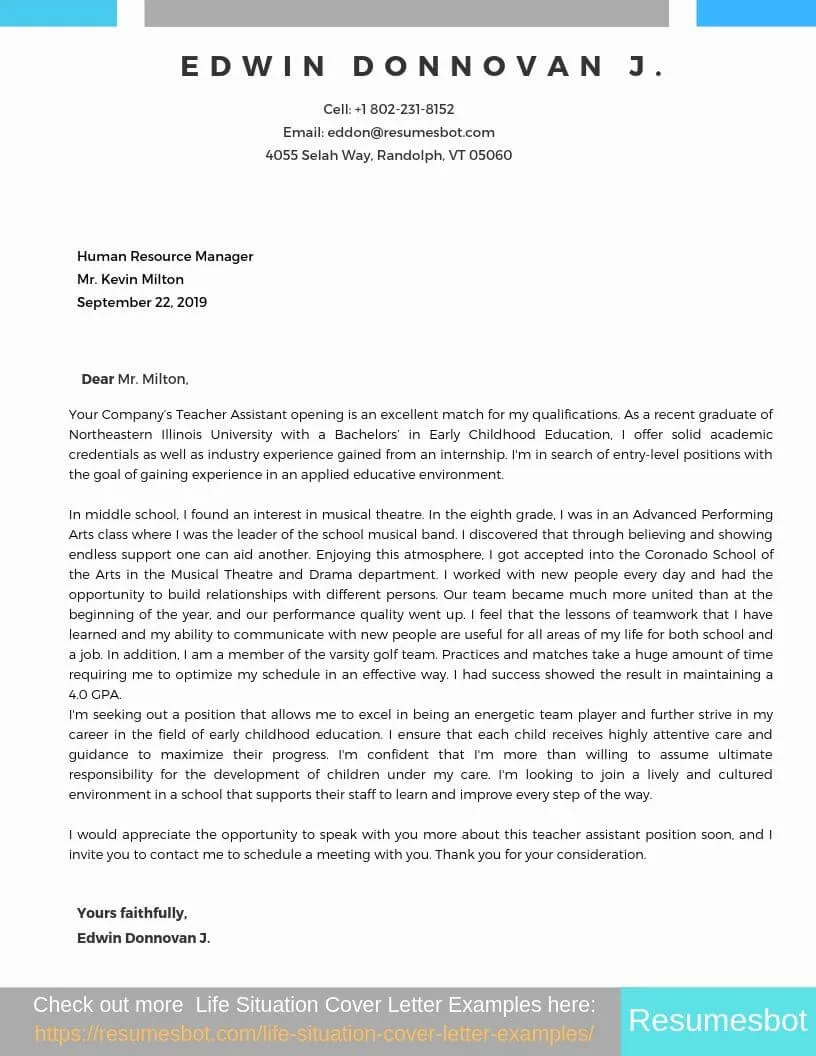
The structure of your cover letter is crucial. A well-organized letter is easy to read and allows the reader to quickly grasp your key qualifications. Your cover letter should be formatted to present the information in a logical and engaging manner. It should start with your contact information and then proceed through the body paragraphs, highlighting your strengths and passion for teaching. A concise closing paragraph, expressing your enthusiasm for the opportunity and your willingness to contribute to the school, is also very important.
Header and Contact Information
Your cover letter should begin with a professional header. Include your full name, address, phone number, and email address. You may also want to include a link to your professional online portfolio or LinkedIn profile. Ensure that the contact information is accurate and up-to-date. This section ensures the recipient can easily contact you. The format should be clean, clear, and professional, aligning with the tone you want to set. This is the first impression you make, so presentation is key.
Opening Paragraph

The opening paragraph is your hook. Start with a strong statement that captures the reader’s attention. State the position you are applying for and where you saw the advertisement. Then, briefly explain why you are interested in the position and what makes you a good fit. Show your enthusiasm for the school or district, mentioning something specific that resonates with you. This opening paragraph should be concise and engaging, drawing the reader into the rest of your letter and making them want to learn more about your qualifications. The more personalized, the better!
Body Paragraphs
The body paragraphs are where you showcase your skills and experiences. Use two or three paragraphs to elaborate on your qualifications. Focus on the skills and experiences that are most relevant to the teaching position. Use the STAR method to describe specific situations, the tasks you performed, the actions you took, and the positive results. Quantify your achievements whenever possible. For example, instead of saying ‘I improved student engagement’, state ‘I increased student engagement by 20% through implementing interactive lesson plans.’ Ensure that each paragraph has a clear topic sentence and supporting details. Make each paragraph count, emphasizing your suitability for the role.
Closing Paragraph
The closing paragraph is your opportunity to summarize your interest and enthusiasm. Reiterate your interest in the position and the school. Express your confidence in your ability to contribute to the school’s mission and values. Thank the reader for their time and consideration. End with a strong call to action, such as ‘I am eager to learn more about this opportunity and discuss how my skills can benefit your students.’ Include a professional closing, such as ‘Sincerely’ or ‘Best regards,’ followed by your name. Proofread this section carefully to make sure you didn’t include any typos or grammatical errors.
Demonstrating Passion and Enthusiasm

A cover letter is your chance to express your genuine passion for teaching. Even without direct experience, your enthusiasm can make a significant impact. Show your love for teaching through your words and the tone of your writing. Convey your genuine interest in education and your eagerness to inspire students. A passionate and enthusiastic cover letter can often make up for the lack of experience.
Expressing Commitment to Education
Clearly articulate your commitment to education. Discuss your understanding of the challenges and rewards of teaching, and highlight your dedication to student success. Show that you are committed to ongoing professional development and that you are willing to learn and adapt. Demonstrate your understanding of educational best practices, even if you haven’t taught in a classroom before. If you’ve taken courses or attended workshops on education, be sure to mention those, too.
Highlighting Specific School Values
Research the school and its values before you start writing. Tailor your cover letter to reflect your understanding of the school’s mission, vision, and culture. Demonstrate that your values align with the school’s. If the school emphasizes innovation, highlight your willingness to embrace new teaching methods. If the school promotes a collaborative environment, mention your experience working effectively in teams. By showing that you understand and support the school’s values, you increase your chances of getting noticed and demonstrating that you are a good fit.
Proofreading and Formatting

Proofreading and formatting are critical aspects of any cover letter. A well-formatted and error-free cover letter demonstrates your attention to detail, professionalism, and respect for the hiring committee. Any typos or formatting inconsistencies can create a negative impression, making you look less polished and potentially leading to your application being overlooked. Always take the time to review and perfect your letter.
Reviewing for Clarity
Clarity is essential. Ensure your cover letter is easy to read and understand. Use clear and concise language. Avoid jargon and overly complex sentences. Each paragraph should have a clear purpose, and the overall flow should be logical. Have a friend, career counselor, or mentor review your letter for clarity. Getting a second opinion can help you identify any areas where your writing is unclear or confusing. They can also help you to ensure that your message comes across as intended.
Formatting for Readability
Proper formatting enhances readability. Use a professional font, such as Times New Roman, Arial, or Calibri, with a size of 11 or 12 points. Use consistent spacing between lines and paragraphs. Break up long blocks of text with headings and bullet points to make the letter easier to scan. Pay attention to the alignment of your text, and ensure that your cover letter is visually appealing. The goal is to make your cover letter easy and enjoyable for the reader to review. A well-formatted document indicates that you care about presentation and detail.