Why Send a Cover Letter? 10 Essential Facts
In the realm of job applications, the debate often rages: Should you send a cover letter with your resume? The answer, more often than not, leans towards a resounding yes. A well-crafted cover letter can be your secret weapon, setting you apart from the competition and significantly increasing your chances of landing an interview. This article delves into 10 essential facts that underscore the importance of including a cover letter with your resume, providing a comprehensive guide to navigate the complexities of modern job applications. From highlighting your skills and expressing genuine interest to tailoring your application and making a lasting positive impression, we’ll explore the multitude of benefits a cover letter offers. Understanding these key points will empower you to make informed decisions, ensuring your application shines in the eyes of potential employers. Let’s explore the significance of the cover letter and how it can be your key to career success.
The Importance of a Cover Letter
The cover letter serves as your introduction to the hiring manager, providing a space to express your personality and passion for the role. It’s an opportunity to go beyond the bullet points of your resume and create a narrative that highlights your key qualifications and experiences in a way that resonates with the employer. Unlike a resume, which is a concise summary of your work history, a cover letter allows you to elaborate on specific achievements, explain any career gaps, and demonstrate your understanding of the company’s needs and the job requirements. It allows you to make a lasting first impression, showing initiative and attention to detail. Think of it as a chance to tell a story, to sell yourself and make them want to read your resume with more interest. A strong cover letter helps to showcase your written communication skills, which are invaluable in almost any professional setting.
Highlighting Your Skills

A cover letter is the perfect space to spotlight your skills and connect them directly to the job description. While your resume lists your skills, the cover letter allows you to provide specific examples of how you’ve used those skills to achieve results. For instance, if the job description emphasizes problem-solving, you can use the cover letter to describe a situation where you successfully resolved a complex issue, quantifying your achievements whenever possible. This personalized approach allows the hiring manager to see, not just read about, your capabilities. By tailoring your skills to the specific requirements of the role, you show that you understand the company’s needs and are prepared to make a valuable contribution from day one. Using action verbs and providing context helps showcase your accomplishments and distinguish yourself from other applicants.
Showing Genuine Interest
A cover letter gives you the chance to demonstrate your genuine interest in the company and the specific position. Instead of simply listing your qualifications, you can express your enthusiasm for the company’s mission, values, and culture. Research the company beforehand and mention something specific that excites you about the role or the organization. This could be a recent project they completed, an innovative product they launched, or even their commitment to sustainability. By showing that you’ve done your homework, you make a more compelling case for your candidacy and signal that you’re not just applying for any job but are truly invested in this particular opportunity. Your letter can be a powerful tool for connecting with the hiring manager on a personal level, which can significantly increase your chances of being selected for an interview.
Tailoring to the Job
One of the key advantages of a cover letter is the ability to tailor your application to each specific job. A generic resume might get you noticed, but a customized cover letter ensures that you address the specific needs and requirements outlined in the job description. This is your opportunity to show that you understand the role and how your skills and experiences align with it. By highlighting the relevant accomplishments and skills, you demonstrate that you are a good fit for the position. Carefully review the job description and match your qualifications to the listed requirements. This targeted approach will impress the hiring manager and clearly communicate why you are the best candidate. Remember, a well-tailored letter speaks volumes about your attention to detail and your commitment to the opportunity.
When a Cover Letter is Not Needed
While a cover letter is generally recommended, there are a few situations where it might not be necessary. However, these instances are becoming increasingly rare as employers continue to place a high value on the personalized touch a cover letter provides. It’s essential to remember that in most cases, a cover letter can only enhance your application. Nevertheless, if the job posting explicitly states ’no cover letter needed,’ you should adhere to those instructions. Also, in situations where you are applying through a highly streamlined online application system and there is no obvious option to attach a cover letter, it’s acceptable to omit it. Always prioritize following the instructions provided in the job posting; if there is a specific requirement, always adhere to it.
The Resume Speaks for Itself
In some limited cases, a resume might seem sufficient, especially if you have a very strong and relevant work history, and the job posting doesn’t specifically request a cover letter. However, even in these situations, a cover letter can still give you an edge by providing additional context and demonstrating your communication skills. You should only rely on the resume alone if there are clear instructions from the employer. If you are unsure whether to include a cover letter, it’s usually safer to err on the side of caution and include one, customizing it to the specific job and showcasing your genuine interest in the opportunity.
Online Applications
Many online application systems streamline the process, and some may not have a clear option for attaching a cover letter. If you are unsure or if the system doesn’t allow it, you might omit the cover letter. However, if there’s an option to upload it, always take advantage of it. Consider copying and pasting the text into the available field if a direct upload is not provided. Even a brief, well-crafted cover letter can set you apart from candidates who only submit their resumes. Remember to adapt your cover letter to the format required by the online system and to always follow the job posting’s instructions. Always ensure that you are customizing your message to reflect both the job requirements and your unique qualifications.
Alternatives to a Cover Letter

If the job posting explicitly discourages a cover letter, consider alternatives to convey the same information. Some online application platforms may provide a section for a brief statement of interest or a space to answer specific questions. Use this opportunity to express your enthusiasm, highlight relevant skills, and tailor your response to the job requirements. Another alternative is to create a compelling LinkedIn profile that showcases your professional accomplishments and skills. A well-maintained profile can serve as an introduction to potential employers and offer a more comprehensive overview of your background. When faced with an online form, it is important to use all the fields available to create an effective introduction. You can also ask a professional contact to write a recommendation on LinkedIn, which will bolster your application.
Crafting a Compelling Cover Letter
A compelling cover letter goes beyond simply rehashing your resume. It’s about telling a story, showcasing your personality, and demonstrating why you’re the ideal candidate for the role. Take time to research the company and the hiring manager, if possible. This will enable you to personalize your letter and show that you’re genuinely interested in the opportunity. Your cover letter should be written in a professional tone, free of grammatical errors and typos. Make sure the language is clear and concise, focusing on what you can bring to the table. Be enthusiastic and make sure your personality shines through. A well-crafted cover letter can make a significant difference in how your application is received and can increase your chances of getting an interview.
Keep It Concise
Hiring managers are busy. Therefore, your cover letter should be succinct and to the point, ideally fitting on one page. Focus on the most relevant information and avoid unnecessary details. Get straight to the point by highlighting the key skills and experiences that match the job requirements. A concise cover letter demonstrates your respect for the hiring manager’s time and your ability to communicate effectively. Use clear and direct language, avoiding jargon or overly complex sentences. The goal is to make it easy for the hiring manager to quickly understand why you are a suitable candidate. Make every word count. Think of the cover letter as an opportunity to summarize your abilities, which increases the chances of a recruiter reading your resume.
Proofread and Edit

Proofreading is non-negotiable. A cover letter filled with errors can create a negative first impression and undermine your credibility. Before submitting your cover letter, carefully review it for grammatical errors, typos, and inconsistencies. Read it aloud to catch awkward phrasing or unclear sentences. Consider asking a friend, family member, or career counselor to review your letter for feedback. This second set of eyes can help you identify errors that you might have missed. A well-edited cover letter shows attention to detail and demonstrates professionalism. Taking the time to proofread is a critical step in ensuring your application makes a positive impact.
What to Include in a Cover Letter
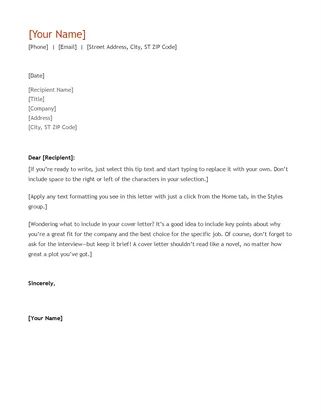
A successful cover letter includes several key elements that work together to make a strong impression. Begin with a personalized introduction, addressing the hiring manager by name if possible. Highlight the relevant experience and skills, using specific examples to demonstrate your accomplishments. Express your enthusiasm for the company and the role, showing that you’ve done your research. Finally, close with a strong statement that reiterates your interest and expresses your desire for an interview. Remember, your cover letter should be a reflection of your professional approach. This will allow the employer to understand your qualifications and give them a reason to review your resume. All the elements should work in tandem to create a compelling message.
Personalized Introduction
Start your cover letter with a personalized introduction that grabs the hiring manager’s attention. If possible, address the letter to a specific person, such as the hiring manager or the person listed in the job posting. This shows that you’ve done your research and taken the time to find out who will be reviewing your application. If you can’t find a name, use a professional salutation like ‘Dear Hiring Manager.’ In the first paragraph, clearly state the position you’re applying for and briefly mention how you learned about the opportunity. Your introduction should set the tone for the rest of the letter, creating an immediate connection with the reader. An engaging opening creates a strong first impression and encourages them to keep reading.
Highlighting Relevant Experience

The body of your cover letter should emphasize the relevant skills and experiences that align with the job requirements. Instead of simply repeating your resume, provide specific examples of your accomplishments and the results you achieved. Quantify your achievements whenever possible. For instance, instead of saying ‘Managed social media accounts,’ you could write, ‘Increased social media engagement by 30% within six months.’ Use the job description as a guide and tailor your letter to the specific needs of the role. By demonstrating how your past experiences have prepared you for this opportunity, you make a compelling case for your candidacy and show your understanding of the role requirements. Make sure your highlighted experience is relevant to the job.
Expressing Enthusiasm
Show your enthusiasm for the company and the position by expressing your genuine interest. Research the company’s mission, values, and culture and mention something specific that resonates with you. This could be a recent project they completed, their commitment to innovation, or their positive impact on the community. Expressing your enthusiasm demonstrates that you’re not just looking for any job, but that you are genuinely excited about this specific opportunity. Your enthusiasm should be reflected in your tone, word choice, and overall message. Your excitement could make you stand out from other applicants. Showing passion will let the hiring manager know you’re eager to be a part of the company.
Making a Strong Closing
End your cover letter with a strong closing statement that reiterates your interest and expresses your desire for an interview. Thank the hiring manager for their time and consideration. Indicate your availability for an interview and provide your contact information. A strong closing leaves a lasting impression and encourages the hiring manager to take the next step. Avoid generic phrases and instead, convey your enthusiasm and confidence. You might say something like, ‘I am eager to learn more about this opportunity and discuss how my skills and experience can contribute to your team.’ Close your letter professionally and thank the hiring manager for their time.
Cover Letter Best Practices

Following best practices can significantly improve the effectiveness of your cover letter. This is essential to making the right impression on potential employers. By understanding what to do and what to avoid, you can create a cover letter that stands out from the competition and highlights your skills and experiences in the best possible light. Always ensure that you customize your cover letter for each application, emphasizing the skills and experiences that are most relevant to the job. Adhering to these guidelines will help you create a document that makes a strong case for your candidacy.
Formatting for Readability
The formatting of your cover letter should be clear, professional, and easy to read. Use a standard font like Times New Roman or Arial, and maintain a consistent font size. Use single-spacing with a space between paragraphs. Use clear headings and bullet points to organize your thoughts. A well-formatted cover letter is more appealing to the reader and shows attention to detail. Avoid excessive formatting or distracting elements that might detract from your message. Create a clean and professional look that reflects positively on you. Formatting can make a positive impression on the reader, which could lead to an interview.
Using Keywords
To increase your chances of getting noticed, incorporate keywords from the job description into your cover letter. Identify the key skills and qualifications that the employer is seeking and use those words throughout your letter. This helps the hiring manager quickly see that you possess the required qualifications and are a good fit for the role. Use keywords naturally, without overdoing it or sacrificing the flow of your writing. By strategically using keywords, you make your application more searchable and increase the likelihood that it will be considered. This will increase the chances of your resume being reviewed.
Dos and Don’ts
To make your cover letter more effective, it’s crucial to know what to do and what to avoid. Do tailor your letter to each specific job, highlighting the relevant skills and experiences. Do proofread carefully for errors. Do express your enthusiasm for the company and the role. Don’t use generic templates or phrases. Don’t make it too long, keep it concise. Don’t focus solely on yourself – demonstrate how your skills and experience can benefit the employer. By following these guidelines, you can create a cover letter that makes a positive impact and strengthens your application.
The Impact of a Well-Written Cover Letter
A well-written cover letter can have a significant impact on your job search, leading to greater opportunities and better results. It sets the stage for a positive first impression, highlighting your skills and experiences and demonstrating your genuine interest in the role. A compelling cover letter distinguishes you from other applicants and can significantly increase your chances of getting an interview and ultimately, securing the job. If the hiring manager has a good first impression, there is a higher chance of them wanting to meet with you. Think of it as a chance to make your mark and show why you are a good fit for the company. A cover letter can be more than just an introduction, it can be your key to landing the job.
Increasing Your Chances
A well-crafted cover letter significantly increases your chances of getting your resume noticed and securing an interview. By taking the time to personalize your application, highlight relevant skills, and express your enthusiasm, you demonstrate to the hiring manager that you are a serious candidate. A strong cover letter helps you stand out from the competition. It also shows that you are willing to go the extra mile. If you apply to a job with a cover letter, your resume is 5 times more likely to be reviewed. Your letter can also increase your value for any position that you apply for.
Making a Positive First Impression
Your cover letter is often the first point of contact you have with a potential employer. As such, it serves as your initial opportunity to make a positive impression. A well-written cover letter sets a professional tone, showcases your communication skills, and demonstrates your attention to detail. It provides a glimpse into your personality and helps you stand out from the competition. It creates an inviting introduction and can immediately make your application more interesting. Use your letter to show why you are the best fit for the company. Making a good first impression is the key to your future success. This is also the best time to sell yourself.
The Future of Cover Letters
Even as job application methods evolve, the cover letter remains a critical component of the job search process. As technology advances, the way we apply for jobs may change, but the need for personalized communication will persist. Employers will always value candidates who take the time to express their genuine interest and highlight how their skills align with the role. While some aspects of the job search process might change, the core principles of a strong cover letter – expressing enthusiasm, demonstrating relevant skills, and tailoring your message to the job – will always remain relevant. Always be prepared to adapt, but keep in mind that the cover letter continues to be a critical tool for applicants. Continue to prioritize your cover letter, and take the time to perfect it. In a competitive job market, a well-crafted cover letter can make all the difference.