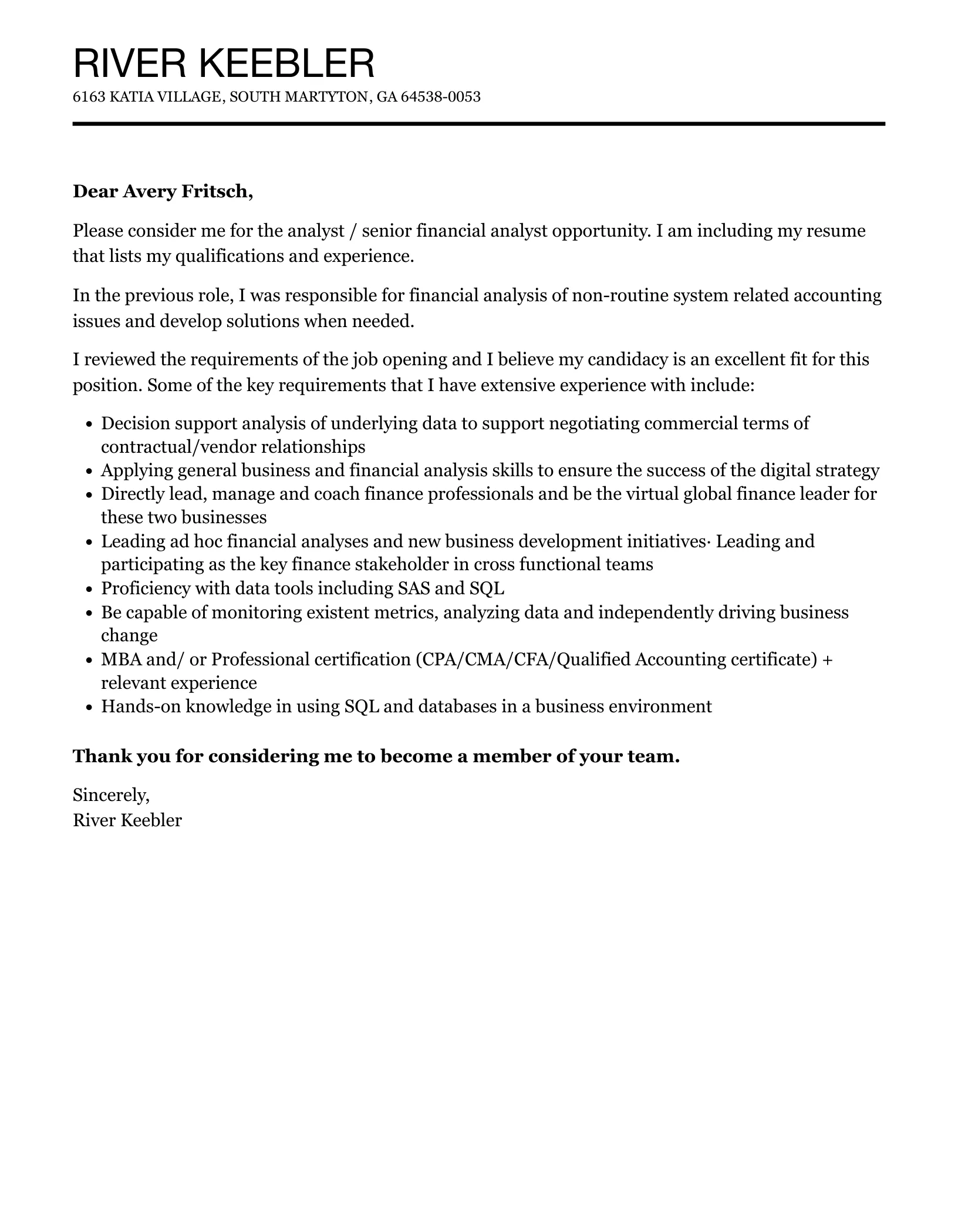
Crafting the Perfect Senior Financial Analyst Cover Letter
Landing a senior financial analyst position requires a strong application, and a well-crafted cover letter is a crucial component. It’s your first impression, a chance to showcase your skills, experience, and personality to potential employers. This guide provides expert advice to help you write a cover letter that gets noticed and increases your chances of securing an interview. Mastering the art of the cover letter can significantly elevate your job application, demonstrating your professionalism and attention to detail, which are highly valued in the finance industry. A compelling cover letter can set you apart from other candidates, as it provides an opportunity to explain your qualifications in more detail and illustrate your passion for the role.
Understanding the Importance of a Cover Letter
Why a Cover Letter Matters

In the competitive field of finance, a cover letter provides context to your resume. It allows you to highlight specific skills and achievements relevant to the job description. This document enables you to connect your experience to the company’s needs. A well-written cover letter demonstrates your communication skills, attention to detail, and genuine interest in the position and the organization. It goes beyond simply listing your qualifications; it tells a story of how your skills and experience align with the job’s requirements and the company’s culture. It is an opportunity to express your enthusiasm and explain why you are the best fit for the role, helping you stand out from other applicants.
Highlighting Your Senior Financial Analyst Skills
Key Skills to Showcase
Senior financial analysts require a diverse skillset. Your cover letter should emphasize skills like financial modeling, budgeting, forecasting, variance analysis, and risk management. Proficiency in financial software such as Excel (including advanced functions), and experience with other financial tools are also key. Additionally, highlight your abilities in data analysis, report writing, and presentation skills. Demonstrate your understanding of financial statements (balance sheets, income statements, and cash flow statements) and your ability to interpret financial data to make informed decisions. Strong communication and interpersonal skills are important for collaboration and presenting findings to stakeholders. Include specific examples where you’ve applied these skills to solve financial challenges.
Quantifiable Achievements

Instead of just listing your responsibilities, quantify your achievements. Use numbers to illustrate your impact. For example, instead of saying “Managed the budgeting process,” state “Managed the budgeting process for a $50 million department, resulting in a 5% reduction in costs.” Include metrics like the percentage increase in revenue, cost savings achieved, or improvements in efficiency. This provides concrete evidence of your capabilities and demonstrates your value to potential employers. Use data-driven examples that showcase your ability to drive results and contribute to the financial success of the company. The more specific and measurable your accomplishments are, the more compelling your cover letter will be.
Structuring Your Senior Financial Analyst Cover Letter
Header and Contact Information
Start with a professional header including your name, address, phone number, and email address. Include the date and the hiring manager’s name (if known), title, and the company’s address. Ensure your contact information is accurate and up-to-date. Formatting should be consistent and easy to read. This section sets the professional tone of your letter. The header provides the necessary information for the recruiter or hiring manager to contact you quickly and easily. It also demonstrates attention to detail and professionalism, which are critical qualities in finance. Use a clear and simple font that is easy to read.
Opening Paragraph – Captivating the Reader

Your opening paragraph is your first chance to make an impression. Immediately state the position you’re applying for and how you learned about the opportunity. Briefly explain why you are interested in the role and the company. Consider using a strong opening statement that highlights your key skills or a significant achievement that aligns with the job requirements. This section sets the tone for the rest of your cover letter. Make it clear you understand the company’s needs and how your skills can help achieve their goals. Capture the reader’s attention quickly and make them want to read further. Demonstrate enthusiasm and a clear understanding of what the company is looking for in a Senior Financial Analyst.
Body Paragraphs – Showcasing Your Value
The body paragraphs are where you elaborate on your qualifications and demonstrate how your experience aligns with the job requirements. Use specific examples to showcase your skills and accomplishments. Focus on quantifiable achievements whenever possible. This is your opportunity to explain your career progression and why you are a strong fit for the role. Use the job description as a guide, highlighting the skills and experiences that match the requirements. Structure your paragraphs logically and use clear, concise language. Avoid jargon unless it is necessary and understood by the reader. Maintain a professional tone throughout, and demonstrate your understanding of the company’s business.
Tailoring Your Cover Letter
Customization is essential. Tailor your cover letter to each specific job application. Research the company and the specific requirements of the role. Use keywords from the job description to demonstrate your understanding and match the requirements. Avoid using a generic cover letter; this will immediately show that you are not serious about the position. This demonstrates your interest in the specific role and shows that you have taken the time to understand the company’s needs. Showing your knowledge of the company’s mission, values, and recent projects can further impress the hiring manager. Make sure to adjust the examples and the language used to align with what the company is looking for.
The Closing – Call to Action

End your cover letter with a strong call to action. Express your interest in an interview and how you would like to discuss your qualifications further. Thank the hiring manager for their time and consideration. Reiterate your contact information one last time. Keep it concise and professional. This is your final opportunity to make an impact and show your enthusiasm for the position. Provide clear instructions on how they can reach you. Avoid vague statements. Make it clear that you are looking forward to hearing from them soon and that you are available to discuss your application in more detail. Proofread the entire letter before sending.
Essential Elements to Include
Your Professional Summary
Include a brief professional summary that highlights your key skills, experience, and accomplishments. This should be a concise overview of your qualifications, emphasizing what makes you an ideal candidate. Start with a strong statement about your experience, followed by key achievements. It should provide the reader with a quick understanding of who you are and what you bring to the table. Keep it focused and relevant to the job you are applying for. Tailor this section to match the job requirements and showcase your value proposition.
Relevant Experience and Achievements

Detail your relevant experience, highlighting accomplishments that demonstrate your skills. Use the STAR method (Situation, Task, Action, Result) to provide context and show how you achieved specific outcomes. Focus on quantifiable achievements and use action verbs to describe your responsibilities. Examples of this include “reduced costs by X%,” “increased revenue by Y%,” or “successfully implemented Z project.” Providing clear examples will illustrate how your skills have made a positive impact in the past. Tailor this section to emphasize skills that align with the job description.
Addressing the Specific Job Requirements
Carefully review the job description and address each of the essential requirements in your cover letter. Explain how your skills and experience align with the needs of the role. Provide specific examples of how you have met similar challenges in the past. Show that you understand the company’s requirements. This demonstrates that you are a strong fit for the position. Demonstrate you have done your research and have the relevant skills to be successful in the role. Customization is a key component of writing a successful cover letter.
Avoiding Common Mistakes
Grammar and Spelling Errors

Careless mistakes can undermine your credibility. Proofread your cover letter carefully for grammar and spelling errors. Use tools like Grammarly or have a friend review your letter. Ensure that your writing is clear, concise, and professional. Make sure your tone is appropriate. Poor grammar and spelling errors can make you seem unprofessional. Always ensure that your letter is free of errors before you submit it. Taking extra time to review your letter will enhance your professional image and will leave a positive impact on the hiring manager.
Generic Cover Letters
Avoid using a generic cover letter that can be sent to any company. Tailor your letter to each job application, highlighting relevant skills and experience. Generic cover letters show a lack of interest and will likely result in rejection. Research the company and the specific requirements of the role. Use keywords from the job description and explain why you are a good fit for the position. Personalize each cover letter. Show the hiring manager that you have invested time in the application. A tailored cover letter demonstrates your enthusiasm for the specific role. Customization is an important way to demonstrate genuine interest.
Exaggerated Claims
Be honest about your skills and experience. Avoid exaggerating your achievements or making claims that you cannot support. Providing false information can damage your credibility and lead to rejection. If you are selected for an interview, you may be asked to elaborate on the claims made in your cover letter. Present accurate information, and emphasize your key skills. Honesty is one of the most important qualities in the finance industry. Stick to verifiable facts. Do not overstate your qualifications.
Formatting Your Cover Letter
Font and Readability
Choose a professional and readable font, such as Times New Roman, Arial, or Calibri. Ensure the font size is between 10 and 12 points. Use clear formatting, including appropriate spacing, bullet points, and headings to make your cover letter easy to read. A well-formatted cover letter demonstrates your attention to detail and professionalism. Use headings to organize the content. Make sure that your formatting is consistent throughout the document. Clear formatting makes it easy for the hiring manager to quickly scan your letter and extract the key information.
Length and Structure
Keep your cover letter concise and to the point. Aim for one page. Organize your content logically, with a clear introduction, body, and conclusion. Use clear headings and bullet points. Avoid long paragraphs and unnecessary jargon. It is important to convey your message in a concise manner. A well-structured letter demonstrates respect for the hiring manager’s time. Use a layout that is clean and easy to follow. This helps the reader to quickly understand your qualifications and experience.
Proofreading and Editing
Before submitting your cover letter, carefully proofread and edit it. Check for grammar, spelling, and punctuation errors. Ensure your content flows smoothly and the language is clear and concise. Have a friend or career counselor review your cover letter to get a fresh perspective. Proofreading and editing are essential to eliminate any errors that could undermine your application. A perfect cover letter reflects your professionalism and attention to detail. Always proofread carefully. Double-check every part of your cover letter before submission. This ensures that your application makes a strong first impression.