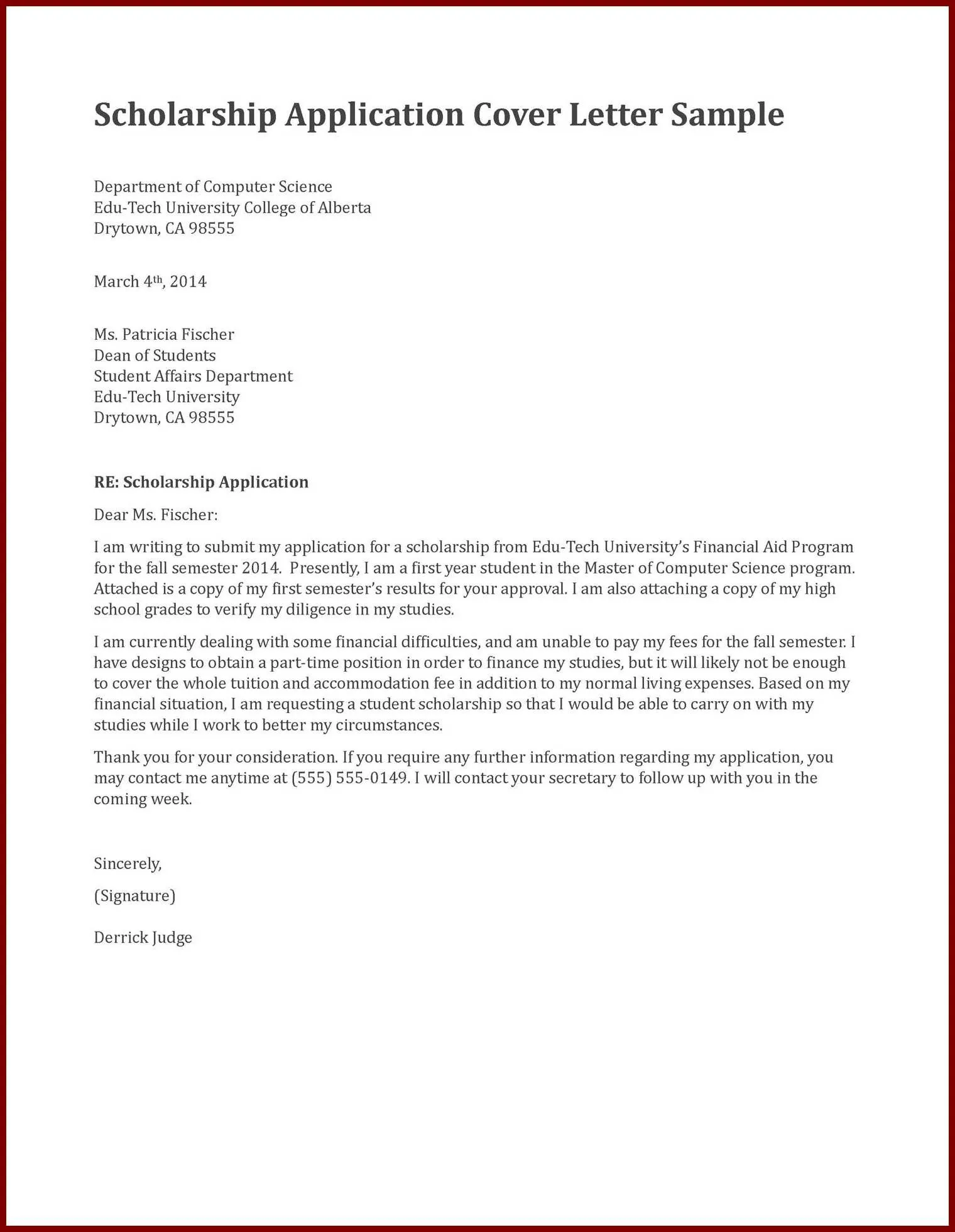
Understanding Scholarship Cover Letters
A scholarship cover letter is a critical document that accompanies your scholarship application. It serves as your introduction to the selection committee, giving them a glimpse into your personality, aspirations, and why you deserve the scholarship. It’s not just a formality; it’s a chance to make a strong first impression and distinguish yourself from other applicants. A well-crafted cover letter complements your application, providing context and depth to your achievements, experiences, and goals. This is where you can showcase your passion, dedication, and suitability for the scholarship, setting the stage for a successful application.
Purpose of a Scholarship Cover Letter
The primary purpose of a scholarship cover letter is to persuade the selection committee that you are a worthy candidate. It allows you to connect with the committee on a more personal level, going beyond the facts and figures presented in your resume or application form. The cover letter gives you the opportunity to communicate your unique qualities, motivations, and the impact you hope to make. It should explain why you need the scholarship and how it will help you achieve your academic and career goals. Furthermore, the cover letter helps you demonstrate your understanding of the scholarship’s values and mission, showing that you are a good fit for the opportunity.
Key Elements to Include

A strong scholarship cover letter includes several key elements that highlight your suitability. Begin with a clear and concise introduction that states the purpose of your letter and the scholarship you are applying for. Then, showcase your relevant experiences, skills, and achievements, providing specific examples to support your claims. Highlight how the scholarship aligns with your goals and aspirations and what you plan to achieve with the funds. Express your gratitude to the selection committee for considering your application, and end with a confident and professional closing. Always tailor your letter to the specific scholarship requirements and values.
Researching the Scholarship
Thorough research is essential for crafting a compelling cover letter. Before you start writing, take the time to understand the scholarship’s specific requirements, values, and mission. Visit the scholarship provider’s website, read the application guidelines carefully, and gather all necessary information. Identify the criteria used for evaluating applications, and make sure your cover letter addresses these points. Research the organization or individual offering the scholarship to understand their goals and what they look for in recipients. This research allows you to tailor your letter effectively and show the selection committee that you have a genuine interest in the scholarship.
Understanding Scholarship Requirements
Each scholarship has its own specific requirements and eligibility criteria. Carefully review these requirements to ensure you meet all the qualifications before applying. Pay attention to any specific instructions regarding the cover letter, such as word limits, formatting guidelines, or required content. Understand the scholarship’s focus area, whether it’s academic achievement, community involvement, financial need, or a specific field of study. By understanding the requirements, you can tailor your cover letter to highlight your relevant experiences, skills, and achievements, increasing your chances of success.
Tailoring Your Letter

Generic cover letters rarely impress selection committees. Tailor your letter to each scholarship application by personalizing it to the specific requirements and values of the scholarship. Address the specific criteria and highlight the experiences and achievements most relevant to the scholarship’s goals. Use the organization’s name and the specific scholarship name. This level of personalization demonstrates that you have taken the time to understand the opportunity and that you are genuinely interested. Show how your goals align with the scholarship’s mission, and express why you believe you are the ideal candidate.
Writing the Cover Letter
With the research and planning complete, it’s time to start writing your cover letter. Remember that a well-written letter is a clear and concise statement that clearly conveys your message. The content should be well-organized, and the language should be persuasive. Start with a captivating introduction that grabs the reader’s attention, then move into the main body, which presents your qualifications, experiences, and goals. Use specific examples to support your claims and show how the scholarship will help you achieve your aspirations. Ensure a strong and professional closing. Keep in mind that the letter is a reflection of your communication skills and ability to convey your ideas effectively.
Formatting and Structure
The formatting and structure of your scholarship cover letter contribute significantly to its readability and impact. Use a professional font, such as Times New Roman or Arial, with a font size of 11 or 12 points. Use single-spaced lines and double-space between paragraphs for clarity. Start with your contact information, the date, and the recipient’s contact information. The letter should have an introduction, a body, and a conclusion. Keep the letter concise, ideally no more than one page. Proper formatting makes your letter easy to read and enhances your professionalism.
Crafting a Compelling Introduction

Your introduction is the first impression you make on the selection committee. Start strong by immediately stating the purpose of your letter and the scholarship you are applying for. Briefly introduce yourself and your primary qualifications, and then provide a compelling hook to capture the reader’s attention. This could be a personal anecdote, a striking achievement, or a clear statement of your goals. Make sure your introduction is enthusiastic and confident, setting the tone for the rest of the letter. Your goal is to get the committee excited about reading your letter.
Highlighting Relevant Experience
The body of your cover letter should provide details about your experiences, skills, and achievements. Focus on the experiences that align with the scholarship’s requirements and values. Give specific examples of your academic performance, extracurricular activities, volunteer work, and any leadership roles you’ve held. Describe how these experiences have shaped you and how they have prepared you to succeed in your field of study. Quantify your achievements whenever possible, using numbers and metrics to show the impact of your work. This section should demonstrate your suitability for the scholarship.
Demonstrating Your Fit
Demonstrate your fit for the scholarship by showing how your goals align with the scholarship’s mission and values. Explain why you need the scholarship, how it will help you achieve your academic and career goals, and what impact you hope to make. Show that you have researched the scholarship and understand its purpose. If the scholarship has a specific focus area or targets a particular type of student, make it clear that you fit the profile. Your letter should show the selection committee that you are passionate about their cause and that you will use the scholarship to make a positive difference.
Expressing Gratitude and Closing

End your cover letter with a professional and grateful closing. Thank the selection committee for their time and consideration. Reiterate your interest in the scholarship and express your enthusiasm for the opportunity. Provide your contact information again and make sure it’s up-to-date. A confident closing statement reaffirms your qualifications and strengthens your application. Use a formal closing phrase such as “Sincerely” or “Respectfully.” Proofread your entire letter one last time before submitting.
Reviewing and Refining
Once you have completed your draft, it’s time to review and refine your cover letter. Read it carefully, checking for clarity, grammar, and spelling errors. Ensure that your letter is well-organized and flows logically. Make sure each paragraph supports your overall message. Consider whether your letter is persuasive and effectively communicates your qualifications and goals. Refine your word choices, making sure you use powerful verbs and descriptive language. Seek feedback from trusted sources to get another perspective on your cover letter.
Proofreading for Errors
Proofreading is a crucial step in the application process. Before submitting your cover letter, carefully proofread it for any errors in grammar, spelling, punctuation, and formatting. Errors can undermine your credibility and make a negative impression on the selection committee. Use a grammar checker and spelling tool, but don’t rely on them completely. Read your letter out loud to catch any awkward phrasing or sentence structure issues. Ask someone else to proofread your letter to catch any errors you might have missed. A polished and error-free cover letter shows attention to detail.
Seeking Feedback

Get feedback from trusted sources. Ask teachers, counselors, mentors, or friends to review your cover letter and provide their insights. They can offer valuable feedback on your writing style, clarity, and the overall impact of your letter. Ask them to look for any areas that are unclear, and ask if the letter effectively communicates your qualifications and goals. Consider their suggestions and revise your letter accordingly. Getting a second or third opinion can help you identify any weaknesses or areas for improvement, and can help ensure your cover letter is the best it can be.
Finalizing and Submitting
Once you have refined your cover letter and addressed all feedback, you are ready to finalize and submit your application. Ensure that you have followed all submission guidelines. If the application requires a hard copy, print your cover letter on high-quality paper and make sure it looks professional. If you are submitting electronically, use a standard format such as PDF to preserve the formatting. Before submitting, review the cover letter one last time to make sure you have included all the necessary information. Submitting a well-crafted and polished cover letter can significantly increase your chances of winning the scholarship.