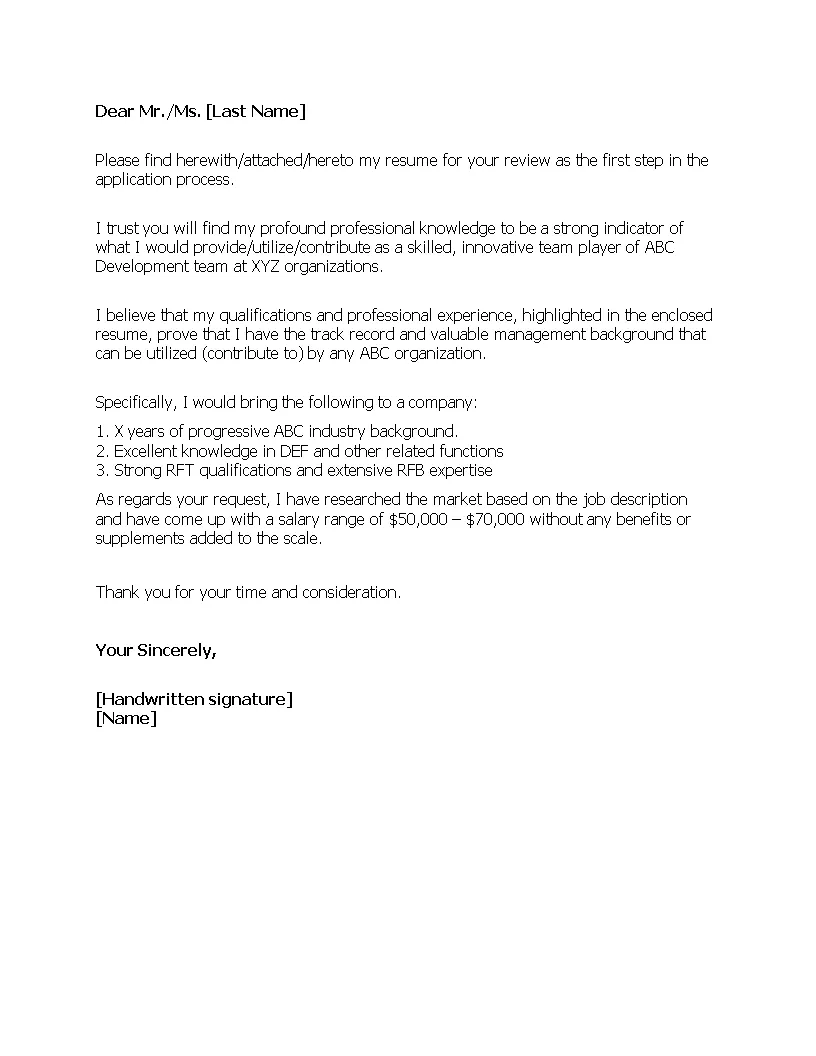
What are Salary Requirements in a Cover Letter
Salary requirements in a cover letter refer to the section where you state your desired or expected compensation for a job. It’s a crucial part of your application, as it immediately informs the potential employer about your financial expectations. Properly addressing salary requirements can significantly impact your chances of getting an interview. However, improperly handling this aspect might lead to immediate rejection. Therefore, understanding how to articulate your salary needs effectively is vital.
Why Include Salary Expectations
Including your salary expectations is not just a formality; it demonstrates professionalism and respect for the employer’s time. It shows that you’ve considered the role and are realistic about your value. In many cases, employers explicitly request salary expectations in their job postings to filter candidates whose expectations might be too high or too low for their budget. Addressing this requirement upfront saves both parties valuable time and sets the stage for transparent negotiations later on.
Understanding the Employer’s Perspective

Employers often include salary requirements to streamline the hiring process. They have a budget in mind and need to ensure that potential candidates align with their financial constraints. Addressing salary expectations demonstrates that you have researched the position and are aware of industry standards. It shows that you are serious about the opportunity and have a clear understanding of your worth in the job market. Failing to address this can lead to your application being immediately overlooked.
Communicating Your Value
Your cover letter is your chance to highlight your skills, experience, and qualifications. It’s also an opportunity to communicate your value to the employer. When you address salary requirements, do so strategically. Don’t just state a number; instead, connect your desired compensation with the value you bring to the table. Mentioning your skills, expertise, and achievements related to the role helps justify your financial expectations. Emphasizing how you can contribute to the company’s goals strengthens your position during salary negotiations.
Best Practices for Including Salary Requirements
Crafting a salary section that aligns with the employer’s needs while still representing your value can be challenging. The key is to strike a balance between being specific and flexible. There is a strategic approach to including salary requirements in your cover letter. It is not a matter of luck but rather a matter of planning and implementing the following practices. Adhering to these principles will ensure your application stands out, leaving a positive impression and increasing your chances of success.
Researching Salary Ranges

Before including any salary information, research the typical salary range for the position and your experience level. Websites like Glassdoor, Salary.com, and Payscale provide valuable insights into industry standards. Consider factors like location, company size, and your skill set, as these can influence the salary range. This research will enable you to provide a realistic and informed response, demonstrating your professionalism and market awareness. It also provides you with a basis for negotiation if you progress through the hiring process.
Using a Salary Range
When stating your salary requirements, it is often advantageous to provide a salary range rather than a specific number. This demonstrates flexibility and allows room for negotiation. The range should be realistic based on your research, with the lower end representing your minimum acceptable salary and the higher end reflecting your ideal compensation. This approach provides the employer with options, showing that you are open to discussing compensation. This can also help in your negotiations with a potential employer.
Avoiding Specific Numbers
In some situations, especially when you are unsure of the typical salary range or want to keep your options open, you can avoid mentioning specific numbers altogether. You can state that your salary expectations are ‘competitive’ or ’negotiable,’ depending on the role and the company’s benefits package. However, ensure this approach is appropriate for the job posting. If the posting explicitly asks for a specific number, providing a range or stating ’negotiable’ might be perceived negatively. The best approach depends on each situation.
Formatting and Placement of Salary Info
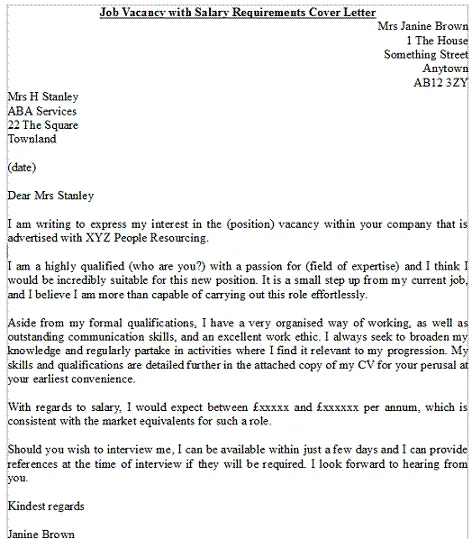
The ideal placement for salary requirements in your cover letter is usually near the end, after you’ve highlighted your skills and expressed your interest in the role. This allows you to first showcase your qualifications and then address the financial aspect. Keep the section concise and clear, using a sentence or two to state your salary expectations. For instance, ‘My salary expectations are in the range of $X to $Y, based on my experience and the responsibilities outlined in the job description.’ or, ‘I am open to discussing salary expectations and am flexible depending on the overall package.’ Make sure the formatting is consistent with the rest of your letter.
Common Mistakes to Avoid
Avoiding these common pitfalls will enhance your cover letter and increase your prospects of securing an interview. Recognizing and addressing these mistakes can significantly improve your chances of success in the job search. This involves being prepared, being adaptable, and always being mindful of what you are communicating.
Being Too Vague or Too Specific
Being too vague, such as simply stating ‘competitive salary,’ can make you seem unprepared or uninterested in the role. Conversely, providing a very specific number, especially if it is too high, might disqualify you from consideration. Strive for a balance. If the job posting asks for salary expectations, provide a well-researched range. If the posting doesn’t specify, consider saying you are open to discussing salary expectations or state a range after researching what the role demands.
Ignoring Salary Requirements

Failing to address salary expectations when explicitly requested can be a significant mistake. Employers often use this information to screen candidates, and ignoring their request might suggest a lack of attention to detail or a misunderstanding of the job requirements. Always adhere to the instructions provided in the job posting. If the posting does not mention salary expectations, then you are not usually required to mention your expectations, but if there’s a field to fill on their website, then you are expected to fill it.
Failing to Tailor Your Letter
A generic cover letter can demonstrate a lack of interest in the specific job. If the job description mentions the salary or benefits, be sure to adjust your expectations accordingly. Customizing your letter to reflect the specific company and role is crucial. Researching the company, understanding the role, and then tailoring your salary expectations will make a stronger impression. Avoid using a template without customizing it.
Examples of Salary Requirement Statements
Here are a few examples of how to address salary requirements in your cover letter, each tailored to a different scenario. These examples provide guidance on how to include salary expectations in your cover letter. Remember to tailor these examples to your unique experience and the specific job description. These examples cover a variety of different approaches that can be taken, to help tailor a response that fits what is needed.
Example 1 Negotiable

In this case, the candidate is open to discussing salary based on the overall compensation package and the details of the role. This approach is beneficial if you’re unsure of the typical salary range or want to keep your options open. ‘I am open to discussing my salary expectations and am flexible depending on the overall compensation package, including benefits and opportunities for professional development. I am also willing to negotiate to work for a company with as great a reputation as yours.’
Example 2 Stating a Range
This example demonstrates a more proactive approach, offering a range based on research and understanding the value you bring. ‘Based on my research of similar roles and my experience in this industry, my salary expectations are in the range of $60,000 to $75,000 annually. However, I am negotiable on my lower expectations depending on the overall compensation package offered, in terms of benefits and other incentives.’
Example 3 Referencing the Job Posting
This approach aligns with the job posting’s specific instructions and shows that you paid attention to the details. For instance, ‘As requested in the job posting, my salary expectations are within the range of $X to $Y, which aligns with my experience and the responsibilities outlined for this role. I am very happy to discuss the opportunity at the earliest convenience.’
Final Thoughts
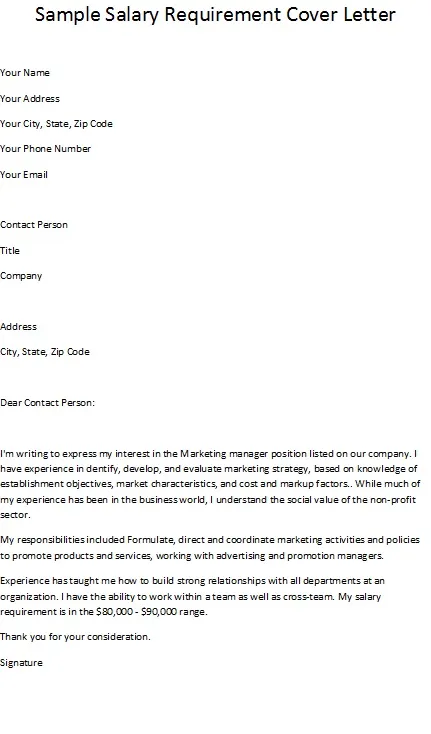
Addressing salary requirements in your cover letter is a critical part of the job application process. By understanding the employer’s perspective, researching salary ranges, and communicating your value effectively, you can increase your chances of landing an interview. Remember to tailor your approach to each job posting and be prepared to negotiate if you receive an offer. Mastering the art of addressing salary expectations will empower you to confidently navigate the job search and secure the compensation you deserve. Good luck with your job search!