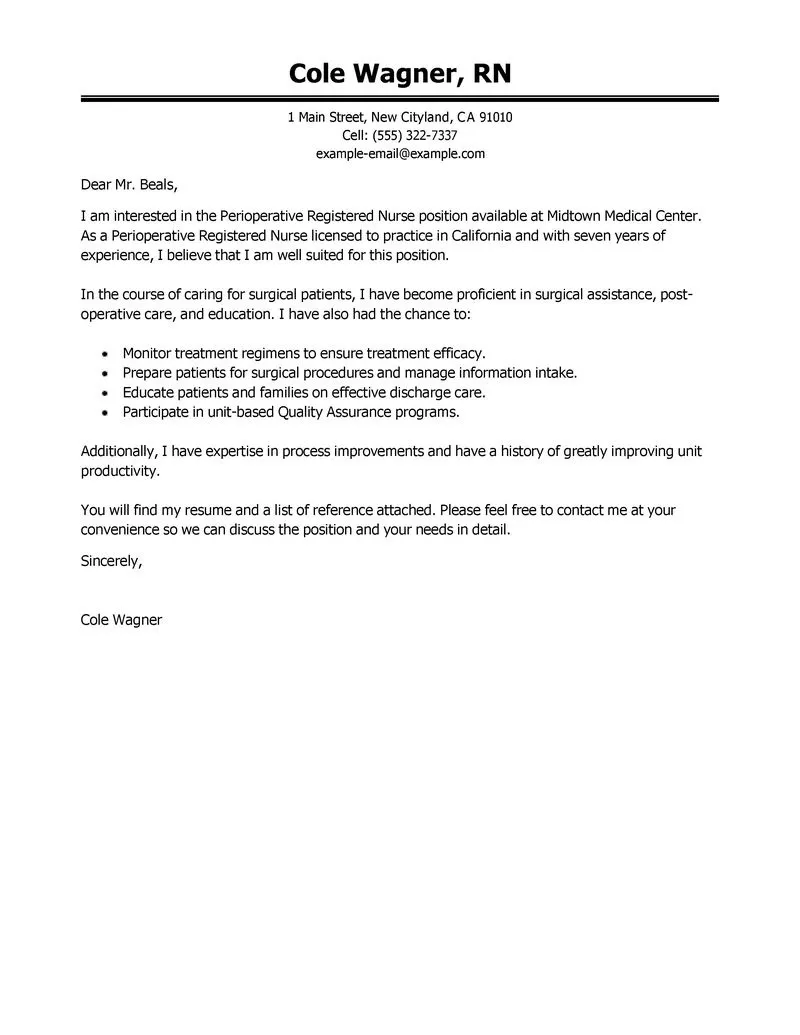
Highlighting Your Skills and Education
As a new graduate registered nurse (RN), your cover letter is your first chance to make a strong impression. Since you may lack extensive professional experience, it’s crucial to highlight your skills and education effectively. Start by clearly stating your RN license status and the university from which you graduated. Then, emphasize the key skills you’ve developed, such as patient assessment, medication administration, care planning, and communication. Tailor your skills section to match the requirements of the specific job you are applying for. Make sure your cover letter reflects the nursing skills. For example, mention skills such as critical thinking, teamwork, and adaptability. These are fundamental for success in nursing. Consider a skill inventory and use it to make an effective cover letter.
Emphasize Relevant Clinical Experience
Your clinical rotations offer valuable experience. While you might not have direct work experience, the hands-on training you received during clinical rotations is crucial. Your cover letter should detail these rotations. Specify the areas of nursing you have experience in, such as medical-surgical, critical care, pediatrics, or mental health. Highlight the responsibilities you took on, the patient populations you worked with, and the specific tasks you performed. Emphasize any experiences that align with the job description’s requirements. This shows the hiring manager that you have a solid foundation and are ready to apply your knowledge in a professional setting. Mention specific patient care skills, such as wound care, catheter insertion, or patient education. Highlight the soft skills developed during the clinical experiences.
How to Showcase Your Clinical Rotations

To make your clinical rotations stand out, be detailed. Instead of simply listing the rotations, describe your role and the impact you had. Mention any leadership roles you held during your rotations, such as charge nurse or team lead. Describe your responsibilities in each rotation. Discuss patients you encountered, specific medical conditions you addressed, and any procedures you participated in. Did you assist with complex medical procedures or handle difficult patient situations? Did you receive positive feedback from your clinical instructors or preceptors? This evidence supports the quality of your clinical abilities. Highlighting these instances demonstrates your practical skills and your ability to handle challenges. It allows the hiring manager to see your commitment to high-quality patient care.
Focus on Your Achievements
Even as a new graduate, you likely have achievements that set you apart. Think about any awards, scholarships, or honors you received during nursing school. Mention any research projects or presentations you participated in. Did you volunteer in any healthcare-related activities or participate in community health initiatives? Highlight any certifications you have, such as Basic Life Support (BLS) or Advanced Cardiac Life Support (ACLS). These achievements illustrate your dedication to nursing and your commitment to continuous learning. The more you provide evidence of achievements, the more memorable you will be to the hiring manager. Mention any experiences with quality improvement initiatives or patient safety projects.
Quantify Your Accomplishments
Whenever possible, quantify your accomplishments. Instead of stating that you provided excellent patient care, describe it in more detail. Did you reduce patient falls by a certain percentage during your clinical rotations? Did you successfully manage a certain number of patients in a shift? Using data and statistics makes your achievements more credible and impactful. This demonstrates the value you bring to the role. For example, quantify your participation in clinical trials or research projects. Provide concrete examples and support them with data.
Tailoring Your Cover Letter

One of the most important tips is to tailor your cover letter. Generic cover letters often fail to impress hiring managers. Always customize your letter for each job. Read the job description carefully and identify the key skills and qualifications the employer is looking for. Then, emphasize the experiences and skills that align with those requirements. Address the specific needs of the hospital or healthcare facility. Consider the mission, values, and services. This shows that you have researched the organization and are genuinely interested in the position. Mention the specific department or unit you are applying for and explain why you are interested in working there. Personalize the letter. Using the name of the hiring manager can help you get noticed.
Researching the Hospital and Role
Before writing your cover letter, do your research on the hospital or healthcare facility. Find out about their mission, values, and the services they offer. If you know someone who works there, ask them about the work culture and environment. This research will help you tailor your cover letter and demonstrate your genuine interest in the role. Also, research the role itself. Understand the responsibilities, the required skills, and the expectations of the position. You can find this information in the job description and online resources. This preparation helps you to highlight relevant experience. Use your research to demonstrate how your skills and experiences match the hospital’s or facility’s needs.
Key Phrases to Include
Use specific phrases in your cover letter to highlight your skills and experience. Here are some examples: patient assessment, medication administration, care planning, electronic health records (EHR) proficiency, critical thinking, teamwork, communication skills, adaptability, and patient education. Demonstrate your understanding of the role, and use industry-specific language to show your familiarity with the profession. Include these keywords. The hiring manager will instantly understand your abilities. Adapt the phrases to fit the specific job and your experience. You can demonstrate your knowledge, skills, and abilities by using these words.
Demonstrating Your Enthusiasm

Show your enthusiasm and passion for nursing in your cover letter. Express your excitement about the opportunity to work at the hospital or healthcare facility. Explain why you are drawn to nursing and what motivates you. Discuss what appeals to you about the role. Demonstrate your knowledge of the organization. Share your long-term goals. This helps the hiring manager see your commitment. Be authentic and genuine in your expression. Consider why you chose to become a nurse. Let this come through in your letter. Make it clear that you are excited about the opportunity to contribute to patient care and the organization’s mission.
Expressing Your Interest in the Role
Clearly state your interest in the specific role and why you are a good fit. Explain what attracts you to the position. Highlight any aspects of the job description that resonate with your skills and interests. Describe how the role aligns with your career goals. This shows the hiring manager that you have considered the position carefully and are genuinely interested in it. Focus on how you can contribute to the team. If the role focuses on a specific patient population, mention your experience with that population. If the role involves using certain technologies or procedures, mention your familiarity with those technologies. Make your application relevant to the specific job.
Addressing Potential Weaknesses
Since you are a new graduate, you might lack extensive experience. Instead of ignoring this, address it directly. Frame this lack of experience as an opportunity. Focus on your enthusiasm for learning and your eagerness to contribute to the team. Highlight your transferable skills, such as strong communication skills, adaptability, and a willingness to learn. Emphasize your willingness to receive and act upon feedback. Describe how you are dedicated to your professional development. You can address any gaps in your experience by highlighting your commitment to continuing education or certification. Focus on your strengths. Frame any weaknesses as opportunities for growth and learning.
Proofreading and Formatting

Always proofread your cover letter carefully. Errors can undermine your professionalism and credibility. Check for grammar mistakes, spelling errors, and punctuation issues. Ask someone else to review your cover letter before you submit it. A fresh pair of eyes can catch errors you may have missed. Pay attention to the formatting of your cover letter. Use a professional font, such as Times New Roman or Arial. Keep your cover letter concise and easy to read. Avoid using jargon or overly complex sentences. Use clear and concise language. Use proper formatting. A well-formatted cover letter demonstrates your attention to detail. It also makes your letter more readable.
Reviewing Your Cover Letter
Before submitting your cover letter, review it thoroughly. Make sure it is well-organized, easy to read, and free of errors. Ensure that your cover letter highlights your skills and education effectively. Confirm that you have emphasized your relevant clinical experience. Make sure your cover letter is tailored to the specific job and the organization. Ensure that you have expressed your enthusiasm and interest in the role. Check that you have addressed any potential weaknesses appropriately. Get feedback from career services professionals. A career counselor or experienced nurse can review your cover letter.
Formatting Tips
Formatting can significantly impact your cover letter. Use a standard business letter format with your contact information at the top, the date, and the hiring manager’s name and title. Keep the font size consistent and easy to read. Use single spacing within paragraphs and double spacing between paragraphs. Be sure to use consistent formatting. Keep the margins set at one inch. Use a clear, readable font. This gives your cover letter a professional appearance. Avoid using excessive bolding, italics, or underlining. Make it readable and professional.
What to Avoid

There are certain things you should avoid in your cover letter. Don’t include generic phrases or statements. Avoid using clichés. Don’t include irrelevant information or details that are not related to the job. Avoid exaggerating your skills or experience. Avoid making negative comments about previous employers. Don’t submit a cover letter with errors. Avoid the following. Sending the same cover letter to different positions. Don’t simply repeat your resume. Tailor your letter. Keep the cover letter focused, concise, and relevant to the job.
Common Mistakes to Skip
Avoid these common mistakes. Don’t underestimate the importance of a cover letter. Many applicants make this error. Don’t fail to proofread your cover letter. Avoid a generic approach. Tailor your cover letter to each role. Don’t apply for jobs you aren’t qualified for. Be sure to highlight transferable skills. Avoid using overly casual language. The cover letter is a professional document. Be sure to review your cover letter. Correct any errors before sending.
Call to Action
Your cover letter should end with a clear call to action. Express your interest in an interview and provide your contact information. Thank the hiring manager for their time and consideration. Reiterate your enthusiasm for the role and the organization. Make it easy for the hiring manager to contact you. A well-written call to action increases your chances of moving forward in the application process. Conclude with a professional closing, such as “Sincerely” or “Respectfully.”