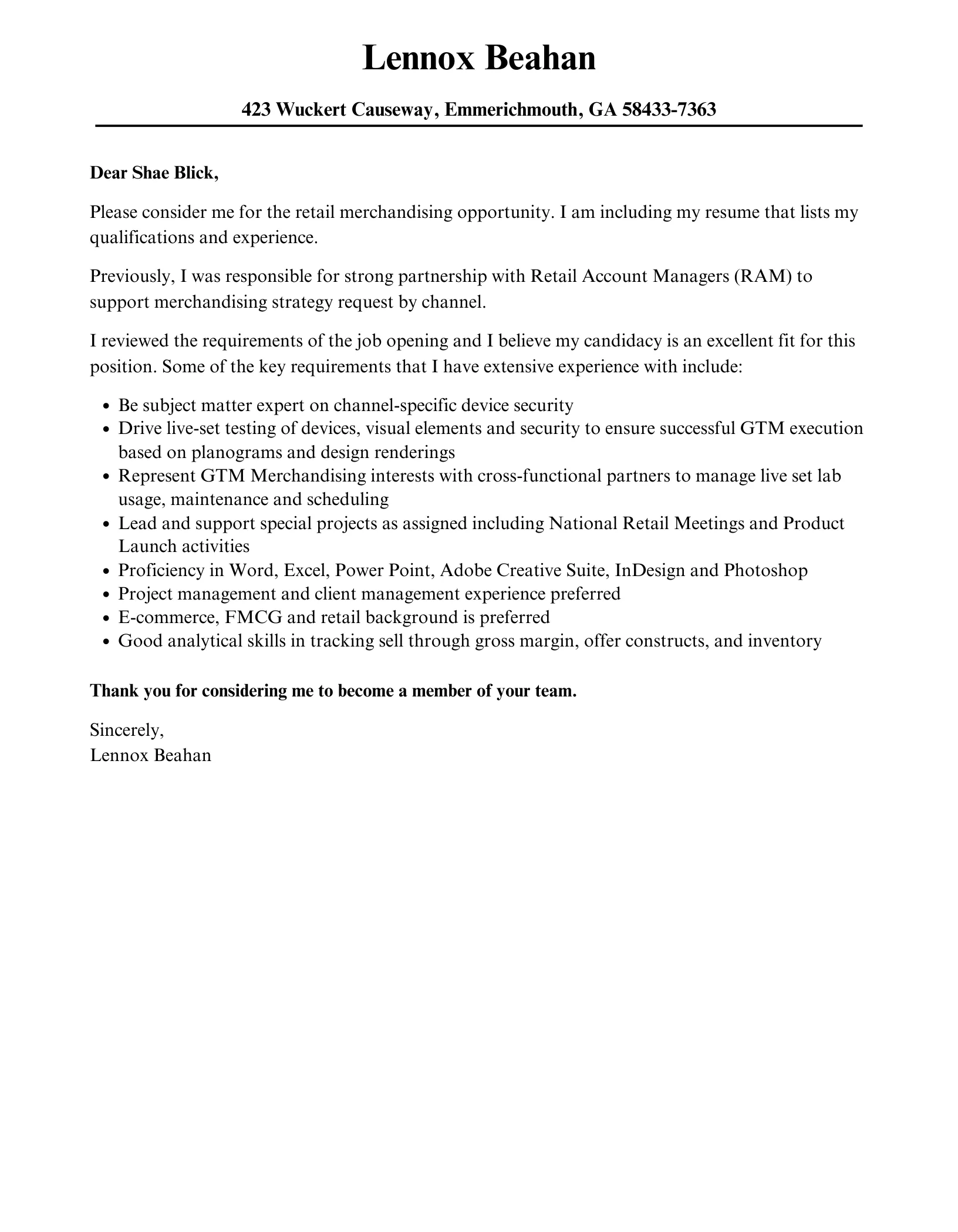
Crafting Your Retail Merchandising Cover Letter
A well-crafted retail merchandising cover letter is your initial introduction to a potential employer, serving as a vital tool in securing your desired position. It is a critical document that provides you with the opportunity to highlight your relevant skills, experiences, and passion for retail merchandising. A compelling cover letter can set you apart from other applicants, increasing your chances of landing an interview and ultimately, your dream job. This guide will walk you through the essential steps of crafting a cover letter that grabs the attention of hiring managers.
Understanding the Purpose of a Cover Letter
The primary purpose of a retail merchandising cover letter is to express your interest in a specific role, showcase your qualifications, and demonstrate your understanding of the company’s needs. It is not merely a reiteration of your resume; instead, it is a chance to provide context, elaborate on your experiences, and explain why you are the perfect fit for the position. A strong cover letter allows you to demonstrate your personality, communication skills, and enthusiasm for the opportunity.
Highlighting Your Skills and Experience

This section is about showcasing your relevant skills and experience in a way that resonates with the job description. Focus on aspects that directly relate to retail merchandising, such as visual merchandising, inventory management, sales analysis, and customer service. Use specific examples to illustrate your abilities and the positive impact you’ve made in previous roles. A cover letter is a space to demonstrate how your skills and experiences align with the company’s requirements and expectations, ultimately showcasing that you are the ideal candidate.
Key Skills to Showcase
When writing your cover letter, be sure to highlight skills that align with the job description. These skills often include visual merchandising, the art of creating appealing product displays; sales analysis, the ability to interpret sales data and trends; inventory management, expertise in tracking and managing stock levels; strong communication and interpersonal skills; the capacity to thrive in a fast-paced retail setting; and a demonstrated ability to meet and exceed sales targets. These will show you are capable of thriving within the world of retail merchandising.
Relevant Experience to Mention
In your cover letter, detail any previous retail merchandising experience you have, including roles in visual merchandising, store management, or sales. Describe your responsibilities and accomplishments, such as successful visual merchandising campaigns that boosted sales or initiatives that improved inventory turnover. Tailor your experience to the specific job requirements, emphasizing any areas where you have a proven track record. Providing solid evidence of past experience will showcase your ability to perform the job at hand.
Tailoring Your Cover Letter

Customizing your cover letter for each job application is crucial. Generic cover letters often fail to impress; instead, demonstrate that you’ve taken the time to understand the company and the specific role. This level of personalization can set you apart and significantly improve your chances of getting noticed by the hiring manager. Customization makes your application stand out from the crowd.
Researching the Company
Before you begin writing, research the company to understand its mission, values, and current projects. Visit the company’s website, browse its social media accounts, and read any recent news articles or press releases. Understanding the company’s brand identity and goals will allow you to align your skills and experience with their specific needs and demonstrate your genuine interest in working there. This is where you start to show why you and the company are a great match.
Addressing the Hiring Manager
Whenever possible, address your cover letter to the specific hiring manager or the person responsible for the role. This level of personalization demonstrates that you’ve taken the time to research the company and shows initiative. If the hiring manager’s name isn’t available, use a professional salutation like “Dear Hiring Manager” instead of a generic greeting. Addressing the letter correctly helps create a positive first impression.
Formatting for Success

Ensure your cover letter is well-formatted, easy to read, and visually appealing. Use a professional font, such as Times New Roman or Arial, with a font size between 10 and 12 points. Use clear headings, bullet points, and short paragraphs to break up the text and make it easier to scan. Maintaining a clean and organized layout reflects professionalism and attention to detail, which are valuable qualities in retail merchandising.
Writing a Compelling Opening
The opening paragraph of your cover letter is your opportunity to grab the reader’s attention and make a positive first impression. Start with a strong statement that clearly states your purpose for writing and highlights your enthusiasm for the role. Avoid generic opening lines, and instead, focus on immediately demonstrating your interest and aligning yourself with the company’s goals.
Grabbing the Reader’s Attention
To capture the reader’s attention, use a compelling opening sentence that shows your genuine interest in the position and the company. This could be a brief mention of something that caught your eye about the company, a relevant accomplishment, or a brief overview of how your skills align with their needs. Your opening should be concise, confident, and specific to the role and the company.
Showcasing Your Enthusiasm

Express your enthusiasm for the position and the company in your opening paragraph. Show that you’re excited about the opportunity and that you’ve taken the time to research the company and understand its values. Avoid generic phrases and instead, show your passion and genuine interest in the role. Let your excitement shine through and make the reader want to learn more about you.
Structuring the Body of Your Cover Letter
The body of your cover letter should provide more detailed information about your skills, experience, and accomplishments. Structure it logically, using clear headings and bullet points to make it easy to read and scan. Focus on providing specific examples and quantifying your achievements whenever possible. Use this section to demonstrate how your skills and experience align with the job requirements.
Detailing Your Accomplishments
When describing your accomplishments, use the STAR method (Situation, Task, Action, Result) to provide a clear and concise overview of your achievements. Describe the situation, the task you faced, the actions you took, and the positive results you achieved. Provide concrete examples and highlight any measurable outcomes, such as increased sales, improved customer satisfaction, or reduced costs.
Quantifying Your Achievements

Use numbers and data to quantify your achievements and demonstrate your impact. Instead of saying you increased sales, specify by how much. For example, “Increased sales by 15% in the first quarter.” Providing measurable results adds credibility and demonstrates the value you can bring to the company. Specific, measurable achievements make your application stand out.
Providing Examples
Provide specific examples that illustrate your skills and experience. For instance, if you mention visual merchandising skills, describe a specific display or campaign you worked on and the results it achieved. When showcasing your achievements, be specific and provide tangible evidence of your capabilities. Clear examples will make it easier for the hiring manager to understand your ability to do the job.
Concluding Your Cover Letter Effectively
Your conclusion should leave a lasting impression and encourage the hiring manager to take action. Reiterate your interest in the position, express gratitude, and include a clear call to action. Your closing should be professional, enthusiastic, and focused on the next steps in the hiring process.
Expressing Gratitude

Express your gratitude to the hiring manager for their time and consideration. Show that you appreciate the opportunity to be considered for the position. This simple gesture can leave a positive impression and show respect for the hiring process.
Including a Call to Action
End your cover letter with a clear call to action, such as requesting an interview. State your availability and express your enthusiasm for discussing your qualifications further. Provide your contact information again, ensuring that the hiring manager can easily reach you. Including a call to action encourages the next steps in the hiring process and demonstrates your interest.
Proofreading and Editing Your Cover Letter
Thoroughly proofread and edit your cover letter before submitting it. Check for any grammatical errors, typos, or inconsistencies. A polished and error-free cover letter reflects professionalism and attention to detail. It is essential to make a good first impression. Make sure to have another set of eyes look over your cover letter to ensure it is the best it can be.
Avoiding Common Mistakes
Avoid common mistakes such as generic openings, vague language, and typos. Refrain from mentioning negative experiences or using unprofessional language. Tailor your cover letter to the specific job description and company. Customization and attention to detail are essential for a successful application.
Ensuring Professionalism
Ensure your cover letter maintains a professional tone throughout. Use formal language, avoid slang or colloquialisms, and maintain a positive and enthusiastic attitude. Ensure you use a professional font, proper formatting, and a clear, easy-to-read layout. Professionalism reflects well on your application.