Understanding the Importance of a Relocation Cover Letter
A relocation cover letter is more than just a formality; it’s a crucial tool in your job search arsenal when you’re planning a move. It serves as your first impression and gives you the opportunity to explain your reasons for relocating and why you’re the perfect fit for the job. In a competitive job market, a well-crafted cover letter can significantly increase your chances of getting an interview. It demonstrates your initiative, your understanding of the company and the role, and your commitment to the opportunity. Without a strong relocation cover letter, your application may be overlooked, especially if the hiring manager has doubts about your commitment to the new location. Therefore, taking the time to create a compelling letter is essential for a successful job search.
Why a Relocation Cover Letter is Crucial
A relocation cover letter addresses the elephant in the room – the fact that you don’t live locally. It proactively answers the hiring manager’s questions about your willingness to move and your reasons for doing so. This letter is your opportunity to highlight your genuine interest in the position and your preparedness for a life change. It also allows you to show that you understand the implications of relocating, such as securing housing and managing travel. Without explicitly addressing relocation, you risk your application being discarded due to the perceived uncertainty or inconvenience. The cover letter shows that you’re serious about the job and have considered all the practical aspects of moving, making you a more attractive candidate.
Highlighting Your Interest and Motivation

Use your cover letter to express your passion for the role and the company. Share why you’re enthusiastic about the specific opportunity and what excites you about the prospect of working there. Demonstrate your research by mentioning specific projects, company values, or industry trends that resonate with you. Showing genuine interest helps you stand out from other applicants who might be applying for multiple jobs. When you articulate your motivations, you humanize your application, and you create a connection with the reader. Explain why this role is a natural progression for your career, and how it aligns with your long-term goals. This level of detail shows that you’re not just looking for any job, but that you’re genuinely invested in this specific opportunity.
Essential Components of a Relocation Cover Letter
Your Contact Information and Date
Start with your contact information at the top of the letter. Include your name, phone number, email address, and LinkedIn profile URL. Also, include the date. This ensures that the hiring manager can easily reach you and provides context for when the letter was written. Make sure your contact details are up-to-date and professional. Ensure that your email address is appropriate and that your voicemail greeting is professional. This basic information lays the foundation for a professional communication and helps the hiring manager contact you quickly and easily.
Addressing the Hiring Manager

Always address the hiring manager by name if possible. Research the company website or LinkedIn to find the name of the hiring manager or the person responsible for recruiting. If you can’t find a name, use a general greeting like ‘Dear Hiring Manager’ or ‘Dear [Department Name] Team’. Personalizing your letter shows that you’ve taken the time to research the company and are invested in the application process. A personalized greeting also shows respect and attention to detail, which are highly valued qualities in any employee. Avoiding a generic greeting, if at all possible, creates a more personal connection and makes your application stand out.
Expressing Enthusiasm for the Role
In the opening paragraph, express your enthusiasm for the specific role you are applying for. Mention where you found the job posting and why it caught your eye. Highlight what interests you about the company and the position. Briefly outline how your skills and experiences align with the job requirements. This will immediately capture the hiring manager’s attention and provide a clear purpose for your letter. Use strong verbs and positive language to convey your excitement. Showing genuine interest from the start sets a positive tone and encourages the reader to continue reading your letter.
Clearly Stating Your Relocation Plans
The most crucial part of the relocation cover letter is explicitly stating your plans to relocate. Clearly mention your willingness to move and when you plan to be available to start. This will prevent any assumptions and demonstrate your proactive approach. Be specific about your timeline. Are you already in the process of moving, or are you waiting to secure a job? The more specific you are, the more confidence you instill in the hiring manager. You can also briefly explain your reasons for relocating, whether it’s for personal growth, a career opportunity, or a desire for a change of pace.
Showcasing Relevant Skills and Experience

Use the body of your cover letter to showcase your relevant skills and experience. Highlight how your qualifications align with the job description. Don’t simply list your responsibilities, but rather, provide specific examples of your achievements and the results you’ve delivered in previous roles. Quantify your accomplishments whenever possible by using numbers and data to demonstrate your impact. Use action verbs to describe your accomplishments, and tailor your examples to the specific requirements of the job. This will show the hiring manager that you possess the required skills and experience to excel in the role.
Tailoring Your Skills to the Job Description
Carefully review the job description and identify the key skills and qualifications the employer is looking for. Then, tailor your cover letter and resume to match these requirements. Use the same keywords and phrases as the job description to demonstrate that you possess the necessary skills. Provide specific examples of how you’ve used these skills in past roles and achieved positive results. If the job requires specific software proficiency, mention it in your cover letter and provide evidence of your competence. Customizing your cover letter shows that you’ve taken the time to understand the job and that you’re a good fit.
Quantifying Your Achievements
Instead of simply stating your responsibilities, quantify your achievements with numbers and data. For example, instead of saying ‘Managed social media accounts’, say ‘Increased social media engagement by 30% in six months’. Use metrics to illustrate your impact in previous roles. This allows the hiring manager to easily understand the value you bring to the table. Quantifying your achievements makes your claims more credible and shows the hiring manager that you deliver tangible results. Use percentages, dollar amounts, or any other quantifiable data that demonstrates your success.
Addressing the Relocation Directly

Stating Your Timeline and Availability
Provide a clear timeline for your relocation. Be specific about when you plan to move and when you will be available to start working. If you have a specific date in mind, mention it. If you’re flexible, state that you’re willing to relocate at your earliest convenience. This transparency will assure the hiring manager that you are committed and prepared. A clear timeline prevents any uncertainties and streamlines the hiring process. This demonstrates your proactive approach and helps the hiring manager plan accordingly.
Demonstrating Your Commitment
Reiterate your commitment to the role and the company. Emphasize your enthusiasm for the opportunity and your eagerness to contribute to the team. Reassure the hiring manager that you are serious about relocating for this specific job. This shows that you’re not just looking for any job but are invested in the opportunity. You can also mention any steps you’ve already taken to prepare for the relocation, such as researching housing options or familiarizing yourself with the area. This demonstrates your proactive nature and readiness.
Mentioning Your Research of the Area and Company

Show that you’ve done your homework by mentioning your knowledge of the company, its values, and its location. Research the area and highlight any aspects that interest you, such as the culture, the cost of living, or the local attractions. This shows that you’re genuinely interested in the role and the location, making you a more appealing candidate. Referencing the company’s mission, values, or recent projects demonstrates your understanding of the company. This demonstrates that you see yourself fitting in and making a contribution to the team and the community.
Formatting and Writing Style
Choosing the Right Tone
Maintain a professional and enthusiastic tone throughout your cover letter. Use positive language and avoid any negative statements. Tailor the tone to match the company culture. Ensure your tone is appropriate for the industry and the specific role you are applying for. Demonstrate confidence in your skills and experience, but avoid being arrogant. A friendly and approachable tone will resonate well with the hiring manager. Show genuine enthusiasm for the opportunity and a willingness to learn and contribute. Your tone should reflect professionalism and a positive attitude.
Keeping It Concise and Clear

Keep your cover letter concise and to the point. Hiring managers are busy people, so make sure to present your information clearly and efficiently. Aim for a cover letter that is no more than one page long. Use short paragraphs and bullet points to break up the text and make it easy to read. Focus on the most relevant information and avoid unnecessary details. Highlight your most important skills and accomplishments. Clarity and brevity are key to making a strong impression in a short amount of time.
Proofreading for Errors
Before submitting your cover letter, proofread it carefully for any errors in grammar, spelling, and punctuation. Errors can create a negative impression and make you appear careless or unprofessional. Use a grammar checker and ask a friend or family member to review your letter for any mistakes. Even minor errors can detract from your message. Double-check the hiring manager’s name and the company name. A polished and error-free cover letter will significantly increase your chances of making a good impression.
Relocation Cover Letter Template and Examples
Template Structure

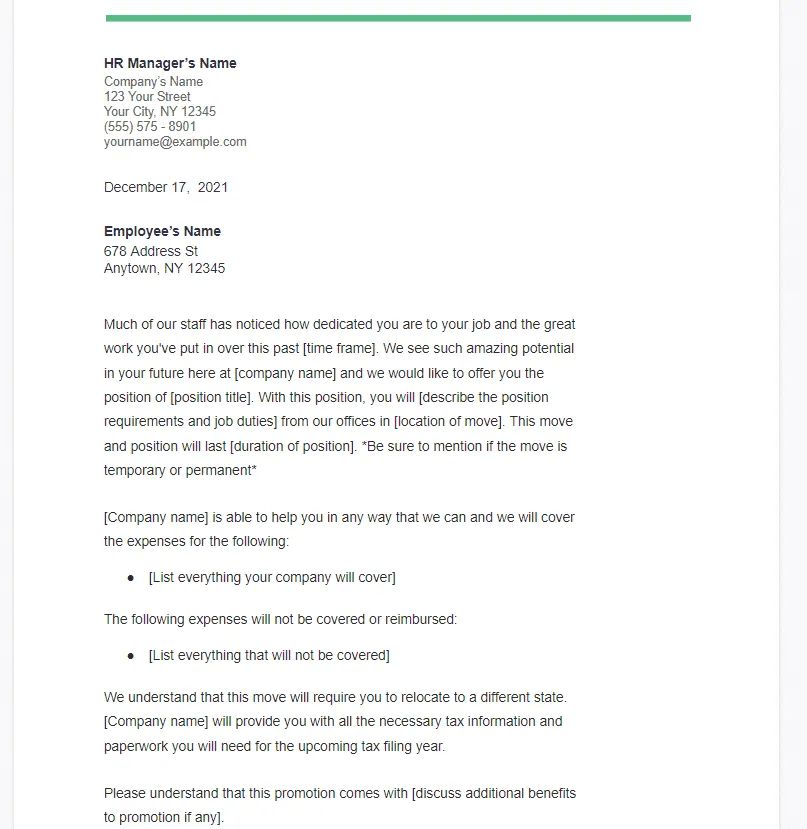
A well-structured cover letter makes it easy for the hiring manager to quickly understand why you’re a good fit. Start with your contact information and the date. Then, address the hiring manager by name if possible, followed by a professional greeting. The first paragraph should express your interest in the role. The body of the letter should highlight your skills and experiences. Finally, summarize your interest and include a call to action. Close with a professional closing and your signature. This format provides a clear, concise, and impactful way to structure your cover letter.
Example Scenario 1
Suppose you are applying for a marketing role and are relocating to a new city. Your cover letter might begin by stating your excitement about the marketing manager position, mentioning specific campaigns or projects that caught your eye. In the body, highlight your experience in digital marketing, social media, and content creation, quantifying your achievements with metrics. Then, clearly state your relocation plans, including your availability to start. Finally, mention your research of the local area, your commitment to the role, and how you are already in the process of finding accommodation.
Example Scenario 2
For a software developer role, you might start by mentioning your passion for coding and your familiarity with the company’s products. Highlight your proficiency in relevant programming languages and projects. Quantify your experience by describing projects that improved efficiency. Clearly state your relocation timeline, emphasizing your willingness to relocate for the specific role. Mention your research into the local tech scene and how excited you are about the opportunity. Then, express your confidence in your ability to contribute to the team and a call to action to schedule an interview.
Finalizing and Submitting Your Letter
Reviewing Before Submission
Before submitting your cover letter, review it carefully. Make sure that the letter is error-free. Check for any typos, grammatical mistakes, or formatting errors. Ensure that you’ve tailored the letter to the specific job and that it highlights the most relevant skills and experiences. Verify that the letter is addressed to the correct person and that the contact information is accurate. Make sure your tone is professional and that your enthusiasm for the role is evident. Have a trusted friend or career counselor review your letter for a second opinion.
Submitting Your Letter
When submitting your cover letter, follow the application instructions provided in the job posting. Send your cover letter and resume as a single PDF document. If the application requires a different format, make sure to comply with these instructions. Address the email to the hiring manager, and include a professional subject line. Proofread your email before sending it. After submitting your application, follow up with the hiring manager within a week to confirm receipt and reiterate your interest. A well-submitted cover letter and a follow-up can increase your chances of getting noticed.