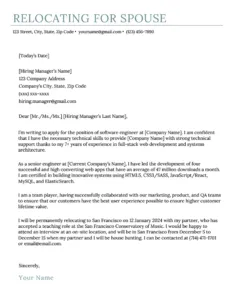
Why You Need a Relocation Cover Letter
In the dynamic world of job hunting, a relocation cover letter is a crucial tool for anyone seeking opportunities in a new city or state. It’s not merely a formality but a strategic document that can significantly increase your chances of landing your dream job. This letter allows you to proactively address the elephant in the room — your relocation plans — and present them as an asset rather than a hindrance. By clearly stating your intentions and enthusiasm, you assure potential employers of your commitment and seriousness. This proactive approach can set you apart from other candidates who might be hesitant to disclose their relocation plans upfront. Therefore, understanding the significance and crafting an effective relocation cover letter is vital for a successful job search.
Understanding the Purpose of a Relocation Cover Letter
The primary purpose of a relocation cover letter is to address the employer’s concerns about your move. It provides you with the opportunity to explain why you’re relocating, which can range from personal reasons to professional aspirations. It’s also your chance to highlight your genuine interest in the company and the specific role. By clearly stating your intention to relocate and emphasizing your commitment to the job, you alleviate any doubts the employer might have. This letter also enables you to showcase your skills and experience in a way that directly aligns with the job requirements. It’s about selling yourself as a valuable asset who is not only qualified but also dedicated to making the transition a success for both you and the company. Consider it as your first chance to make a compelling pitch.
Highlighting Your Skills and Experience

When crafting a relocation cover letter, it’s essential to effectively highlight your skills and experience. This is not just about listing your qualifications; it’s about demonstrating how your skills align with the needs of the employer. Start by carefully reviewing the job description and identifying the key requirements. Then, provide specific examples from your professional history where you have successfully utilized those skills. Use action verbs and quantify your achievements whenever possible to show the impact you’ve made in previous roles. This approach not only showcases your capabilities but also gives the employer a clear picture of how you can contribute to their organization. The goal is to make a strong case for why you’re a valuable candidate, despite the added element of relocation.
Tailoring Your Cover Letter
Generic cover letters are easily spotted and often disregarded. A successful relocation cover letter is tailored to each specific job and company. Before you start writing, research the company thoroughly. Understand their mission, values, and recent projects. Then, customize your letter to reflect your understanding of their needs and how your skills and experience can address them. This might involve adjusting the tone, highlighting specific accomplishments that are relevant to the role, and demonstrating your knowledge of the industry. Show that you’ve taken the time to learn about the company and are genuinely interested in joining their team. This level of personalization will significantly increase the impact of your letter and make a positive impression on the hiring manager.
Key Elements of a Relocation Cover Letter
Several key elements are essential in a compelling relocation cover letter. These elements, when properly incorporated, can significantly improve your chances of success. Make sure to include all these in your cover letter to leave a good impression on the hiring manager. Don’t miss any of these essentials.
Your Contact Information and Introduction

Start with your full contact information, including your name, phone number, email address, and LinkedIn profile URL. This should be at the top of your letter for easy access. The introduction is your first impression, so make it count. State the position you are applying for and where you found the job listing. Briefly mention why you’re interested in the company and the role. Keep it concise and engaging, setting a positive tone for the rest of the letter. It’s about capturing the reader’s attention immediately and making them want to learn more about you.
Stating Your Purpose and Motivation
Clearly state your purpose for writing the cover letter and your motivation for relocating. Explain why you’re choosing to move to the new location and what excites you about the opportunity. Whether it’s for career advancement, personal reasons, or a change of scenery, be honest and transparent. However, frame your motivation in a way that highlights your commitment to the job. For example, you could say that you’re eager to contribute your skills to a company and a community that aligns with your long-term goals. Avoid vague statements. This section assures the employer of your seriousness.
Showcasing Your Qualifications
Dedicate a section of your letter to showcase your qualifications, skills, and experience. Highlight the most relevant aspects of your background that match the job requirements. Provide specific examples of your accomplishments, using quantifiable results whenever possible. This might involve mentioning a project you led, a problem you solved, or a skill you developed. The goal is to demonstrate your value and show how you can contribute to the company’s success. Tailor this section to the specific role you are applying for, emphasizing the skills and experiences that are most relevant.
Addressing the Relocation

Address your relocation plans directly and confidently. State your intention to move to the new location, and specify the timeline for your move. If you have already made arrangements, mention them. This demonstrates your proactiveness and readiness. If you are in the initial stages of planning, be clear about your timeframe and your willingness to move quickly. Reassure the employer that the relocation will not disrupt your ability to start working. You can also mention any resources or support you’ve found to assist with your move. Be upfront, and make sure it looks like you are ready to start.
Expressing Enthusiasm and Availability
End your letter by expressing your enthusiasm for the opportunity and the company. Reiterate your interest in the role and your eagerness to contribute to their team. Include a call to action, such as inviting them to contact you for an interview. You can also mention your availability for interviews, both in person and virtually. Close with a professional and confident tone. Thank the hiring manager for their time and consideration. This section should leave the reader with a positive impression and a clear understanding of your interest and availability.
Relocation Cover Letter Examples
Reviewing different relocation cover letter examples can help you tailor your own. Here are a few examples.
Example 1 Experienced Professional

For experienced professionals, the cover letter should focus on demonstrating a proven track record. Highlight significant accomplishments and quantify your results whenever possible. Emphasize how your skills and experience directly align with the job requirements. It’s important to show how your past roles have prepared you for this new opportunity. Be confident and concise, focusing on the value you bring to the table. Make sure it covers your experience, skills, accomplishments, and the reasons for your relocation in a professional tone. Also include details such as how quickly you can move and any prior experience with the industry or company.
Example 2 Recent Graduate
For recent graduates, a relocation cover letter should emphasize academic achievements, relevant internships, and transferable skills. Since you may have less professional experience, focus on your potential and eagerness to learn. Highlight any projects, coursework, or volunteer activities that demonstrate your abilities. Tailor your letter to show your knowledge about the company and the role you’re applying for. Be sure to address the employer’s concerns about your recent graduate status. Include how this opportunity will help you develop your skills further and why it’s an essential next step in your career.
Example 3 Career Changer
Career changers need to clearly explain the reasons for their career shift and demonstrate how their transferable skills can be applied to the new role. Highlight any experiences, skills, or training that are relevant to the job. Focus on your adaptability, willingness to learn, and enthusiasm for this new direction. Clearly state your intention to relocate and your plans for the transition. Address any potential concerns about your lack of direct experience in the new field. Show how your unique background can bring a fresh perspective to the company and role. Make sure you emphasize what you can offer and how it will help the company.
Tips for Writing a Strong Relocation Cover Letter

To increase your chances of success, consider the following tips to enhance the quality of your cover letter.
Researching the Company
Before you start writing, research the company and the role thoroughly. Understand their mission, values, culture, and recent projects. Visit their website, read news articles, and check their social media profiles. Tailor your cover letter to reflect your knowledge of the company and demonstrate how your skills and experience align with their needs. Show that you’ve taken the time to learn about the company and are genuinely interested in joining their team. This level of personalization will significantly increase the impact of your letter.
Proofreading and Editing
Proofread your cover letter meticulously before submitting it. Check for any grammatical errors, spelling mistakes, and typos. Ensure that your writing is clear, concise, and easy to read. Ask a friend, colleague, or career advisor to review your letter and provide feedback. A polished cover letter is a reflection of your attention to detail and professionalism. Make sure that it is error-free, as even minor mistakes can negatively impact your application.
Formatting and Presentation

Pay attention to the formatting and presentation of your cover letter. Use a professional font, such as Times New Roman or Arial, and maintain consistent formatting throughout the document. Use clear headings, bullet points, and white space to make your letter easy to read. Ensure that your letter is well-organized and visually appealing. Your cover letter is a reflection of your professionalism, so the formatting and presentation can be as important as the content.
Common Mistakes to Avoid
Be aware of the common mistakes that can diminish the effectiveness of your cover letter. Avoiding them will boost your chances of success.
Overlooking the Relocation Plans
One of the biggest mistakes is failing to address your relocation plans directly and proactively. Leaving it unmentioned creates uncertainty and concern for the employer. Instead, clearly state your intent to relocate, your timeline, and any arrangements you’ve made. By addressing the issue head-on, you show your seriousness and dedication to the job.
Using a Generic Letter

Sending a generic cover letter to every job you apply for is a major mistake. Generic letters don’t demonstrate your genuine interest in the company and the specific role. Instead, tailor your cover letter to each job by researching the company, highlighting relevant skills, and demonstrating how your experience aligns with their needs. This personalization will make your letter stand out.
Focusing on Yourself Too Much
While it’s important to showcase your skills and experience, avoid making your cover letter all about you. Shift the focus to how you can contribute to the company and solve their problems. Demonstrate how your qualifications and skills will benefit their organization. Show that you understand their needs and are eager to help them achieve their goals.
Ignoring the Job Description
Failing to carefully read and address the job description is another common mistake. The job description provides valuable information about the required skills, experience, and qualifications. Use it as a guide to tailor your cover letter. Highlight your relevant skills and experiences in a way that aligns with the job requirements. By showing that you understand the needs of the role, you will make a strong impression on the employer.
Being Negative or Unprofessional

Avoid negativity, complaining, or unprofessional language in your cover letter. Keep your tone positive, enthusiastic, and professional. Avoid any negative comments about past employers or jobs. Instead, focus on your accomplishments, skills, and eagerness to contribute to the new company. Make sure to proofread the letter for any errors and ensure it reflects a positive attitude and professionalism.
In conclusion, a well-crafted relocation cover letter is an essential tool in any job seeker’s arsenal. By addressing the employer’s concerns, showcasing your qualifications, and expressing your enthusiasm, you can significantly increase your chances of landing the job. Remember to tailor your letter, proofread carefully, and avoid common mistakes. With these examples and tips, you’re well-equipped to create a cover letter that will impress potential employers and help you secure your dream job in a new location.