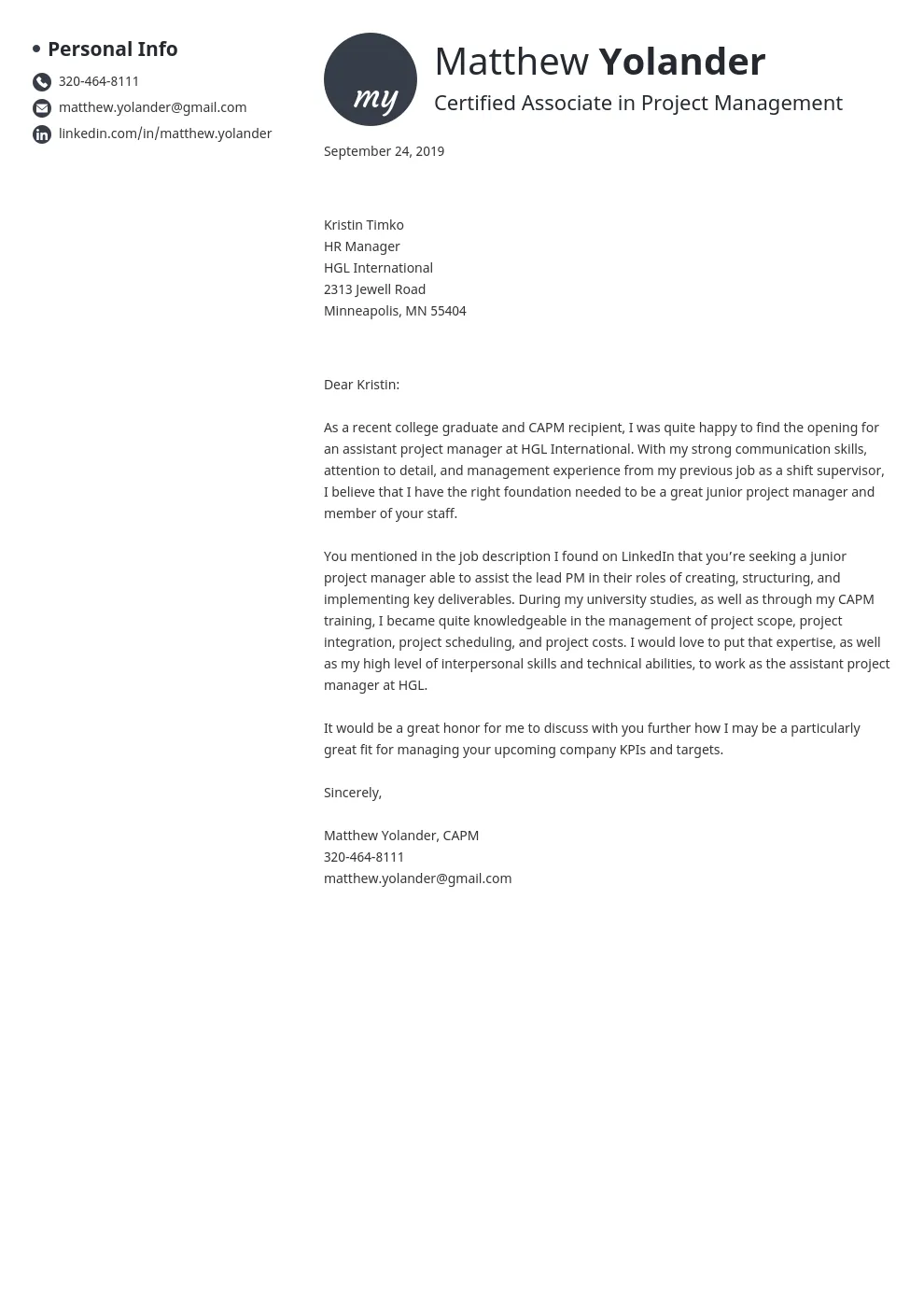
What is a Project Manager Cover Letter
A project manager cover letter is a crucial document that accompanies your resume when applying for project management positions. It serves as your introduction to the hiring manager, providing a concise overview of your qualifications, skills, and experience. Unlike a resume, which lists your work history, a cover letter allows you to showcase your personality, express your enthusiasm for the role, and explain why you are the ideal candidate. Think of it as your chance to make a strong first impression and persuade the employer to read your resume. A well-crafted cover letter can significantly increase your chances of getting an interview. It should be customized for each position you apply for, highlighting the specific requirements and demonstrating how your skills align with the job description.
Key Components of a Project Manager Cover Letter
A strong project manager cover letter comprises several essential components that work together to present you as a compelling candidate. Each element plays a vital role in conveying your qualifications and making a positive impression on the hiring manager. Ensure you include all these key components to maximize the impact of your application.
Contact Information

At the top of your cover letter, include your full name, phone number, email address, and optionally, your LinkedIn profile URL. This makes it easy for the hiring manager to contact you if they are interested in your application. Ensure your contact information is accurate and professional. Double-check for any typos or errors that could prevent them from reaching you. The date should also be included for formality.
Professional Summary
This section should provide a brief overview of your experience and key skills. Highlight your most relevant accomplishments and what you can bring to the role. Focus on the value you can provide to the company. Keep it concise and impactful, aiming to grab the reader’s attention immediately. Consider including the number of years of experience you have and the types of projects you’ve managed successfully. Tailor this section to match the specific requirements of the job description.
Skills and Experience
This is where you delve into your qualifications. Describe your project management skills, such as planning, budgeting, risk management, team leadership, and communication. Provide specific examples of your accomplishments, quantifying them whenever possible. For example, mention how you successfully delivered a project under budget or ahead of schedule. Refer to relevant certifications like PMP or PRINCE2. Showcase your ability to use project management software and methodologies. Tailor this section to match the job description, emphasizing the skills and experience most relevant to the role.
Why This Role and Company

Express your genuine interest in the specific role and the company. Explain why you’re excited about the opportunity and what attracts you to the organization. This demonstrates that you’ve done your research and are not just sending out a generic application. Highlight how your career goals align with the company’s mission and values. Mention something specific that appeals to you about the company’s work or culture. Show your enthusiasm and explain how you can contribute to their success. This helps you stand out from other candidates.
Call to Action
Conclude your cover letter with a clear call to action. Express your eagerness for an interview and state your availability. Thank the hiring manager for their time and consideration. Reiterate your interest in the position and your confidence in your ability to contribute. Keep the tone professional and enthusiastic. This reinforces your interest and encourages the employer to move forward with your application.
Formatting Your Cover Letter
The formatting of your cover letter is as important as its content. A well-formatted letter is easy to read, professional, and reflects your attention to detail. Pay close attention to font, structure, and proofreading to ensure a polished presentation. Poor formatting can distract from the message and create a negative impression. Using a clean and professional format helps to showcase your qualifications and professionalism.
Choosing the Right Font

Select a professional and easy-to-read font, such as Times New Roman, Arial, or Calibri. Avoid using overly fancy or unusual fonts that might be distracting. Keep the font size between 10 and 12 points for readability. Ensure consistency in the font throughout the entire document. The font should be clear and easy on the eyes, making it easy for the hiring manager to read your letter without strain. Choose fonts that are widely accessible to avoid any compatibility issues.
Using a Clear Structure
Organize your cover letter with a clear and logical structure. Use headings and subheadings to break up the text and guide the reader. Keep paragraphs concise and focused. Use bullet points to highlight key skills or achievements. Ensure there is sufficient white space to avoid a cluttered appearance. A well-structured letter is easier to navigate and allows the hiring manager to quickly find the information they need. This helps convey your thoughts in a clear, organized manner.
Proofreading and Editing
Proofread your cover letter carefully for any typos, grammatical errors, or formatting inconsistencies. Use a spell-checker and grammar checker, but also read through the document manually. Have someone else review your cover letter to catch any errors you might have missed. Errors can create a negative impression and make you seem unprofessional. Paying attention to detail is an essential skill for a project manager, and your cover letter should reflect that. Ensure your letter is polished and error-free before submitting it.
Tailoring Your Cover Letter

A generic cover letter rarely impresses hiring managers. Tailoring your cover letter to each specific job application is crucial for demonstrating your interest and suitability. Customize the content to match the job description, highlighting relevant skills and experiences. This shows the employer that you have taken the time to understand their needs and that you are a good fit for the role.
Researching the Company
Before writing your cover letter, research the company and the specific role you are applying for. Understand the company’s mission, values, and recent projects. Identify the key requirements and desired skills mentioned in the job description. This research will enable you to customize your letter to show how your qualifications align with the company’s needs and express your genuine interest in the position. Knowing the company’s culture and values helps you to align your letter accordingly.
Highlighting Relevant Skills
Carefully review the job description and identify the key skills and qualifications the employer is seeking. Highlight your relevant skills and experiences using specific examples. Use keywords from the job description to show that you meet their requirements. Quantify your achievements whenever possible to demonstrate your impact. Focus on how you can contribute to the company’s goals and address their specific needs. This will make your application more impactful and increase your chances of getting an interview.
Using Action Verbs

Start your sentences with strong action verbs to showcase your accomplishments and skills. Examples include ‘managed,’ ’led,’ ‘coordinated,’ ‘implemented,’ ‘achieved,’ and ‘delivered.’ Action verbs make your cover letter more dynamic and engaging. They highlight your proactive approach and provide a sense of your ability to take initiative and drive results. Use a variety of action verbs to avoid repetition and to effectively communicate your contributions.
Common Mistakes to Avoid
Avoiding common mistakes is crucial for making a positive impression. Here are some pitfalls to avoid when writing your project manager cover letter. Taking care to eliminate these mistakes will help make your letter stand out and increase your chances of success. Review your letter carefully to ensure you are not making any of these common errors. Attention to detail is key to a successful application.
Generic Cover Letters
Do not use a generic cover letter. A cover letter that isn’t tailored to the specific job and company is immediately recognizable and often disregarded. Always customize your cover letter for each position, referencing the job description and company information. Demonstrate your genuine interest in the role and explain why you are a good fit for that specific opportunity. Tailoring your letter takes more effort, but it significantly increases your chances of getting noticed.
Typos and Grammatical Errors

Typos and grammatical errors make you appear careless and unprofessional. Proofread your cover letter carefully, and use spell-check and grammar-check tools. Have someone else review your letter to catch any errors you might have missed. Attention to detail is crucial in project management, and your cover letter should reflect your ability to work accurately. A clean, error-free cover letter makes a strong positive impression on the hiring manager.
Lack of Enthusiasm
Show your enthusiasm for the role and the company. Avoid sounding indifferent or uninspired. Express your excitement about the opportunity and your interest in contributing to the company’s success. Tailor your cover letter to match the company’s culture and vision. Enthusiasm can make you stand out. If your cover letter sounds bland, the hiring manager will assume you are not genuinely interested in the position.
Examples of Effective Project Manager Cover Letters
Reviewing examples of effective project manager cover letters can provide valuable insights and help you understand how to structure and write your own. Analyzing successful cover letters allows you to identify best practices, learn how to articulate your skills, and tailor your letter to different types of roles. Here are a few examples of project manager cover letters that illustrate the key components and principles discussed earlier.
Example 1

This example highlights a candidate’s experience in managing complex projects, focusing on their ability to deliver projects on time and within budget. It emphasizes their leadership skills and ability to work effectively with cross-functional teams. The cover letter is tailored to the specific requirements of the job description, showcasing how the candidate’s skills align with the company’s needs. It includes quantifiable achievements to demonstrate the impact of their work. The tone is confident and enthusiastic, demonstrating the candidate’s passion for project management. (Consider providing a simplified version of a real example here).
Example 2
This example focuses on a candidate’s expertise in a specific industry or technology. The cover letter demonstrates their understanding of the industry’s challenges and their ability to apply project management principles effectively. It highlights their experience in using specific project management methodologies and tools. The candidate expresses their enthusiasm for the company’s work and explains how their skills and experience align with the company’s goals. This example showcases how to tailor your letter based on industry-specific knowledge. (Consider providing a simplified version of a real example here).
Example 3
This example emphasizes a candidate’s experience in a particular type of project, such as agile software development or construction projects. The cover letter showcases their ability to manage project risks, communicate effectively with stakeholders, and drive successful project outcomes. It highlights their leadership skills and their experience in team building and collaboration. The candidate includes quantifiable achievements, such as project completion rates and cost savings. (Consider providing a simplified version of a real example here).
Final Thoughts
Writing a strong project manager cover letter is an essential step in your job search. By following these guidelines and tailoring your letter to each application, you can significantly increase your chances of landing an interview. Remember to highlight your skills, experience, and enthusiasm while showcasing your value to the company. Proofread carefully and present a professional image. A well-crafted cover letter can make a lasting impression and set you apart from other candidates. Good luck with your job search!