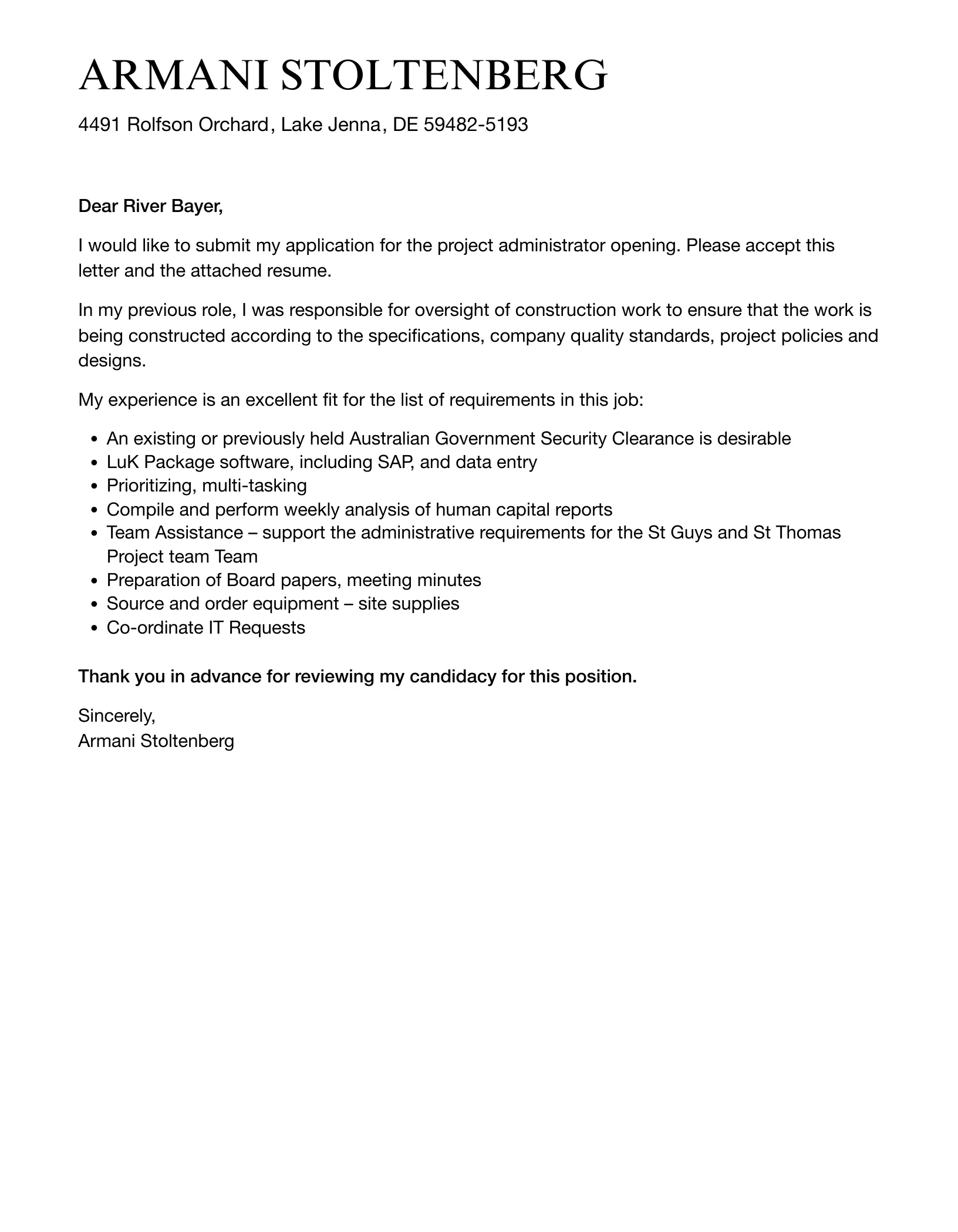
A project administrator cover letter is a critical document in your job application. It’s your chance to make a strong first impression and demonstrate why you’re the ideal candidate for the role. This guide provides a comprehensive approach to crafting a compelling cover letter, ensuring you effectively highlight your skills, experience, and enthusiasm for the position. By following these steps, you’ll significantly increase your chances of landing an interview and ultimately securing the job. Remember, a well-written cover letter is more than just a formality; it’s a powerful tool that can set you apart from other applicants.
Highlighting Your Skills in Project Administrator Cover Letter
Your project administrator cover letter should spotlight your key skills that align with the job requirements. Employers seek individuals with a blend of technical proficiency, interpersonal abilities, and organizational prowess. Focus on the skills most relevant to the specific job description, providing concrete examples of how you’ve utilized these skills in past roles. Quantify your achievements whenever possible to demonstrate the tangible impact you’ve made. This section details some crucial skills to feature in your cover letter.
Project Management Software Skills
Project administrators often use various project management software platforms. Showcase your proficiency with tools such as Microsoft Project, Asana, Jira, or similar software. Provide examples of how you’ve used these tools to manage project timelines, allocate resources, track progress, and generate reports. Mention specific features you’re adept at using, such as task assignment, Gantt charts, or budget tracking. Highlight your ability to adapt quickly to new software and leverage it to improve project efficiency.
Communication and Interpersonal Skills

Effective communication is crucial for a project administrator. Emphasize your ability to communicate clearly, both verbally and in writing, with team members, stakeholders, and upper management. Provide examples of how you’ve facilitated meetings, created project reports, and handled conflicts. Highlight your interpersonal skills, such as active listening, empathy, and the ability to build rapport. Showcasing your communication skills demonstrates your ability to collaborate effectively and ensure everyone is aligned.
Organizational and Time Management Skills
Project administrators must be highly organized and efficient in managing their time. In your cover letter, emphasize your ability to prioritize tasks, meet deadlines, and manage multiple projects simultaneously. Mention any organizational systems or methodologies you’ve used, such as Agile or Kanban, to streamline workflows. Provide examples of how you’ve successfully managed project schedules, budgets, and resources to deliver projects on time and within budget. Demonstrating these skills shows your capability to keep projects on track.
Demonstrating Relevant Experience
Your cover letter should clearly demonstrate your relevant experience. Instead of simply listing job duties, describe specific projects you’ve worked on and the responsibilities you held. Quantify your accomplishments whenever possible. For example, mention how you reduced project costs by a certain percentage, improved project completion rates, or successfully managed a project of a specific size or complexity. This approach provides tangible evidence of your capabilities and impact.
Structuring Your Project Administrator Cover Letter

A well-structured cover letter is easy to read and conveys your message effectively. Follow a standard format that includes a header with your contact information, a professional opening, a body highlighting your skills and experience, and a strong closing. This clear structure allows the hiring manager to quickly grasp your qualifications and how they align with the job requirements. Adhering to a logical structure ensures you present your best self in a professional manner.
Header and Contact Information
Start your cover letter with a header that includes your name, address, phone number, and email address. This information should be clearly displayed at the top of the page. Also, include the date and the recipient’s name, title, and company address. This section provides essential contact details and allows the hiring manager to easily reach you.
Opening Paragraph Capturing Attention
The opening paragraph is your opportunity to grab the reader’s attention. Start with a strong statement about your interest in the project administrator role and the company. Briefly mention how your skills and experience align with the job requirements. Avoid generic opening lines. Instead, make your introduction engaging and tailored to the specific position. This establishes your enthusiasm and sets the tone for the rest of your letter.
Body Paragraphs Showcasing Accomplishments

The body of your cover letter should highlight your key skills and accomplishments. Use separate paragraphs to discuss your relevant experience, skills, and achievements. Provide specific examples to illustrate your qualifications. Use action verbs to describe your roles and responsibilities. Be concise, focusing on the most pertinent information that demonstrates your ability to excel in the project administrator role. Focus on what you have achieved and the skills you have to offer.
Closing Paragraph Call to Action
Conclude your cover letter with a strong call to action. Reiterate your interest in the position and express your eagerness to discuss your qualifications in an interview. Thank the hiring manager for their time and consideration. Include a professional closing, such as “Sincerely” or “Best regards,” followed by your name and signature (if submitting a hard copy). This shows your professionalism and reinforces your commitment to the role.
Tailoring Your Project Administrator Cover Letter
Customizing your cover letter for each job application is essential. Generic cover letters are easily identified and often discarded. Tailoring your letter shows that you’ve taken the time to understand the specific requirements of the role and the company’s culture. This personalization significantly increases your chances of making a positive impression and securing an interview. Customizing your letter is not just a recommendation – it’s a requirement.
Researching the Company and Role

Before writing your cover letter, research the company and the specific project administrator role. Visit the company’s website, read about their mission, values, and recent projects. Understand the challenges the company faces and how your skills can contribute to their success. Analyze the job description carefully to identify the key requirements and expectations. This research informs your cover letter and ensures that you tailor your message to the employer’s needs.
Using Keywords from the Job Description
Carefully review the job description and identify relevant keywords. Incorporate these keywords naturally throughout your cover letter. This not only demonstrates that you possess the required skills but also helps your application get noticed by applicant tracking systems (ATS). Ensure that you don’t simply stuff keywords into your letter. Instead, use them strategically within your sentences to highlight your qualifications and experience.
Proofreading and Editing Your Cover Letter
Proofreading and editing your cover letter is crucial for ensuring it’s polished and professional. Errors in grammar, spelling, or punctuation can damage your credibility. Review your cover letter multiple times, and consider asking a friend or colleague to proofread it as well. Ensure that your letter is concise, well-organized, and free of any mistakes. A clean and error-free cover letter shows your attention to detail and commitment to excellence.
In conclusion, a well-crafted project administrator cover letter is a powerful tool in your job search. By highlighting your skills, demonstrating your relevant experience, structuring your letter effectively, and tailoring it to each job, you can significantly increase your chances of landing an interview. Remember to focus on your accomplishments and tailor your message to each specific job and company. By following these guidelines, you’ll be well-equipped to create a cover letter that gets you noticed and helps you achieve your career goals. Good luck with your job search!