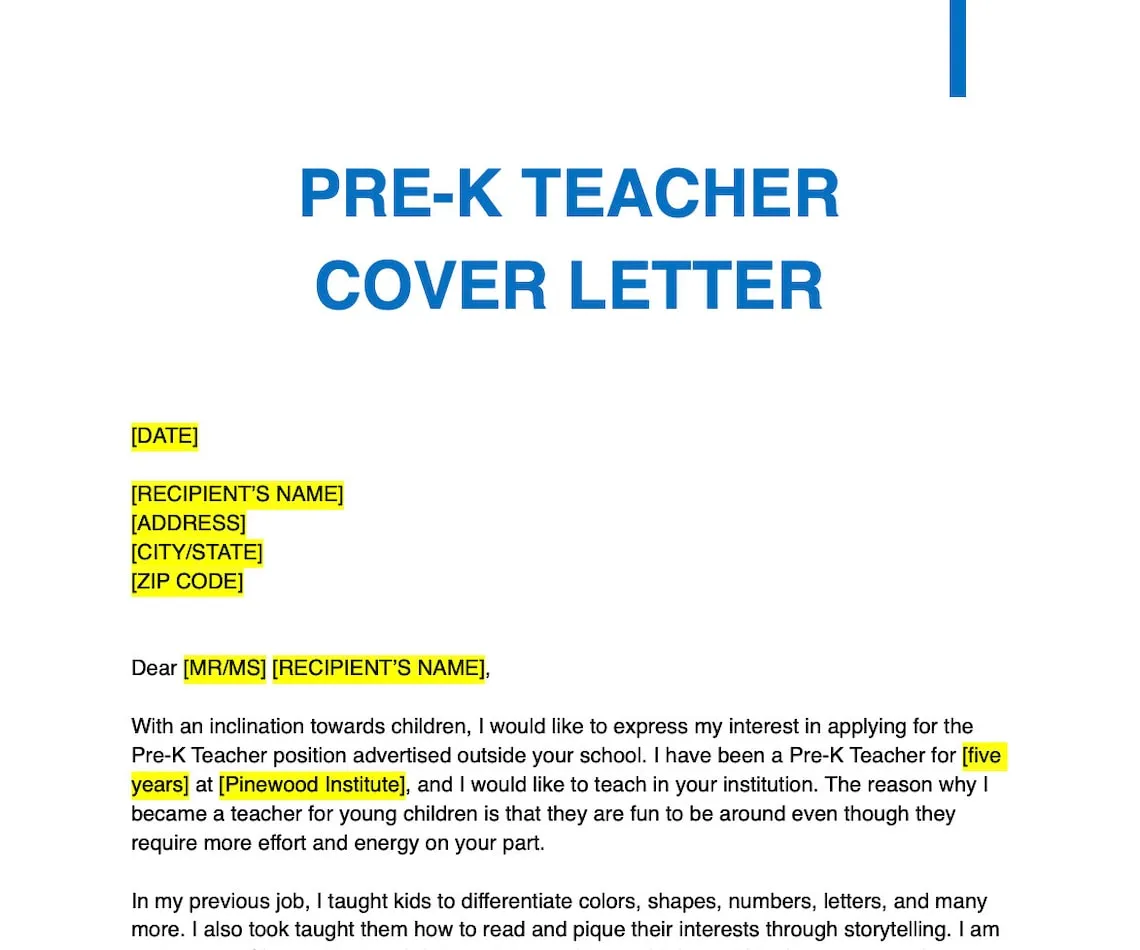
Crafting a Captivating Preschool Teacher Cover Letter
A well-crafted cover letter is your initial introduction to a potential employer and a critical component of any job application. As a preschool teacher, your cover letter presents a unique opportunity to showcase your passion, skills, and experience in early childhood education. It’s more than just a formality; it’s a chance to make a memorable first impression and distinguish yourself from other candidates. This guide will help you craft a cover letter that not only meets the basic requirements but also captivates the reader, highlighting your suitability for the position.
Understanding the Purpose of a Cover Letter
The primary purpose of a cover letter is to complement your resume. While your resume lists your qualifications and experience, the cover letter provides a narrative, allowing you to express your personality, enthusiasm, and specific reasons for applying. It’s your chance to tell a story, connecting your skills and experiences to the needs of the preschool and the role. The cover letter should demonstrate your understanding of the preschool’s mission and values, as well as your commitment to early childhood education.
Showcasing Your Passion for Early Childhood Education

Passion is a crucial element in early childhood education, and your cover letter is the perfect place to express it. Share what motivates you to work with young children. Do you love fostering a child’s curiosity, creativity, or social development? Do you believe in the power of play-based learning or the importance of creating a nurturing environment? Let your enthusiasm shine through by describing your teaching philosophy and how it aligns with the preschool’s values. Use specific examples that illustrate your commitment to child development.
Key Elements to Include in Your Cover Letter
A compelling cover letter includes several essential elements that work together to create a strong impression. Each element should be carefully considered and thoughtfully written. The goal is to provide a comprehensive overview of your qualifications and demonstrate how they match the preschool’s specific requirements. Remember, your cover letter should be tailored to the specific job and preschool you are applying to. This personalization shows you’ve taken the time to understand their needs.
Contact Information and Salutation
Begin your cover letter by providing your contact information, including your name, phone number, email address, and LinkedIn profile (if applicable). Always address the letter to a specific person, such as the hiring manager or the preschool director. If you can’t find a name, use a professional greeting like “Dear Hiring Manager” rather than a generic greeting. Research the preschool to find the right person to address, demonstrating your attention to detail and genuine interest in the position.
Highlighting Your Skills and Experience

Detail your relevant skills and experience in early childhood education. Mention any previous roles you’ve held, the age groups you’ve worked with, and your specific responsibilities. Focus on skills that are most relevant to the preschool’s needs, such as classroom management, curriculum development, communication with parents, and creating a safe and stimulating learning environment. Use action verbs to describe your accomplishments and quantify your achievements whenever possible (e.g., “Implemented a new reading program that improved student literacy scores by 15%”).
Mentioning Relevant Qualifications and Certifications
Clearly state your educational qualifications, including your degree(s) in early childhood education or a related field. List any certifications you hold, such as a teaching license, CPR certification, or any other relevant credentials. Specify any specialized training or experience you have, such as experience with specific teaching methodologies (Montessori, Reggio Emilia) or working with children with special needs. Include any professional development workshops or courses you’ve completed to enhance your skills.
Emphasizing Your Teaching Philosophy and Approach
Describe your teaching philosophy and how it aligns with the preschool’s values. Do you believe in a play-based approach? Are you passionate about creating a nurturing and inclusive environment? Explain how you create lesson plans, manage your classroom, and interact with children. Provide specific examples of your approach to teaching, such as how you handle conflicts, encourage creativity, or support each child’s individual learning style. Show that you understand and can implement the preschool’s educational approach.
Showcasing Your Accomplishments and Achievements

Go beyond simply listing your responsibilities. Highlight your accomplishments and achievements. What specific results have you achieved in your previous roles? Did you improve student outcomes, create innovative lesson plans, or enhance parent-teacher communication? Use quantifiable metrics and specific examples to demonstrate your impact. For instance, “Increased student participation in classroom activities by 20% through the implementation of engaging learning centers.”
Structuring Your Cover Letter for Maximum Impact
The structure of your cover letter is just as important as the content. A well-structured letter is easy to read and allows the hiring manager to quickly understand your qualifications and suitability for the role. Follow a clear, logical structure that includes an introduction, body paragraphs, and a conclusion. Each paragraph should have a clear purpose and contribute to the overall message. Make sure your letter flows seamlessly from one point to the next, creating a compelling narrative.
Formatting Your Cover Letter Professionally
Use a professional font, such as Times New Roman, Arial, or Calibri, in a readable size (11 or 12 points). Ensure your letter is well-formatted with clear headings, concise paragraphs, and appropriate spacing. Keep your cover letter to one page. Use bullet points or lists to highlight key skills or achievements. Proofread your letter carefully for any errors in grammar or spelling. Use a professional layout that is easy on the eyes and well-organized. Ensure consistent formatting throughout the document.
Using Action Verbs to Describe Your Accomplishments

Use action verbs to start each sentence when describing your accomplishments. Action verbs add energy and impact to your writing, making your achievements more compelling. For example, instead of saying “Responsible for managing the classroom,” say “Managed the classroom effectively, creating a supportive learning environment.” Other effective action verbs include “Developed,” “Implemented,” “Collaborated,” “Created,” “Improved,” “Led,” “Organized,” and “Achieved.”
Tailoring Your Cover Letter to Each Job Application
Customize each cover letter to match the specific requirements and values of the preschool you are applying to. Research the preschool’s mission, programs, and culture. Refer to the job description and highlight the skills and experiences that are most relevant to the position. Personalize your letter by mentioning something specific about the preschool that resonates with you, such as their focus on outdoor learning or their commitment to diversity and inclusion. Show that you understand their needs and that you’ve put in the effort to apply.
Reviewing and Proofreading Your Cover Letter
Before submitting your cover letter, review and proofread it carefully. Errors in grammar, spelling, or punctuation can detract from your professionalism and make a negative impression. Read your letter aloud to catch any awkward phrasing or unclear sentences. Ask a friend or family member to proofread your letter as well. Consider using a grammar checker tool to help identify any errors. A polished cover letter demonstrates attention to detail and professionalism.
Common Mistakes to Avoid in Your Cover Letter

Avoid common mistakes that can undermine your cover letter. These include generic language, vague statements, and errors in grammar or spelling. Don’t simply rehash your resume; instead, provide a narrative that expands on your qualifications. Avoid negative language or complaining about previous jobs. Don’t include irrelevant information or personal details. Proofread carefully to eliminate any typos or grammatical errors, which can make you seem inattentive to detail. Ensure your letter is positive, focused, and tailored to the specific job and preschool.
Ensuring Your Cover Letter is Free of Errors
Thoroughly proofread your cover letter for errors in grammar, spelling, and punctuation. Ensure that all names, dates, and other details are accurate. Check for consistency in formatting, such as font size, spacing, and indentation. Read your letter aloud to catch any awkward phrasing or unclear sentences. If possible, have a friend or career advisor review your cover letter for a fresh perspective. Using a grammar checker or proofreading software can also help you identify and correct errors efficiently. A polished and error-free cover letter demonstrates professionalism and attention to detail.
Providing a Strong Call to Action
End your cover letter with a strong call to action. Express your enthusiasm for the position and reiterate your interest in the preschool. Thank the hiring manager for their time and consideration. Include a statement about your availability for an interview and how they can best contact you. For example, “I am eager to discuss my qualifications further in an interview and can be reached at [phone number] or [email address].” A clear and direct call to action encourages the hiring manager to move forward with your application.