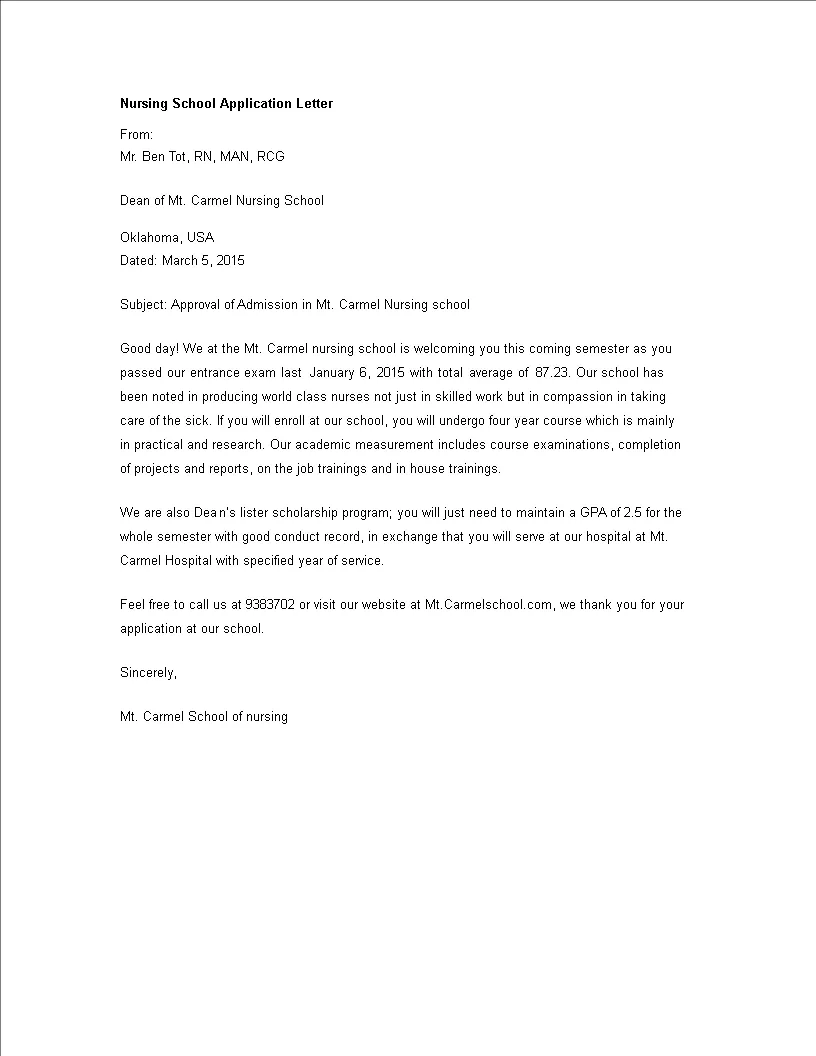
Why a Nursing School Application Cover Letter is Crucial
A well-crafted cover letter for your nursing school application is more than just a formality it is your first chance to make a positive impression and set yourself apart from other applicants. The cover letter serves as your personal introduction, giving you the opportunity to articulate your passion for nursing, showcase your relevant experiences, and highlight your unique qualifications. Unlike the standardized format of an application form or transcript, the cover letter allows you to express your personality and demonstrate your genuine interest in the field.
Highlighting Your Passion for Nursing
Your passion for nursing should be the cornerstone of your cover letter. Clearly articulate what sparked your interest in nursing and what motivates you to pursue this challenging yet rewarding career. This could stem from a personal experience, an inspiring encounter with a healthcare professional, or a deep-seated desire to care for others. Be specific and avoid generic statements. Instead, weave a narrative that demonstrates your emotional connection to nursing. Sharing a relevant anecdote can be very effective in this regard.
Showcasing Relevant Experiences

Nursing schools are looking for candidates who have a solid foundation of experience in healthcare or related fields. This can include volunteer work in hospitals or clinics, shadowing nurses, working as a certified nursing assistant (CNA), or any other experience where you have interacted with patients and the healthcare system. Detail your roles and responsibilities, emphasizing the skills you developed and the lessons you learned. Make sure to quantify your achievements whenever possible (e.g., “assisted in the care of 20+ patients daily”).
Academic Achievements to Feature
While your GPA and transcripts will speak for themselves, your cover letter can highlight specific academic achievements and coursework that are particularly relevant to nursing. If you excelled in science courses like biology, anatomy, or physiology, be sure to mention them. You can also discuss any research projects, presentations, or academic awards that demonstrate your intellectual curiosity and commitment to learning. Even if your GPA isn’t perfect, emphasizing your strengths in specific subjects can help to balance it.
The Importance of Tailoring Your Letter
Generic cover letters are easily spotted and often discarded. To truly impress the admissions committee, you must tailor your letter to the specific nursing school you are applying to. Research the school’s mission, values, and programs. If the school emphasizes community service, highlight your relevant volunteer experience. If the school has a strong research focus, mention any research experience you have. By demonstrating that you have taken the time to understand the school, you show genuine interest and a higher chance of being accepted.
Structuring Your Nursing School Application Cover Letter

Crafting a Compelling Opening
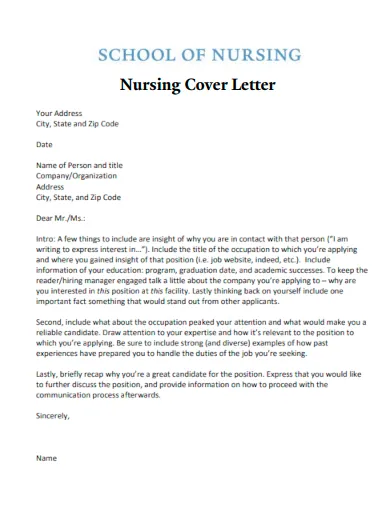
The opening of your cover letter is your first chance to grab the reader’s attention. Instead of a generic greeting, try starting with a hook a brief statement that highlights your passion for nursing or a key skill. Briefly introduce yourself and clearly state the position you are applying for (admission to the nursing program). If you have a personal connection to the school, mention it here. The opening sets the tone for the entire letter, so make it engaging and professional.
Developing Your Body Paragraphs
The body of your cover letter is where you elaborate on your experiences, skills, and qualifications. Each paragraph should focus on a specific aspect of your background. Use clear topic sentences to introduce the main idea of each paragraph. Provide concrete examples to support your claims. Use action verbs to describe your accomplishments (e.g., “managed,” “assisted,” “coordinated”). Keep your paragraphs concise and focused, and maintain a professional tone throughout.
Writing a Strong Closing

The closing paragraph should summarize your interest in the nursing program and reiterate your enthusiasm for the opportunity. Thank the admissions committee for their time and consideration. Clearly state your availability for an interview and provide your contact information. Reiterate your commitment to the program and your excitement about the prospect of contributing to the nursing profession. This is also a good place to politely express your appreciation.
Key Elements to Include
Demonstrating Clinical Skills and Knowledge
If you have any clinical experience, be sure to highlight the specific skills you developed. Mention any medical procedures you assisted with or performed. Focus on the skills and knowledge you have gained. Include any experience with patient assessment, medication administration, wound care, or other relevant skills. When mentioning skills, explain how you utilized them and the impact they had on patient care. Quantify these experiences whenever possible.
Highlighting Volunteer Work and Extracurriculars

Volunteer work and extracurricular activities are valuable indicators of your commitment to helping others and your ability to work in a team. Detail your involvement in any volunteer organizations, especially those related to healthcare. Describe your roles and responsibilities, highlighting any leadership positions you held. These activities also demonstrate your time management, teamwork, and communication skills. If you participated in any extracurricular activities, explain how they contributed to your personal growth and prepared you for a career in nursing. Make sure to highlight all relevant work experience.
Expressing Your Career Goals and Aspirations
Your cover letter should include a clear statement of your career goals and aspirations. Explain what type of nurse you aspire to be (e.g., critical care, pediatric, public health). Describe your long-term goals and how the nursing program will help you achieve them. Show that you have researched the profession and understand the various career paths available to nurses. Mention any specific areas of nursing you are particularly interested in. This shows that you are ambitious and have a clear vision for your future.
Essential Tips for Success
Proofreading and Editing for Perfection
Before submitting your cover letter, carefully proofread it for any grammatical errors, spelling mistakes, or typos. Read it aloud to catch any awkward phrasing or sentence structure issues. If possible, ask a friend, family member, or career counselor to review your letter and provide feedback. A polished and error-free cover letter is crucial for making a positive impression on the admissions committee. Ensure your language is clear, concise, and professional throughout the letter, this shows a very high level of commitment to detail.
Understanding the Nursing School Application Requirements
Carefully review the nursing school’s application requirements before you start writing your cover letter. Pay attention to any specific instructions or prompts provided by the school. If the school has a specific word count or formatting guidelines, adhere to them. Make sure your cover letter is tailored to the specific program, and that you address all the requirements outlined by the school. Your cover letter must complement the information present in your application to showcase your qualifications.
Showcasing Your Unique Strengths
What makes you unique? Your cover letter is the perfect place to showcase your personal strengths, qualities, and experiences that make you a good fit for the nursing program. Highlight any skills you have that are relevant to nursing, such as strong communication skills, empathy, problem-solving abilities, or the ability to work under pressure. Consider your personal experiences and how they have shaped you and prepared you for a career in nursing. Remember to be authentic and genuine throughout your letter.
Examples of Effective Cover Letter Phrases

Using effective phrases can make your cover letter stand out. Some examples include “I am passionate about,” “My experience has equipped me with,” and “I am eager to contribute to.” Use action verbs like “managed,” “coordinated,” “assisted,” and “developed.” These phrases can make your cover letter more engaging and help you highlight your qualifications. Tailoring the phrases to match your experiences and aspirations makes your letter more impactful and memorable. By using these phrases, you can make your writing sound more confident.
In conclusion, crafting a compelling cover letter is essential for your nursing school application. By highlighting your passion, experiences, academic achievements, and career goals, you can make a strong case for your admission. Remember to tailor your letter to each school, proofread it carefully, and showcase your unique strengths. A well-written cover letter is your chance to stand out from the crowd and demonstrate why you are the perfect candidate for the nursing program.