Understanding the Importance of a Nursing Cover Letter
In the competitive field of nursing, a well-crafted cover letter can be your golden ticket to securing your dream job. It’s more than just a formality; it’s your first chance to make a strong impression on potential employers. A compelling nursing cover letter acts as your personal introduction, allowing you to showcase your unique skills, experience, and passion for patient care. It complements your resume by providing context, elaborating on your qualifications, and highlighting what makes you the ideal candidate. A cover letter helps you to bridge the gap between your qualifications and the specific requirements of the job, increasing your chances of getting an interview and ultimately, the job offer. Crafting a great cover letter can be a significant step to success.
Why Is a Cover Letter Important for Nurses?
For nurses, the cover letter is a vital tool that helps to demonstrate your understanding of the healthcare landscape, your empathy, and your commitment to providing excellent patient care. It offers a platform to share stories that your resume cannot, illustrating your ability to connect with patients and work effectively within a team. Cover letters allow you to personalize your application, showing that you’ve taken the time to understand the specific needs of the healthcare facility and how your skills align with their mission. They enable you to address any potential gaps in your resume or to highlight a career change or specific training. This ensures your application stands out. In short, a well-written nursing cover letter is an indispensable component of your job application, and should not be skipped in order to maximize your chances of landing an interview.
What to Include in Your Nursing Cover Letter

Your Contact Information
Start your cover letter with your contact information at the top. This should include your full name, phone number, email address, and optionally, your LinkedIn profile URL. Ensuring your contact information is easily accessible is crucial, as it allows the hiring manager to reach you without any hassle. Use a professional-looking email address; avoid using nicknames or informal language. It’s also wise to double-check that the phone number you provide is correct and that you have a professional voicemail message set up. This part of the cover letter is simple, but it’s also vitally important to make sure they can easily contact you.
The Hiring Manager’s Information
Directly below your contact information, include the hiring manager’s information. If you know the name of the hiring manager, use it. Addressing your letter to a specific person shows that you’ve done your research and are personally invested in the position. If you’re unable to find the hiring manager’s name, use a general greeting like “Dear Hiring Manager”. Always include the healthcare facility’s name and address to ensure your letter is properly addressed. This small but significant step demonstrates professionalism and attention to detail. In the world of healthcare, attention to detail is critical, so demonstrating this upfront shows that you understand the needs of the profession.
The Introductory Paragraph

The opening paragraph should immediately grab the reader’s attention. Start by stating the position you are applying for and where you saw the job posting. Briefly mention your most relevant qualifications and why you are excited about this opportunity. Express your enthusiasm for the position and the healthcare facility. The goal of your introductory paragraph is to pique the hiring manager’s interest and encourage them to read the rest of your letter. This sets the tone for the rest of the letter. Keep the introduction concise, informative, and focused on the job requirements and your key strengths. Make them want to learn more about you.
Highlighting Your Skills and Experience
The body of your cover letter is where you showcase your skills, experience, and achievements. Focus on the most relevant aspects of your nursing background. Describe your experience in similar roles, highlighting any specializations or areas of expertise. Mention specific skills that match the job description, such as patient assessment, medication administration, wound care, or electronic health record (EHR) proficiency. Provide concise examples of how you’ve used these skills to positively impact patient outcomes or improve team efficiency. Tailor your examples to align with the specific requirements and values of the healthcare facility to show that you are a great fit.
Quantifying Your Achievements
Whenever possible, quantify your achievements to demonstrate your impact. Use numbers to illustrate your success. For instance, instead of saying “Improved patient satisfaction,” state “Increased patient satisfaction scores by 15% through implementing a new communication strategy.” Include specific examples of how you have reduced readmission rates, improved patient outcomes, or enhanced team performance. Providing measurable results adds credibility to your claims and showcases your value as a nurse. Quantifiable achievements make your application more compelling and demonstrate your ability to deliver results in a healthcare environment. Use numbers to make your letter stand out.
Showcasing Your Passion for Nursing

Expressing your passion for nursing is an essential part of your cover letter. Share what motivates you to pursue a career in healthcare and what aspects of nursing you find most rewarding. Discuss your commitment to patient care, your empathy, and your dedication to upholding ethical standards. Show how your values align with the healthcare facility’s mission and values. Mention any volunteer work, professional development activities, or other experiences that highlight your commitment to the nursing profession. Your enthusiasm will help you stand out, and will make the hiring manager see you as a positive force in the workplace. Show them you care about nursing and about patient well-being.
The Closing Paragraph
Conclude your cover letter with a strong closing paragraph. Reiterate your interest in the position and express your enthusiasm for the opportunity. Thank the hiring manager for their time and consideration. Clearly state your availability for an interview and how they can contact you. It’s also good practice to include a call to action, such as “I look forward to hearing from you soon.” Proofread your letter one last time before sending it. Your closing paragraph should leave a lasting positive impression and encourage the hiring manager to take the next step.
Formatting Your Nursing Cover Letter
Choosing the Right Font and Font Size

The formatting of your cover letter is crucial for readability and professionalism. Use a clean and readable font such as Times New Roman, Arial, or Calibri. Make sure the font size is between 10 and 12 points. Ensure that the font you choose is professional, and not something that will distract the hiring manager from reading the content of your letter. Avoid using overly stylized fonts or those that are difficult to read. Your cover letter should be easy on the eyes, which makes the process of reading and evaluating your skills easier for the hiring manager. A well-formatted cover letter is more likely to make a positive impression.
Proper Use of White Space
Proper use of white space is essential for a clean and organized appearance. Use single spacing within paragraphs and double spacing between paragraphs. Leave margins of at least one inch on all sides of the page. White space prevents your cover letter from looking cluttered and makes it easier to read. Ensure there is consistent spacing throughout the letter. Avoid overcrowding the text, as this can make the document look overwhelming. A well-formatted cover letter is easier to read and more inviting, which increases the likelihood of the hiring manager spending more time on your application. Adequate white space is a significant advantage for your application.
Proofreading and Editing
Always proofread your cover letter meticulously before submitting it. Check for grammatical errors, spelling mistakes, and punctuation errors. Review the content for clarity, conciseness, and coherence. Ask a friend or colleague to proofread your letter as well, as a second pair of eyes can catch errors you might have missed. Pay close attention to the formatting and ensure everything is aligned correctly. A polished cover letter demonstrates your attention to detail and commitment to professionalism, which is crucial for a nursing position. It also shows that you are careful, which is an important characteristic in healthcare, and makes a good first impression.
Customizing Your Letter for Each Job

Researching the Healthcare Facility
Before you start writing, research the healthcare facility and the specific role you’re applying for. Visit the facility’s website to learn about their mission, values, and recent initiatives. Pay attention to the specific requirements and preferences mentioned in the job description. Tailor your cover letter to the facility’s unique needs and culture. By demonstrating that you understand their goals and priorities, you increase your chances of making a strong impression. Tailoring your cover letter can show that you’ve taken the time to learn about the healthcare facility’s values and needs. This shows you’re not just sending a generic application, but that you are truly interested in the position.
Tailoring Your Letter to the Job Description
Carefully review the job description and identify the key skills and qualifications the employer is seeking. Highlight your relevant experience and achievements that align with those requirements. Use keywords from the job description throughout your cover letter, but avoid simply repeating the job description verbatim. Instead, explain how your skills and experience make you an ideal candidate for the specific position. Provide concrete examples to illustrate your abilities, and tailor your letter to reflect the specific needs of the role. You can use the job description to guide you through the application, ensuring your strengths match the requirements of the position. This way, you’re more likely to impress the hiring manager.
Sample Nursing Cover Letter

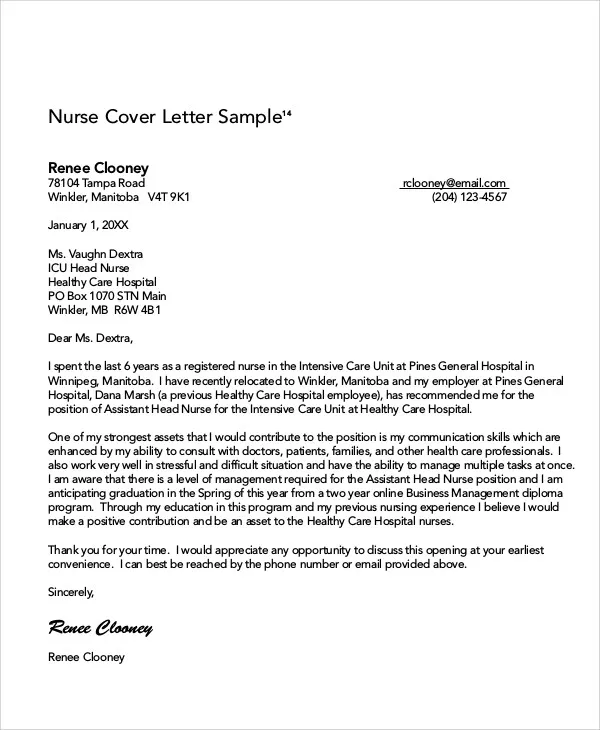
A well-crafted nursing cover letter should be tailored to the specific job you’re applying for, but generally include the applicant’s contact information, date, hiring manager’s information, salutation, a compelling introductory paragraph stating the role you’re applying for and your enthusiasm, 2-3 body paragraphs that highlight your relevant skills and experience (use action verbs and quantifiable achievements), a closing paragraph that reiterates interest and availability, and a professional closing and signature. The letter should emphasize your nursing skills, achievements, and passion, showcasing why you’re a good fit for the position and the healthcare facility. Using a sample cover letter can help you draft yours, but ensure that you customize it for the specific job. Make it your own.
Additional Tips for a Strong Nursing Cover Letter
Using Action Verbs
Use strong action verbs to describe your skills and accomplishments. Action verbs make your cover letter more dynamic and compelling. Instead of saying “Responsible for patient care,” use “Managed patient care effectively” or “Administered medications accurately.” Begin each bullet point or sentence about your accomplishments with an action verb to make your statements more impactful. This practice helps convey your abilities in an active and engaging way. Some good action verbs include: assessed, administered, coordinated, educated, implemented, managed, monitored, provided, and trained. Action verbs showcase your skills and experience effectively.
Highlighting Relevant Certifications

Highlight any relevant certifications or licenses in your cover letter. Certifications are important in nursing, and are indicators of your qualifications and expertise. For instance, if you have certifications such as Advanced Cardiac Life Support (ACLS), Basic Life Support (BLS), or a specific nursing specialty certification, be sure to mention them. Include the name of the certification, the issuing organization, and the expiration date if applicable. Highlighting your certifications demonstrates your commitment to professional development and your readiness to meet the demands of the role. This proves that you’ve met the requirements for the job and are qualified for the position.
Expressing Your Enthusiasm
Convey your genuine enthusiasm for the nursing profession and the specific opportunity. Share your passion for patient care and explain what motivates you to work in healthcare. Use language that reflects your positive attitude and your dedication to making a difference. Mention why you’re interested in the specific healthcare facility and how your values align with their mission. Enthusiasm can leave a lasting positive impression. It’s a good way to show the hiring manager that you are not just looking for a job, but a career, and that you’re committed to your patients. Show them you want to do your best.
In conclusion, a well-crafted nursing cover letter is a critical tool for showcasing your skills, experience, and passion. By understanding its importance, knowing what to include, formatting it correctly, and tailoring it to each job, you can significantly increase your chances of landing an interview and securing your desired nursing position. Remember to highlight your qualifications, quantify your achievements, and express your enthusiasm. Good luck with your job search!