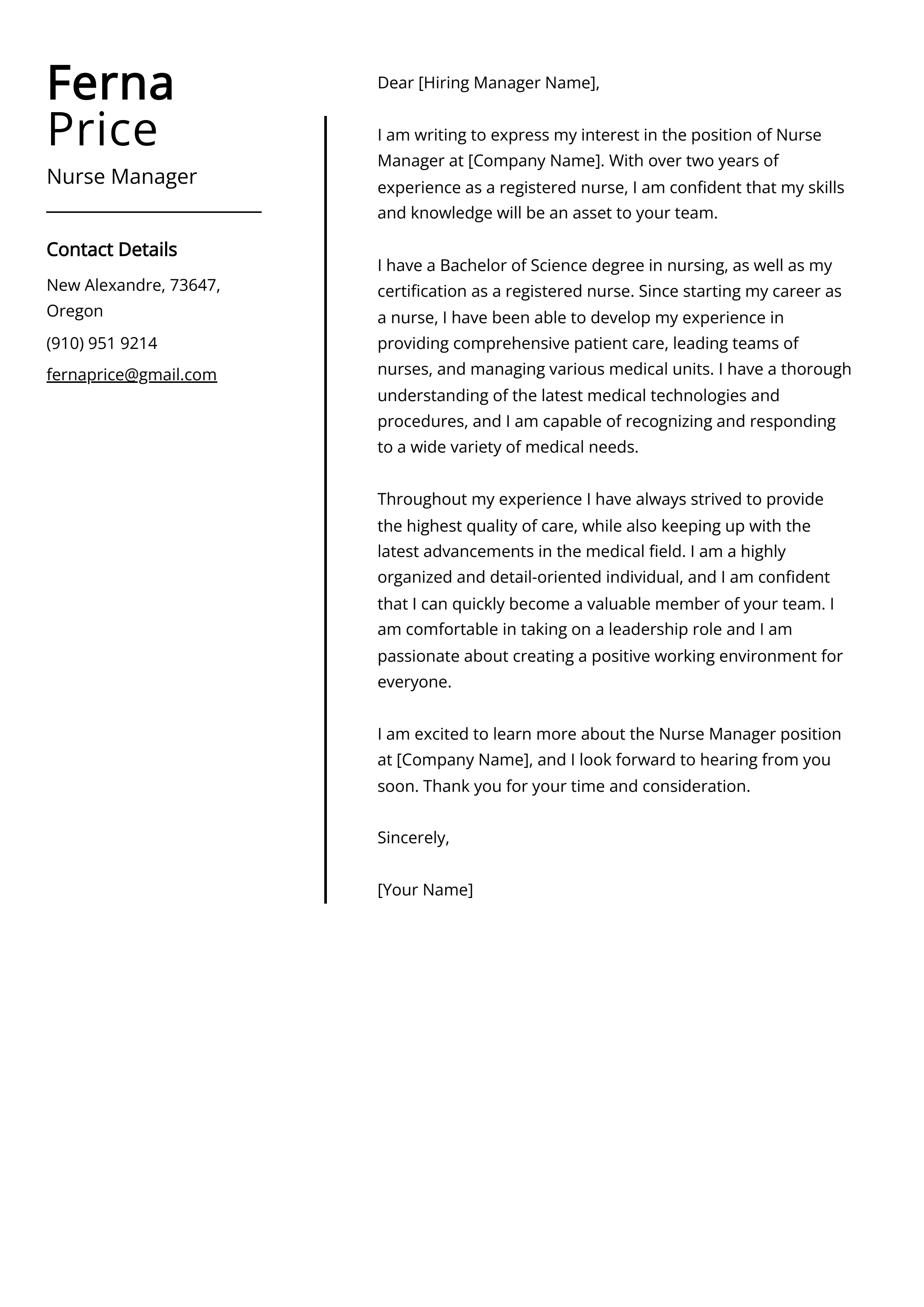
What is a Nurse Manager Cover Letter?
A nurse manager cover letter is a crucial document that accompanies your resume when applying for a nurse manager position. It serves as your first introduction to the hiring manager and provides an opportunity to highlight your skills, experience, and qualifications in a way that your resume may not fully capture. The cover letter allows you to express your enthusiasm for the role, showcase your leadership abilities, and demonstrate your understanding of the healthcare environment. It’s your chance to make a strong first impression and increase your chances of securing an interview. A well-crafted cover letter can set you apart from other applicants and position you as a top candidate for the job. Therefore, dedicating time and effort to create a compelling cover letter is essential for any nurse seeking a management role.
Essential Components of a Nurse Manager Cover Letter
A successful nurse manager cover letter incorporates several key components that work together to create a strong and persuasive application. Each element plays a vital role in showcasing your suitability for the position. By including all the essential parts, you ensure your cover letter is comprehensive and addresses the hiring manager’s needs. A well-structured cover letter will demonstrate your professionalism and attention to detail, both of which are highly valued in a leadership role. These components, when combined effectively, will significantly enhance your chances of being selected for an interview. Remember, the goal is to highlight your capabilities and make a positive impression.
Your Contact Information and Date

Start with your contact information at the top of the letter. This includes your full name, address, phone number, and email address. Ensure your email address is professional. Below your information, include the date you are writing the letter. This provides immediate access to your contact details and establishes the document’s timeline. This section is straightforward but critical for allowing the hiring manager to easily reach you. Accurate and up-to-date contact information is the first step in a professional cover letter and underscores your organizational skills.
Hiring Manager’s Contact Information
If possible, address the cover letter to a specific person. Research the hiring manager’s name and title and include their information directly below the date. Addressing your letter to the hiring manager shows that you have taken the time to do your research, and it also allows you to personalize your communication. Using the hiring manager’s name adds a personal touch that can make your application stand out. If you are unable to find a specific name, you may use the title of the position or the department, but always try to find the hiring manager’s name.
Professional Salutation
Use a professional salutation such as “Dear Mr./Ms./Dr. [Last Name]” or “Dear Hiring Manager”. Avoid using informal greetings such as “Hi” or “Hello”. A proper salutation sets a formal tone and shows respect for the recipient. Ensure you spell the name correctly and use the appropriate title (Mr., Ms., Dr.) to show professionalism and attention to detail. This opening sets the tone for the rest of your letter and indicates that you approach the application process seriously.
Opening Paragraph Grab Attention

The opening paragraph should immediately grab the reader’s attention. State the position you are applying for and briefly mention where you saw the job posting. Then, succinctly express your enthusiasm for the role and the organization. Consider highlighting one or two key achievements or skills that make you an ideal candidate. This initial paragraph should be a clear, concise introduction that captures the hiring manager’s interest and encourages them to read further. The opening is your chance to make a great first impression and encourage the reader to delve deeper into your qualifications.
Highlighting Your Skills and Experience
The main body of your cover letter should focus on highlighting your relevant skills and experience. This is where you showcase what you have to offer and how your qualifications align with the job requirements. Provide specific examples to demonstrate your abilities. Don’t just list your skills; illustrate them with specific instances of how you have utilized them in your previous roles. Focus on the skills and experiences that are most relevant to the nurse manager position, and always tailor your examples to meet the needs of the employer. This section should provide concrete evidence of your capabilities and leadership potential.
Leadership Abilities
As a nurse manager, leadership skills are essential. Highlight your ability to lead and motivate a team, manage conflict, and make critical decisions. Include examples of situations where you have successfully led a team to achieve specific goals or overcome challenges. Showcase your strategic thinking, your ability to set clear objectives, and your capacity to inspire others. Describe how you have fostered a positive work environment, improved team performance, and developed leadership skills within your staff. Demonstrate your ability to create a collaborative and supportive environment.
Clinical Expertise

Your clinical expertise is another important aspect of your qualifications. Mention your experience in patient care, specific medical specialties, and any certifications or advanced training you possess. Provide examples of how your clinical knowledge has benefited patients and improved healthcare outcomes. Highlight any areas where you have excelled, such as implementing new clinical protocols, improving patient safety, or enhancing the quality of care. Demonstrate your commitment to patient-centered care and your ability to provide exceptional clinical leadership.
Communication and Interpersonal Skills
Effective communication and interpersonal skills are critical for a nurse manager. Highlight your ability to communicate clearly and effectively with patients, staff, and other healthcare professionals. Mention your experience in resolving conflicts, providing constructive feedback, and fostering a collaborative work environment. Provide examples of how you have successfully managed difficult conversations, built strong relationships with team members, and facilitated effective communication across departments. Show your ability to listen actively, empathize with others, and communicate information clearly and concisely.
Quantifiable Achievements
Whenever possible, use quantifiable achievements to demonstrate your impact in previous roles. Instead of saying “improved patient satisfaction,” state “increased patient satisfaction scores by 15% in six months.” Provide specific numbers and data to showcase your accomplishments. This could include metrics related to patient outcomes, staff retention, cost savings, or process improvements. Using quantifiable data makes your accomplishments more compelling and demonstrates your ability to drive positive results. Provide concrete evidence of your ability to make a meaningful contribution to the organization’s success.
Showcasing Your Passion for Nursing

Express your passion for nursing and your commitment to healthcare. Share what motivates you to be a nurse manager and what you find rewarding about your profession. Explain why you are interested in working for this specific organization. Highlight your values and how they align with the organization’s mission and values. This personal touch makes your application more memorable and demonstrates your genuine enthusiasm for the role. Share any relevant volunteer work or personal experiences that have shaped your passion for nursing and healthcare leadership.
Closing Your Cover Letter
The closing of your cover letter should be professional and leave a lasting positive impression. This is your final chance to reiterate your interest and emphasize why you are the best candidate for the position. A well-crafted closing can significantly influence the hiring manager’s decision. By incorporating specific elements, you can ensure that your conclusion reinforces your qualifications and increases your chances of getting an interview.
Expressing Gratitude
Begin by expressing your gratitude for the hiring manager’s time and consideration. Thank them for reviewing your application and acknowledging their efforts. This shows respect and professionalism. Expressing your appreciation sets a positive tone and makes the reader feel valued. A simple “Thank you for your time and consideration” is appropriate and demonstrates good manners.
Call to Action

Include a clear call to action. State that you are eager to discuss your qualifications further and are available for an interview. Provide your contact information again, making it easy for the hiring manager to reach you. Express your enthusiasm for the opportunity and reiterate your interest in the position. This direct approach encourages the hiring manager to take the next step in the hiring process. A clear call to action increases the likelihood of a prompt response.
Formatting and Design Tips
The formatting and design of your cover letter are just as important as the content. Proper formatting ensures that your letter is easy to read and visually appealing, enhancing your professional image. By paying attention to these details, you present yourself as organized and detail-oriented. A well-formatted cover letter will make a positive impression and help you stand out among other applicants.
Font and Readability
Choose a professional and easy-to-read font, such as Times New Roman, Arial, or Calibri. Use a font size between 10 and 12 points. Ensure the font is consistent throughout the entire letter. The font choice influences the readability of your cover letter, which is crucial for the hiring manager to easily absorb the information. Clean and readable fonts make your letter more approachable and professional.
Length and Structure

Keep your cover letter concise, ideally one page in length. Use a clear structure with distinct paragraphs and sections. Break up large blocks of text with bullet points to highlight your key accomplishments. A well-structured letter is easier to follow and allows the hiring manager to quickly grasp the important information. Use concise language and avoid unnecessary jargon or overly complex sentences. A well-organized letter shows your ability to communicate effectively.
Proofreading and Editing
Proofread your cover letter carefully for any typos, grammatical errors, or inconsistencies. Use a grammar checker tool, and have someone else review your letter to catch any mistakes you might have missed. Accurate grammar and spelling demonstrate your attention to detail and your professionalism. Errors can detract from your credibility. Taking the time to proofread your cover letter is essential for a polished and professional presentation.
Mistakes to Avoid
Avoid common mistakes to ensure your cover letter makes a positive impact. Common errors can undermine your application and leave a negative impression. By being aware of these pitfalls, you can significantly improve your chances of success. Pay attention to these common missteps to ensure your cover letter is as effective as possible, leading to a higher likelihood of getting hired.
Generic Content

Avoid using generic, one-size-fits-all content. Tailor your cover letter to each specific job application, highlighting the skills and experiences most relevant to the position. Generic letters show a lack of genuine interest in the specific job and organization. Tailor the letter to reflect the particular requirements and culture of the employer. This demonstrates that you have taken the time to understand the role and the company.
Typos and Grammatical Errors
Typos and grammatical errors can damage your credibility and make you appear careless. Always proofread your letter carefully, and consider using a grammar checker. These errors reflect poorly on your attention to detail, which is a critical skill for a nurse manager. A polished cover letter signals professionalism and a commitment to quality. Ensure that your cover letter is error-free before submitting it.
Exaggerating Accomplishments
Avoid exaggerating your accomplishments or making claims that are not true. Be honest and accurate in your representation of your skills and experience. Exaggerations can be easily uncovered during the interview or reference checks. Presenting yourself honestly builds trust and enhances your professional reputation. Emphasize your actual achievements and strengths with confidence.
Tailoring Your Cover Letter
Customizing your cover letter for each job application is crucial for demonstrating genuine interest and highlighting your relevant qualifications. A tailored cover letter shows the employer that you have invested time and effort in understanding their specific needs. This personalization significantly increases your chances of being selected for an interview. Taking the time to customize your application helps you stand out from the competition.
Researching the Employer
Before writing your cover letter, research the employer and the specific job requirements. Understand the organization’s mission, values, and goals. This information will enable you to tailor your letter to demonstrate how your skills and experience align with their needs. This research will also help you identify key phrases and keywords to incorporate into your cover letter. This proactive approach will make your application more compelling and relevant.
Matching Skills to Job Requirements
Carefully review the job description and identify the key skills and qualifications the employer is seeking. Highlight your relevant skills and experiences that match those requirements. Use keywords from the job description to make your application more easily searchable by applicant tracking systems. Emphasize your specific skills and achievements that are most relevant to the advertised position. This targeted approach will demonstrate how you can meet the needs of the employer.
Review and Submission
Before submitting your nurse manager cover letter, conduct a final review to ensure it is polished, professional, and tailored to the specific job. This final step is critical for catching any errors and ensuring your application makes a strong impression. Taking this extra time can significantly enhance your chances of moving forward in the hiring process. Ensure your application is the best it can be before submitting.
Reviewing for Accuracy and Clarity
Carefully review your cover letter for accuracy, clarity, and coherence. Check for any typos, grammatical errors, or inconsistencies. Ensure that your letter is well-organized and easy to read. Read your letter out loud to catch any awkward phrasing or unclear statements. Accuracy and clarity will improve your professionalism. Make sure your message is clear and effectively communicates your qualifications.
Seeking Feedback
Ask a trusted friend, colleague, or career advisor to review your cover letter and provide feedback. A second set of eyes can help identify any areas that need improvement. Their feedback can offer valuable insights. Ask for constructive criticism regarding clarity, content, and overall impact. Use the feedback to refine your cover letter and make it more effective.
Submitting Your Cover Letter
Submit your cover letter and resume in the formats requested by the employer. If no specific format is specified, submit them in a professional format such as PDF or DOCX. Ensure your contact information is accurate. Following these guidelines shows attention to detail and enhances your professionalism. Confirm that your application has been successfully submitted before moving on to other opportunities.