Medical Assistant Cover Letter Essentials
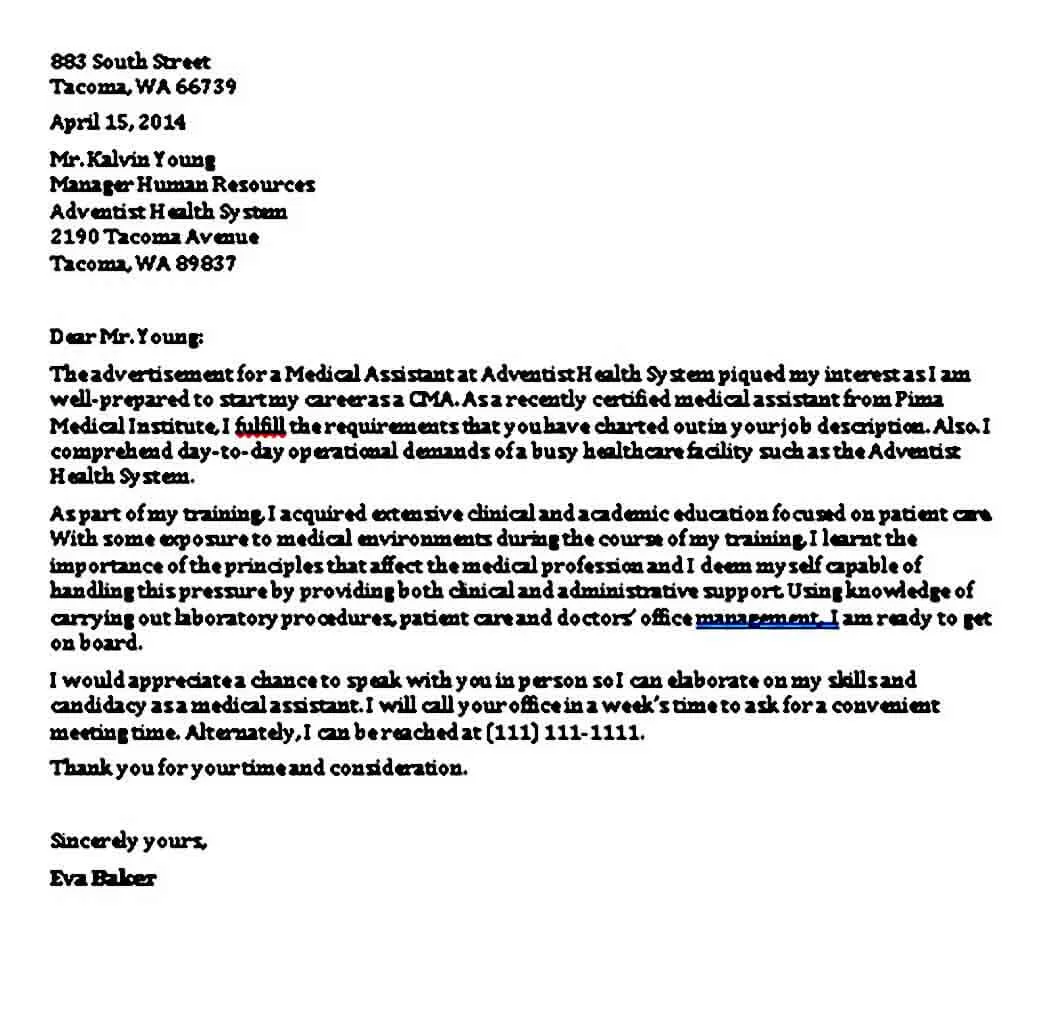
A well-crafted medical assistant cover letter is your first impression, setting the tone for your application. It’s not just a formality; it’s a vital tool that allows you to showcase your skills, experience, and personality in a way that a resume alone cannot. This guide will provide you with a comprehensive template, offering essential advice and proven strategies to help you create a compelling cover letter that will get you noticed and, ultimately, land you an interview. A strong cover letter demonstrates your interest in the specific medical assistant position and the healthcare facility, giving you an edge over other applicants. Understanding the essential components of a cover letter and tailoring them to your unique background is crucial for success.
Contact Information
Begin your cover letter with clear and accurate contact information. This section should be easy to find, usually located at the top of the page. Providing this information ensures that the hiring manager can easily reach you if they’re interested in your application. Accurate contact details are a fundamental aspect of a professional cover letter, making it easy for potential employers to reach you without confusion.
Your Information

Start with your full name, address, phone number, and professional email address. Ensure your email address sounds professional; avoid using nicknames or casual language. Double-check all information for accuracy to prevent any miscommunication. It’s essential to present yourself professionally from the very beginning.
Recipient Information
Directly below your information, include the name of the hiring manager, their title, the name of the clinic or hospital, and their address. Researching the hiring manager’s name demonstrates your initiative and attention to detail. If you can’t find the hiring manager’s name, use a professional title such as ‘Hiring Manager’ or ‘Human Resources Department’. Addressing the letter to a specific person always creates a more personal connection.
Professional Greeting
The greeting sets the tone for the entire letter. Use a formal salutation like ‘Dear Mr./Ms./Mx. [Last Name]’ if you know the hiring manager’s name. If you don’t know the name, ‘Dear Hiring Manager’ is perfectly acceptable. Avoid overly casual greetings such as ‘Hi’ or ‘Hello.’ The greeting should be professional and respectful, showing that you understand workplace etiquette.
Writing an Impressive Opening

Your opening paragraph is crucial. It’s the first thing the hiring manager reads, and it should immediately grab their attention. Clearly state the position you’re applying for and, if applicable, how you learned about the opening. Briefly mention why you’re a strong candidate, highlighting a key skill or experience relevant to the role. Expressing enthusiasm and demonstrating that you’ve researched the clinic or hospital can set you apart. Make sure to keep the opening concise, focused, and compelling. This will get the hiring manager invested in reading the rest of your letter.
Highlighting Relevant Skills and Experience
The body of your cover letter is where you demonstrate how your skills and experience align with the job requirements. Review the job description carefully and identify the key skills and qualifications the employer is seeking. Provide specific examples of how you’ve used these skills in previous roles. Instead of merely listing your responsibilities, focus on what you achieved and the results you delivered. Quantify your achievements whenever possible to make your accomplishments more impactful. This will help the hiring manager see your value to their team.
Medical Assistant Skills to Showcase
Emphasize skills that are most relevant to the medical assistant role. These might include clinical skills (taking vital signs, assisting with examinations), administrative skills (scheduling appointments, managing patient records), and soft skills (communication, empathy). Tailor your examples to demonstrate how you’ve effectively utilized these skills in your previous roles. For instance, mention how you’ve improved patient satisfaction, streamlined administrative processes, or handled challenging patient interactions. Include skills specific to the medical field to show you’re an ideal candidate.
Quantifying Achievements

Use numbers and data to illustrate your accomplishments. Instead of saying you ‘managed patient records,’ state that you ‘managed patient records for an average of 50 patients daily, ensuring 100% accuracy.’ Instead of saying you ‘improved patient communication,’ state that you ‘improved patient satisfaction scores by 15% through enhanced communication strategies.’ Quantifiable achievements add credibility to your claims and make your cover letter much more impactful. When possible, use specific numbers and data to back up your claims.
Demonstrating Passion and Enthusiasm
Your cover letter should convey your genuine interest in the medical assistant role and the healthcare facility. Explain why you’re passionate about healthcare and why you’re excited about this specific opportunity. This could include mentioning the clinic’s mission, its values, or a specific aspect of its work that resonates with you. Show your enthusiasm for working with patients and contributing to their well-being. Demonstrating your passion will make you a more memorable candidate and show the hiring manager you’re invested in the position.
Closing the Cover Letter
Your closing paragraph should summarize your key qualifications and reiterate your interest in the position. Thank the hiring manager for their time and consideration. This section serves as a reminder of why you’re a great fit for the role and the company. A strong closing leaves a positive final impression. The closing paragraph must be concise, and the focus must be on reiterating your interest.
Expressing Gratitude and Offering Availability

Thank the hiring manager for considering your application. State that you’re available for an interview and provide your contact information again, if you wish. Express your willingness to discuss your qualifications further and reiterate your enthusiasm for the opportunity. Clearly state your availability for an interview to make the hiring process easier. A brief and courteous message of appreciation is a perfect way to end your cover letter.
Formal Closing and Signature
Use a formal closing such as ‘Sincerely,’ ‘Best regards,’ or ‘Respectfully.’ Leave space for your signature (if submitting a printed letter) and then type your full name below. If submitting electronically, you may include your typed name only. Ensure your signature is legible and professional. A professional closing reinforces the tone of your letter and leaves a lasting positive impression.
Proofreading and Formatting
Proofreading and formatting are essential for a professional-looking cover letter. Before submitting your letter, carefully review it for any grammatical errors, typos, or formatting inconsistencies. Use a clear and easy-to-read font, such as Times New Roman, Arial, or Calibri, with a font size between 10 and 12 points. Ensure consistent spacing and margins throughout the document. Consider having a friend or career advisor proofread your letter to catch any errors you may have missed. A polished, error-free cover letter demonstrates attention to detail and professionalism.
In conclusion, writing a strong medical assistant cover letter involves focusing on your skills, quantifying your achievements, and conveying your passion for healthcare. By following these guidelines and tailoring your letter to each specific job application, you can significantly increase your chances of securing an interview and landing your dream job as a medical assistant.