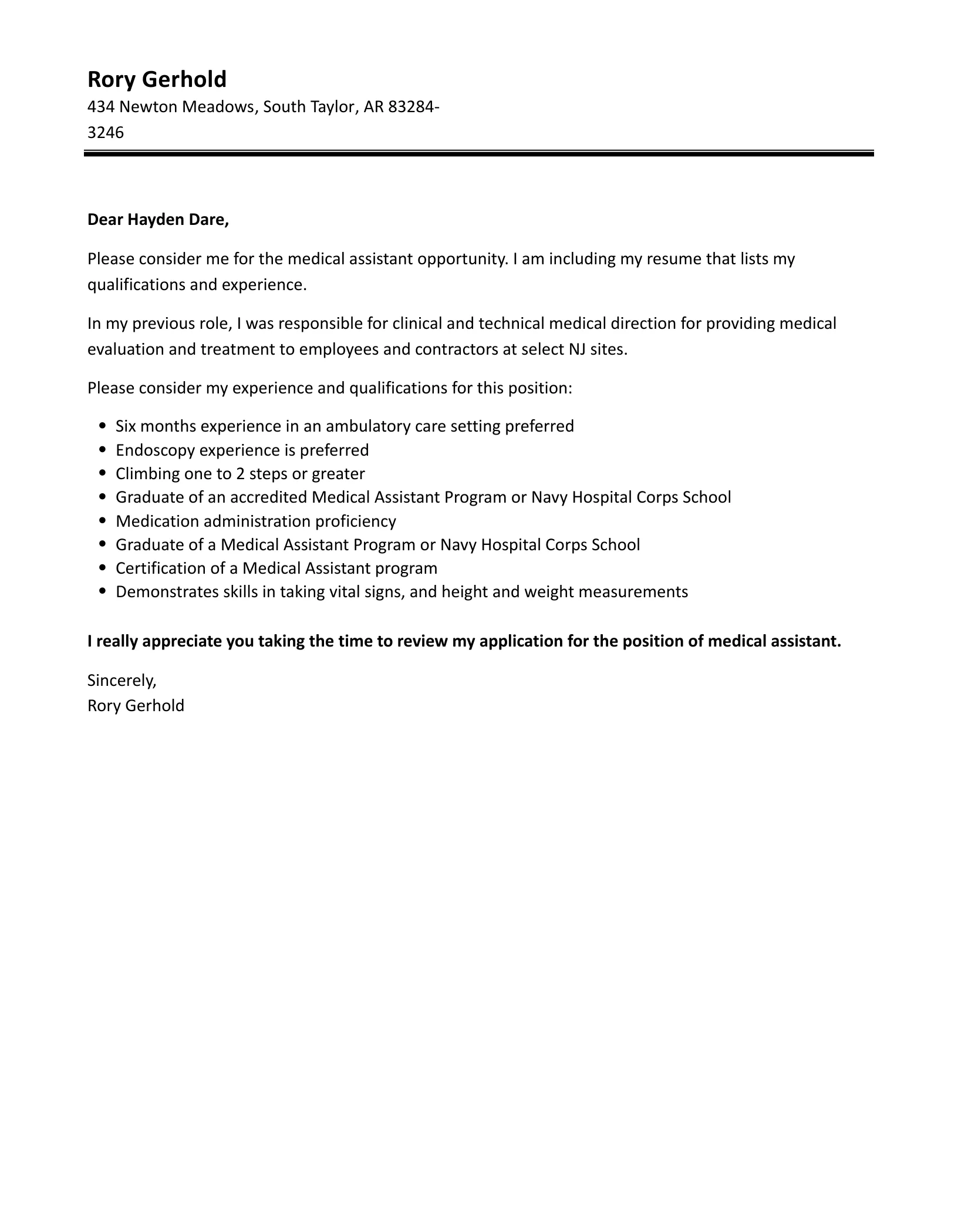
Medical Assistant Cover Letter How-To Guide
A well-crafted cover letter is a critical component of your job application, especially when applying for a Medical Assistant position. This guide provides a comprehensive overview of how to write a compelling cover letter that captures the attention of potential employers. It will cover everything from understanding the importance of a cover letter to formatting, customization, and common pitfalls to avoid. By following these guidelines, you can significantly increase your chances of landing an interview and securing your desired Medical Assistant role.
Understanding the Importance of a Medical Assistant Cover Letter
In the competitive field of healthcare, a cover letter serves as your personal introduction to a potential employer. It is your opportunity to showcase your personality, highlight your relevant skills, and demonstrate your genuine interest in the position and the organization. Unlike a resume, which provides a static overview of your experience, a cover letter allows you to weave a narrative that connects your qualifications to the specific requirements of the job.
Why a Cover Letter is Essential

A cover letter is essential because it provides context to your resume. It allows you to explain any gaps in your employment history, elaborate on your skills and achievements, and express your passion for the medical field. It is also a great way to demonstrate your communication skills, attention to detail, and professionalism. A strong cover letter can set you apart from other candidates and make a positive first impression.
What Employers Look For
Employers look for candidates who not only possess the necessary skills and qualifications but also demonstrate a genuine interest in the position and the organization. They want to see that you have researched the company and understand its mission and values. They are also looking for candidates who can communicate effectively, are detail-oriented, and possess strong interpersonal skills. The cover letter is your chance to communicate these qualities and show why you are the best fit for the role.
Key Components of a Medical Assistant Cover Letter
A well-structured cover letter should include several key components to effectively communicate your qualifications and interest in the position. Each section plays a vital role in showcasing your strengths and making a compelling case for why you should be hired. Pay close attention to each element to create a cover letter that makes a lasting impression.
Contact Information & Greeting

Start with your contact information, including your name, phone number, email address, and optionally, your LinkedIn profile. Following this, address the hiring manager directly, if possible. Research the name of the hiring manager on the company website or LinkedIn. If you can’t find a specific name, use a professional greeting like ‘Dear Hiring Manager’ or ‘Dear [Department Name] Team’.
Opening Paragraph Grabbing Attention
The opening paragraph is your opportunity to grab the reader’s attention. Briefly state the position you are applying for and where you saw the job posting. Express your enthusiasm for the opportunity and the organization. Consider including a brief statement about your most relevant skill or achievement to immediately capture their interest. Your goal is to make the hiring manager want to keep reading.
Highlighting Skills & Experience
This is the core of your cover letter. Describe your relevant skills and experience, emphasizing those that align with the job description. Use specific examples to illustrate your abilities. Instead of simply listing your duties, provide details on how you excelled in previous roles. Quantify your achievements whenever possible, for example, by stating the number of patients you assisted or the efficiency improvements you implemented. Tailor this section to the specific requirements listed in the job posting.
Quantifying Achievements

Quantifying your achievements makes your cover letter more impactful. Instead of saying ‘Improved patient flow,’ state, ‘Implemented a new scheduling system that improved patient flow by 15%.’ Use numbers, percentages, and specific data to demonstrate your accomplishments and the value you brought to previous positions. This helps employers visualize your potential contributions to their team.
Showcasing Relevant Certifications & Training
Include any relevant certifications, such as Certified Medical Assistant (CMA) or Registered Medical Assistant (RMA). Highlight any specialized training you have received, such as experience with electronic health records (EHR) systems, phlebotomy, or EKG procedures. Always mention any continuing education or professional development courses that demonstrate your commitment to staying current in the field. This demonstrates that you are up-to-date with industry standards.
Expressing Enthusiasm & Fit
Express your genuine interest in the specific organization and the position. Explain why you are drawn to the company’s mission, values, or culture. If you have researched the company, mention something specific that resonates with you. Briefly explain how your skills and experience align with the company’s needs and how you can contribute to their success. This shows that you have done your homework and are truly interested in the role.
Closing the Letter & Call to Action

End your cover letter with a strong closing paragraph. Reiterate your interest in the position and thank the hiring manager for their time and consideration. Include a clear call to action, such as stating that you are available for an interview and providing your contact information again. Use a professional closing, such as ‘Sincerely’ or ‘Best regards,’ followed by your typed name.
Formatting & Style for a Medical Assistant Cover Letter
The formatting and style of your cover letter can significantly impact its readability and professionalism. Following best practices in layout, font selection, and proofreading is crucial to ensure your application makes a positive impression. A well-formatted letter reflects attention to detail and professionalism, qualities highly valued in medical settings. Pay attention to these details.
Font and Layout Best Practices
Use a clean, professional font such as Times New Roman, Arial, or Calibri, with a font size between 10 and 12 points. Ensure your letter is well-structured with clear headings, paragraphs, and sufficient white space. Use left alignment, and avoid excessive use of bolding or italics. Keep your letter concise, ideally within one page. A well-organized layout makes your cover letter easier to read and comprehend.
Proofreading and Editing for Errors

Thoroughly proofread your cover letter for any spelling, grammar, or punctuation errors. These errors can create a negative impression and undermine your credibility. Use spell-check and grammar-check tools, but also read your letter aloud to catch any mistakes. Consider having a friend or family member review your letter as a second pair of eyes. Accuracy is essential in healthcare, so make sure your cover letter is flawless.
Customizing Your Cover Letter for Each Application
Generic cover letters are unlikely to impress hiring managers. Customize each cover letter to the specific job and the organization. Tailoring your letter shows that you are genuinely interested in the position and have taken the time to understand the employer’s needs. This personalized approach is vital to stand out from the competition. Customization demonstrates your commitment to the opportunity.
Researching the Employer and Position
Before writing your cover letter, research the employer and the specific Medical Assistant position. Visit the company’s website to learn about its mission, values, and services. Review the job description carefully to identify the key skills, qualifications, and responsibilities. Understanding the employer’s needs is essential for tailoring your cover letter effectively. Understanding the company culture is important.
Tailoring Content to Match Job Requirements

Use the job description to identify the keywords and phrases that the employer values. Incorporate these keywords into your cover letter, highlighting your relevant skills and experience. Provide specific examples that demonstrate how you have met the requirements outlined in the job description. This targeted approach shows the employer that you are a strong fit for the position.
Medical Assistant Cover Letter Examples
Reviewing cover letter examples can provide valuable guidance in crafting your own. Here are examples tailored for different experience levels and specializations, to help you get started. Note that these are just examples and you’ll need to tailor them to your unique circumstances.
Example 1 Entry-Level Medical Assistant
For entry-level positions, emphasize your education, certifications, and any relevant volunteer or internship experience. Highlight your eagerness to learn and your strong interpersonal skills. Demonstrate your understanding of medical terminology and patient care. Focus on your ability to adapt and your willingness to take on new challenges. Show them you’re ready to begin your medical assistant career.
Example 2 Experienced Medical Assistant
If you have years of experience, focus on quantifiable achievements and specific skills. Highlight your experience with various medical procedures, electronic health records, and patient management systems. Showcase your leadership skills, such as training new employees or managing patient flow. Emphasize your ability to handle complex situations and contribute to a positive work environment. Demonstrate your value to the company.
Example 3 Medical Assistant with Specialization
If you have a specialization, such as phlebotomy, cardiology, or pediatrics, highlight your specific skills and experience in that area. Tailor your cover letter to match the requirements of the specialized role. Demonstrate your expertise and any relevant certifications. Showcase your ability to provide specialized care and contribute to the team. Make sure your cover letter matches the requirements.
Common Mistakes to Avoid in a Medical Assistant Cover Letter
Avoid these common mistakes to make sure your cover letter is effective. Failing to avoid these errors could seriously undermine your application.
Generic Cover Letters
Do not send a generic cover letter that is not customized for the specific job. Tailor your letter to the employer and the position. Generic cover letters do not show that you are seriously interested in the job.
Focusing Solely on Duties
Avoid simply listing your job duties. Instead, focus on your accomplishments and how you have exceeded expectations in previous roles. Provide specific examples of your achievements and quantify your results whenever possible. Show them what you brought to the table.
Ignoring the Employer’s Needs
Do not ignore the employer’s needs and the requirements of the job description. Tailor your cover letter to address the specific needs of the organization and the position. Research the company and demonstrate that you understand their mission and values. Show them you understand their needs and you can help meet them.
Conclusion
By following these guidelines, you can create a compelling Medical Assistant cover letter that showcases your skills, experience, and enthusiasm for the role. Remember to tailor your letter to each job application, proofread carefully, and highlight your unique qualifications. A well-crafted cover letter is a crucial step in landing your dream job in the medical field. Good luck with your job search!