Understanding the Importance of a Cover Letter
In the competitive landscape of job applications, a well-crafted cover letter is your first opportunity to make a positive impression. It serves as more than just a formality; it’s a crucial tool that can significantly impact your chances of securing an interview. Many job seekers underestimate the power of a cover letter, viewing it as a redundant document when submitting a resume. However, a compelling cover letter allows you to highlight your skills, experience, and personality in a way that a resume alone cannot. It provides context, demonstrates your understanding of the role and company, and showcases your enthusiasm for the opportunity. Consider it your personal sales pitch, designed to capture the attention of the hiring manager and persuade them to learn more about you.
Why a Cover Letter Matters
A cover letter provides an opportunity to explain why you’re a good fit for the job, going beyond the basic details listed on your resume. It allows you to tell a story, connecting your past experiences to the requirements of the role and the needs of the company. A strong cover letter demonstrates your communication skills, professionalism, and attention to detail, all of which are highly valued by employers. By addressing the specific needs of the employer and showing that you’ve researched the company, you distinguish yourself from other applicants who may be using generic applications. In essence, the cover letter allows you to control the narrative and present yourself as the ideal candidate, increasing your chances of getting noticed and advancing in the hiring process.
Key Elements of a Strong Cover Letter

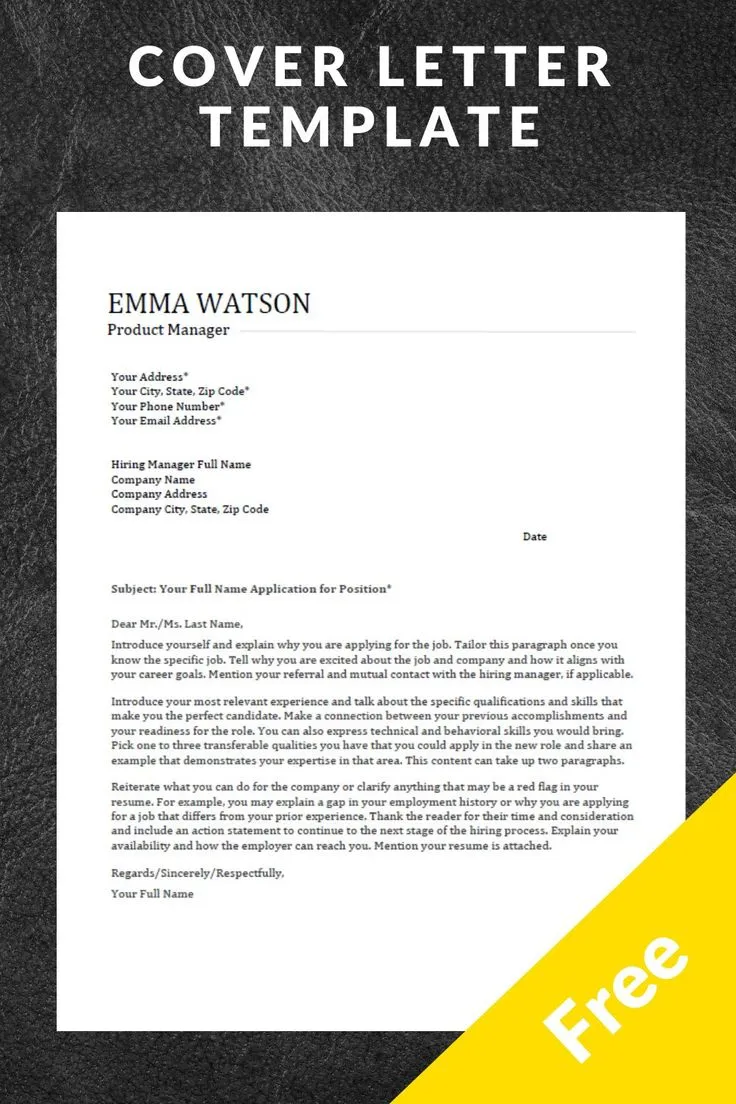
A well-structured cover letter follows a clear and concise format, typically including a header, greeting, introduction, body paragraphs, and closing. Each section plays a vital role in conveying your qualifications and interest. The header should contain your contact information, ensuring the hiring manager can easily reach you. The greeting should be personalized, ideally addressed to the hiring manager by name. The introduction should grab their attention, explaining why you’re excited about the role. The body paragraphs should highlight your relevant skills and experience, using specific examples to showcase your achievements. The closing should express your gratitude, reiterate your interest, and provide a clear call to action, such as requesting an interview.
Header Section
The header is the top section of your cover letter. It should include your full name, phone number, email address, and optionally, your LinkedIn profile URL. This information allows the hiring manager to easily contact you if they decide to move forward with your application. Ensure that your contact information is up-to-date and professional. Consider using a professional email address and double-check that your phone number is correct. The header should be clearly formatted and easy to read, typically aligned to the left or right side of the page. The header is your initial introduction, so it’s important to get it right and make a positive impression.
Personal Contact Information
Your personal contact information is a critical component of the header. It should include your full name, ensuring clarity for the hiring manager. Following this, include your phone number, which is essential for direct communication. Next, provide your email address; use a professional-sounding one. Lastly, adding your LinkedIn profile URL is a modern touch that allows employers to quickly access your online professional presence. All of these details should be presented neatly, typically using a simple and legible font. Ensure that the information is current and easily accessible. Double-checking these details is essential to guarantee the hiring manager can easily reach you.
Date

The date is an important element of your cover letter, typically positioned just below your contact information or the recipient’s details. This date indicates when you wrote the letter and provides context for the application. Ensure you format the date correctly; common formats include Month Day, Year (e.g., May 15, 2024), or the numerical format (e.g., 05/15/2024). The date should align with the other elements of the header and should be consistent with the formatting of the rest of your letter. Using the current date demonstrates that your application is timely and shows that you are actively seeking employment.
Hiring Manager Contact Information
Addressing the hiring manager by name is a highly recommended practice. If possible, find the name of the hiring manager or the person in charge of recruitment for the role. You can often find this information on the job posting itself, on the company’s website, or on LinkedIn. If you are unable to find a specific name, using a general greeting, such as “Dear Hiring Manager” or “Dear [Department Name] Hiring Team,” is an acceptable alternative. However, a personalized greeting demonstrates that you have taken the time to research the company and shows a higher level of interest in the position.
Opening the Cover Letter
The opening of your cover letter is your first chance to grab the hiring manager’s attention. A strong opening will immediately communicate your interest in the position and the company. Avoid generic opening lines, such as “I am writing to apply for the position of…” Instead, try a more engaging approach. For instance, you could mention where you saw the job posting and why the role specifically interests you. Highlighting a recent achievement or a relevant skill can also be effective. The goal is to make your opening stand out and show that you are enthusiastic about the opportunity.
The Greeting

Start your cover letter with a professional greeting. The most effective way to do this is to address the hiring manager by name. Use “Dear Mr./Ms./Mx. [Last Name]” if you know their name. If you’re unsure of their gender, you can use their full name or opt for a gender-neutral title such as “Mx.” Researching the hiring manager’s name is a great way to show initiative. If you’re unable to find the hiring manager’s name, using “Dear Hiring Manager” or “Dear [Department] Team” is a suitable alternative. Always maintain a professional tone throughout your greeting.
Crafting a Compelling Introduction
Your introduction should immediately capture the hiring manager’s interest. Briefly state the position you’re applying for and where you found the job posting. Highlight a key skill or achievement that aligns with the job requirements. Demonstrate your enthusiasm for the company and the role. Consider starting with a brief statement that grabs attention, such as mentioning a specific project you’re proud of or a skill you’re eager to leverage. Make it clear why you’re a strong candidate and what you can bring to the company. Keep the introduction concise, and use it to set the tone for the rest of your letter.
Highlighting Your Skills and Experience
The body paragraphs of your cover letter are where you highlight your skills and experience. Use these sections to show how your qualifications align with the job requirements. Provide specific examples of your accomplishments, using the STAR method (Situation, Task, Action, Result) to demonstrate your impact. Focus on the skills and experiences that are most relevant to the position. Quantify your achievements whenever possible, using numbers and data to illustrate your successes. Avoid simply restating your resume. Instead, expand on your experiences and explain how they have prepared you for the role. Ensure that you address the key requirements listed in the job description.
Showcasing Relevant Skills

To showcase your relevant skills, carefully review the job description and identify the key skills that the employer is seeking. Then, provide specific examples of how you have demonstrated these skills in previous roles or projects. Use action verbs to describe your accomplishments, and quantify your achievements whenever possible. For example, instead of saying “Managed projects,” you could write “Managed 5+ projects simultaneously, delivering them on time and under budget.” Tailor your examples to match the job description, and highlight the skills that are most important to the role. This targeted approach shows the hiring manager that you understand the requirements and are confident in your ability to succeed.
Quantifying Achievements
Quantifying your achievements is a powerful way to demonstrate your impact and effectiveness. Instead of simply stating what you did, use numbers and data to illustrate your accomplishments. For example, if you improved sales, mention the percentage increase. If you saved costs, specify the amount. Use specific metrics to provide concrete evidence of your contributions. Including quantifiable results makes your claims more credible and shows the hiring manager the value you can bring to the company. When possible, use numbers to showcase your achievements. This helps the hiring manager visualize the results and understand the impact you can have on their team.
Matching Skills to Job Requirements
To effectively match your skills to the job requirements, carefully analyze the job description and identify the key skills and qualifications that the employer is seeking. Then, in your cover letter, highlight your relevant skills and provide examples of how you have demonstrated them in the past. Use the same keywords and phrases that are used in the job description to show that you understand the requirements and speak the same language as the employer. Tailor your cover letter to each specific job, emphasizing the skills and experiences that are most relevant to the role. This targeted approach shows the hiring manager that you have the skills and knowledge to excel in the position.
Addressing the Employer’s Needs

To address the employer’s needs, take the time to research the company and the specific role. Understand the company’s mission, values, and goals. Identify the challenges and opportunities they are facing. Then, in your cover letter, demonstrate how your skills and experience can help them achieve their objectives. Explain how you can contribute to their success and solve their problems. By showing that you understand their needs and are prepared to help them succeed, you significantly increase your chances of making a positive impression. Customize your cover letter to align with the company’s values and goals. This demonstrates your interest and initiative.
Demonstrating Enthusiasm and Fit
Demonstrating enthusiasm is essential for capturing the hiring manager’s attention. Express your excitement about the opportunity and the company. Show that you’ve researched the company and understand its mission, values, and goals. Explain why you are interested in the specific role and how it aligns with your career aspirations. Highlight any experiences or skills that make you a particularly good fit for the company culture. Demonstrating genuine enthusiasm and fit makes you more memorable and increases your chances of being selected. By showing your passion, you signal to the employer that you are not just looking for a job but that you are genuinely interested in the opportunity.
Using Keywords from the Job Description
Use keywords from the job description to ensure your application passes through applicant tracking systems (ATS). Many companies use ATS software to scan resumes and cover letters for specific keywords. Review the job description and identify the key skills, qualifications, and responsibilities. Then, strategically incorporate these keywords into your cover letter, ensuring that your qualifications align with the employer’s requirements. This helps your application to be noticed and increases your chances of getting past the initial screening stage. However, avoid keyword stuffing; focus on naturally integrating relevant terms into your writing. Your goal is to show that you are a good fit for the role, not simply to list keywords.
The Closing and Call to Action

The closing of your cover letter is your final opportunity to leave a lasting impression and prompt the hiring manager to take action. Express your gratitude for their time and consideration. Reiterate your interest in the position and the company. Include a clear call to action, such as requesting an interview or suggesting a follow-up. End with a professional closing, such as “Sincerely” or “Best regards.” Ensure that your closing is concise, professional, and leaves a positive impression. The closing paragraph should show that you are eager to learn more and confident in your qualifications.
Expressing Gratitude
Expressing gratitude is a courteous and professional way to close your cover letter. Thank the hiring manager for their time and consideration. Acknowledge that you appreciate them reviewing your application. This demonstrates respect and shows that you value the opportunity. A simple statement, such as “Thank you for considering my application,” is often sufficient. This gesture can leave a positive impression and reinforces your professionalism. Expressing gratitude sets a positive tone and leaves a lasting impression.
Requesting an Interview
Include a call to action to request an interview. Specifically state that you are eager to discuss your qualifications further. Make it easy for the hiring manager to take the next step. Offer your availability for an interview. Provide your contact information again, making it easy for them to reach you. A clear and confident request for an interview shows initiative and demonstrates your enthusiasm for the role. End your cover letter on a positive note by expressing your interest in the next steps of the hiring process.
Professional Closing
Choose a professional closing to end your cover letter. Common options include “Sincerely,” “Best regards,” “Thank you,” or “Respectfully.” Ensure that your closing aligns with the tone of your cover letter. Always capitalize the first letter of the closing phrase. Leave space for your signature if you’re submitting a hard copy. A professional closing sets a polished tone and reflects your professionalism. It also provides a clear and concise end to the letter, leaving the hiring manager with a positive final impression.
Free Cover Letter Samples and Templates
Utilizing free cover letter samples and templates can be a valuable resource for job seekers. These resources provide a starting point and can help you understand the standard format and content. Many websites offer a wide variety of samples tailored to different industries, job titles, and experience levels. Choose templates that align with the specific job and your personal brand. Remember to customize the templates to match your unique qualifications and the job description. Adapt the samples to reflect your own skills, experiences, and the specific needs of the company. Make sure to avoid generic content. The aim is to create a unique, personalized cover letter.
Sample Cover Letter for a Specific Job
When using a sample cover letter for a specific job, ensure the sample closely matches the job description. Look for templates designed for the specific industry and role. Review the sample and identify the key skills and experiences highlighted. Adapt the sample to reflect your unique qualifications and tailor it to the job requirements. Customize the language and format to align with your own style and brand. Remember to replace the sample’s details with your own and tailor it to the specific opportunity. The goal is to use the sample as a guide, not to submit it as is, customizing it to showcase your individual experience.
Cover Letter Template for Various Industries
Numerous cover letter templates are available online, catering to various industries and roles. These templates typically offer pre-written content and structured formats. Choose templates that align with the industry you’re targeting. Look for templates that suit your experience level, whether entry-level, mid-career, or senior. Customize the template by replacing the placeholder information with your own details. Modify the language and structure to reflect your unique skills and experiences. Templates often include guidance on how to format your letter correctly. Use them to ensure your cover letter is well-organized and professional-looking. Be careful to adapt the generic content to showcase your individuality.
Customizing Your Cover Letter
Customizing your cover letter is essential for making a strong impression. Avoid using generic cover letters and templates. Tailor each cover letter to the specific job you’re applying for and the needs of the company. Research the company and role to understand their requirements and values. Highlight the skills and experiences that are most relevant to the job description. Use keywords from the job posting to help your application pass through applicant tracking systems. Address the hiring manager by name to show your initiative. Show how your unique qualifications will contribute to the company’s success. Customize your cover letter to show genuine interest and increase your chances of getting noticed.
Tailoring to the Specific Job
Tailoring your cover letter to the specific job you are applying for requires careful attention to detail. Analyze the job description, identifying the key skills, qualifications, and requirements. Then, highlight your relevant skills and experience that align with the job description. Use the same keywords and phrases used in the job posting to show your understanding of the role. Provide specific examples of your accomplishments. Show how you can meet the employer’s needs. Adapt your language and format to reflect the job’s tone and industry. Customize your cover letter to demonstrate your ability to meet the needs of the role.
Proofreading and Editing
Proofreading and editing your cover letter is critical to ensure it’s free of errors. Carefully review the document for any grammatical errors, spelling mistakes, and punctuation issues. Use a grammar checker to identify and correct any errors. Read your cover letter aloud to catch any awkward phrasing or sentence structures. Ask a friend or colleague to proofread your cover letter for a fresh perspective. Ensure the formatting is consistent and professional. A well-proofread cover letter demonstrates your attention to detail. A polished cover letter enhances your credibility and makes a positive impression.
Common Mistakes to Avoid
Avoiding common mistakes can significantly improve the quality of your cover letter. Be aware of these pitfalls to ensure your letter stands out. Proofread your cover letter carefully to avoid errors. Tailor your cover letter to each specific job, as generic applications are often ignored. Do not use vague language or overly formal phrasing. Use action verbs to demonstrate your accomplishments, and quantify your achievements. Be mindful of your tone, ensuring it matches the job description and the company culture. Avoid using the same cover letter for all jobs.
Grammatical Errors
Grammatical errors can damage your credibility. A cover letter filled with grammatical errors may suggest a lack of attention to detail. Proofread your cover letter multiple times to catch mistakes. Use grammar and spelling checkers. Read your cover letter aloud to identify awkward phrases. Ensure all sentences are grammatically correct and flow logically. Double-check the use of punctuation, such as commas and semicolons. Avoid using slang or informal language. Careful proofreading demonstrates professionalism and enhances your chances of success.
Generic Content
Avoid generic content in your cover letter. Generic cover letters don’t demonstrate your genuine interest in the specific job or the company. Customize each cover letter for the role, highlighting the skills, experiences, and qualifications that align with the job description. Research the company and include information that shows you understand its values and goals. Avoid using generic opening and closing lines. Demonstrate how your skills and experience can benefit the company. Show that you have taken the time to tailor your letter to the specific opportunity. Customize your cover letter for a more impactful impression.
Ignoring the Job Description
Ignoring the job description is a major mistake. The job description is your guide to crafting a targeted and relevant cover letter. Carefully read the job description and identify the key skills, qualifications, and responsibilities. Use the same keywords and phrases from the job description to show that you understand the role. Highlight your relevant skills and experiences to demonstrate your qualifications. Tailor your cover letter to address the specific requirements of the job. This demonstrates that you understand the requirements of the role.
Tips for Writing a Standout Cover Letter
To create a standout cover letter, you need to go beyond the basics. Research the company and show that you understand their mission, values, and goals. Customize your cover letter for each specific job, highlighting the skills and experiences that are most relevant to the role. Use a compelling introduction that grabs the hiring manager’s attention. Quantify your achievements, using numbers and data to demonstrate your impact. Use action verbs and a professional tone throughout the letter. Proofread your cover letter carefully to catch any errors. Include a clear call to action. A standout cover letter will capture the reader’s attention.
Researching the Company
Researching the company is crucial. Understanding the company’s mission, values, and goals helps you tailor your cover letter. Visit the company’s website, read their “About Us” page, and review their social media profiles. Research recent news and press releases about the company. Identify the company’s culture and values. Show how your skills and experience align with the company’s needs. Customizing your cover letter to reflect this research demonstrates your genuine interest.
Showcasing Personality
Showcasing your personality in your cover letter makes you more memorable. Write in a professional yet authentic voice that reflects your unique skills and interests. Use a tone that aligns with the company’s culture. Inject a hint of personality in your introduction. Show your passion for the role and the company. Demonstrating your personality makes you more than just a list of qualifications. It shows you are a great fit for the role and the company culture.
Formatting and Design
Effective formatting and design enhance the readability of your cover letter. Use a clean and professional font, such as Times New Roman, Arial, or Calibri. Maintain consistent formatting throughout the document. Use clear headings and bullet points to organize your content. Keep paragraphs concise. Ensure there is sufficient white space to make your cover letter easy to read. Use professional formatting to make a positive impression and highlight your attention to detail. Proper formatting enhances your cover letter’s readability.
Benefits of Using Free Samples and Templates
Using free cover letter samples and templates offers various benefits. These resources help you understand the standard format and structure of a cover letter. They provide a starting point for your own cover letter, saving you time and effort. Many templates are tailored to different industries and job titles. They also offer inspiration and ideas for content. However, remember to customize the samples. Make your cover letter unique and relevant.