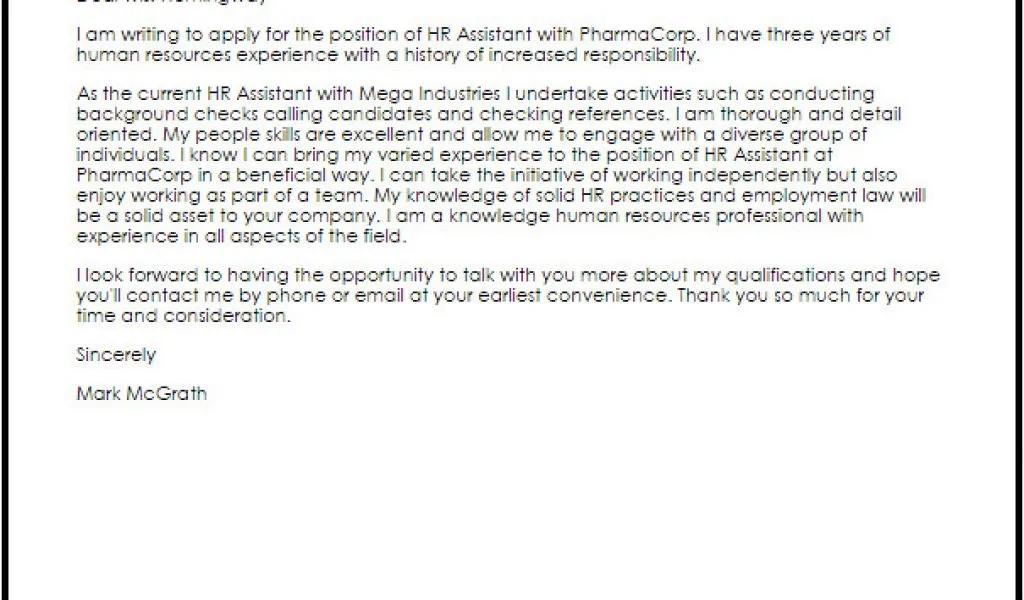
Understanding the HR Assistant Role
Before crafting your HR Assistant cover letter, it’s crucial to understand the core responsibilities of the role. HR Assistants are the backbone of any HR department, handling administrative tasks and supporting various HR functions. This may include tasks such as managing employee records, assisting with recruitment processes, coordinating training programs, and ensuring compliance with labor laws and regulations. They act as the first point of contact for employee inquiries, providing support and guidance. The role demands strong organizational skills, attention to detail, and a good understanding of HR practices and the importance of maintaining confidentiality and professionalism in all interactions. A clear understanding of these tasks will help you highlight your relevant experience in your cover letter, making it more impactful.
Key Skills for HR Assistants
Your cover letter should spotlight the essential skills that make you a strong candidate. These include strong organizational and administrative abilities to manage tasks and prioritize multiple projects. Excellent communication skills, both written and verbal, are crucial for interacting with employees, candidates, and other stakeholders. Proficiency in HR software and Microsoft Office Suite (Word, Excel, PowerPoint, and Outlook) is a must. Furthermore, a deep understanding of HR principles, including recruitment, onboarding, and employee relations, is also important. Attention to detail, confidentiality, and the ability to handle sensitive information with discretion are key. Any experience with payroll systems or HRIS (Human Resources Information Systems) would be a significant advantage. Highlighting these abilities will showcase your suitability for the role and demonstrate your potential for success.
Essential Components of an HR Assistant Cover Letter

A well-structured cover letter is your first chance to make a great impression. It should include your contact information, the date, and the recipient’s details. Begin with a professional greeting. Then, write a compelling opening paragraph that states the position you are applying for and indicates where you saw the job posting. The body of your letter should highlight your relevant experience and skills, providing specific examples to support your claims. Conclude with a strong closing paragraph expressing your enthusiasm for the position and thanking the employer for their time and consideration. Finally, always include a formal closing (such as ‘Sincerely’ or ‘Best regards’) followed by your full name and, if you wish, your contact information. A well-organized cover letter is essential, so be certain that it is clear and easy to read.
Formatting Your Cover Letter
Proper formatting is critical for readability and professionalism. Use a standard business letter format with left-aligned text and single spacing within paragraphs. Use a clear and readable font, such as Times New Roman, Arial, or Calibri, with a font size of 11 or 12 points. Keep the letter concise, ideally one page long, and use margins of one inch on all sides. Break up large blocks of text with paragraphs to avoid overwhelming the reader. Proofread carefully for any errors in grammar and spelling. Ensuring that your cover letter is properly formatted demonstrates your attention to detail and respect for the employer’s time. A well-formatted cover letter reflects professionalism and makes a positive impression on the hiring manager.
Writing a Compelling Opening
Your opening paragraph should immediately capture the reader’s attention. Start by clearly stating the position you are applying for and where you saw the job posting (e.g., on LinkedIn, company website). Briefly mention your key qualifications and what makes you a suitable candidate. It’s important to express your enthusiasm for the role and the company. Tailor this section to reflect the specific requirements and values of the organization. Avoid generic phrases like ‘I am writing to express my interest.’ Instead, aim to create a strong first impression by highlighting your most relevant skills or experiences. A compelling opening sets the tone for the rest of your cover letter and encourages the reader to continue. A tailored approach will show that you are interested in this specific role and will help you stand out from the other candidates.
Highlighting Your Relevant Experience
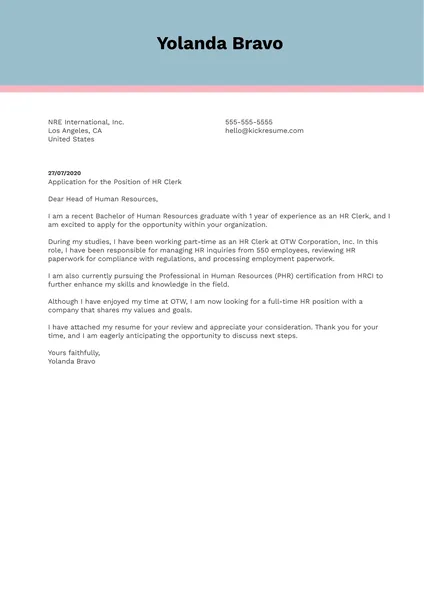
The body of your cover letter is where you showcase your relevant experience. Focus on highlighting your achievements and skills, using examples to demonstrate your capabilities. For each experience, briefly describe your role and responsibilities, and then emphasize the specific tasks you performed. Quantify your achievements whenever possible (e.g., ‘Managed over 100 employee records,’ ‘Reduced processing time by 15%’). Make sure your examples align with the requirements of the job description. Consider the skills and experience the employer is looking for and explain how your background and experience match these requirements. By providing concrete examples, you demonstrate the value you would bring to the role and show that you are capable of performing the required duties. This section is the core of your cover letter, so be thorough and compelling.
Quantifying Your Achievements
Adding numbers and data to describe your accomplishments makes your cover letter more impactful and memorable. Instead of saying ‘Improved efficiency,’ specify ‘Improved efficiency by 20% by implementing a new filing system.’ Instead of saying ‘Managed employee records,’ say ‘Managed and maintained over 200 employee records with 100% accuracy.’ Providing concrete figures demonstrates your ability to deliver results and shows the value you can bring to the company. Quantifiable achievements prove you have the skills needed to succeed in the HR Assistant position. When describing your achievements, use action verbs to make your statements more persuasive. The more specific you are, the more impressive your accomplishments will be. This section helps you stand out from the crowd and shows the hiring manager that you understand how to measure your performance.
Demonstrating Your Skills
In addition to highlighting your experience, you should explicitly demonstrate the skills necessary for the HR Assistant role. Focus on key skills such as organizational skills, communication skills (both written and verbal), attention to detail, and proficiency in relevant software and HRIS systems. Provide examples of how you have used these skills in past roles. For instance, ‘Utilized excellent organizational skills to manage multiple projects simultaneously, ensuring all deadlines were met’ or ‘Communicated effectively with employees and management, resolving issues and providing support.’ Demonstrate your ability to work in a team and handle sensitive information with discretion. Showing these attributes in your cover letter will emphasize your fit for the role and showcase how you would be an effective HR Assistant. Tie your skills back to the job description and show how your talents align with the position’s needs.
Closing Your Cover Letter Effectively

Your closing paragraph should reiterate your interest in the HR Assistant position and thank the employer for their time and consideration. Express your enthusiasm and reiterate your qualifications. Summarize why you are a great fit for the role. Mention your availability for an interview and provide your contact information again. A strong closing will leave a lasting positive impression and encourage the hiring manager to contact you. Avoid generic phrases like ‘Thank you for your time.’ Instead, be specific and show that you are genuinely interested in the position. Express your anticipation for a positive response. A well-crafted closing paragraph is the final touch that can secure your interview and demonstrate professionalism. Leave the reader with a memorable final thought, reflecting your enthusiasm and readiness to join the team.
Proofreading and Editing Your Cover Letter
Before submitting your cover letter, proofread and edit it carefully. Errors in grammar, spelling, and punctuation can undermine your credibility and make a negative impression. Read your cover letter multiple times, looking for any mistakes. Ask a friend or family member to review it as a fresh pair of eyes can often catch errors you might miss. Ensure your writing is clear, concise, and free of jargon. Make certain your letter is tailored to the specific job and company. Check that the contact information is accurate. A polished and error-free cover letter will reflect professionalism and a high attention to detail. Proofreading is critical to guarantee the best possible impression on the hiring manager. A well-edited cover letter demonstrates your commitment to quality and attention to detail.
Tailoring Your Cover Letter for Each Application
Customize each cover letter to the specific job and company you are applying to. Avoid using a generic cover letter for all applications. Research the company and the role, and use your knowledge to tailor your letter. Adjust your language to match the company’s tone and culture. Highlight the skills and experience that are most relevant to the job requirements. Demonstrate your understanding of the company’s values and mission. By customizing your cover letter, you show that you are truly interested in the position and the company. Tailoring your letter ensures your application stands out. Taking the time to customize your cover letter demonstrates your commitment and dedication to each specific opportunity. This personalized approach greatly increases your chances of getting an interview.