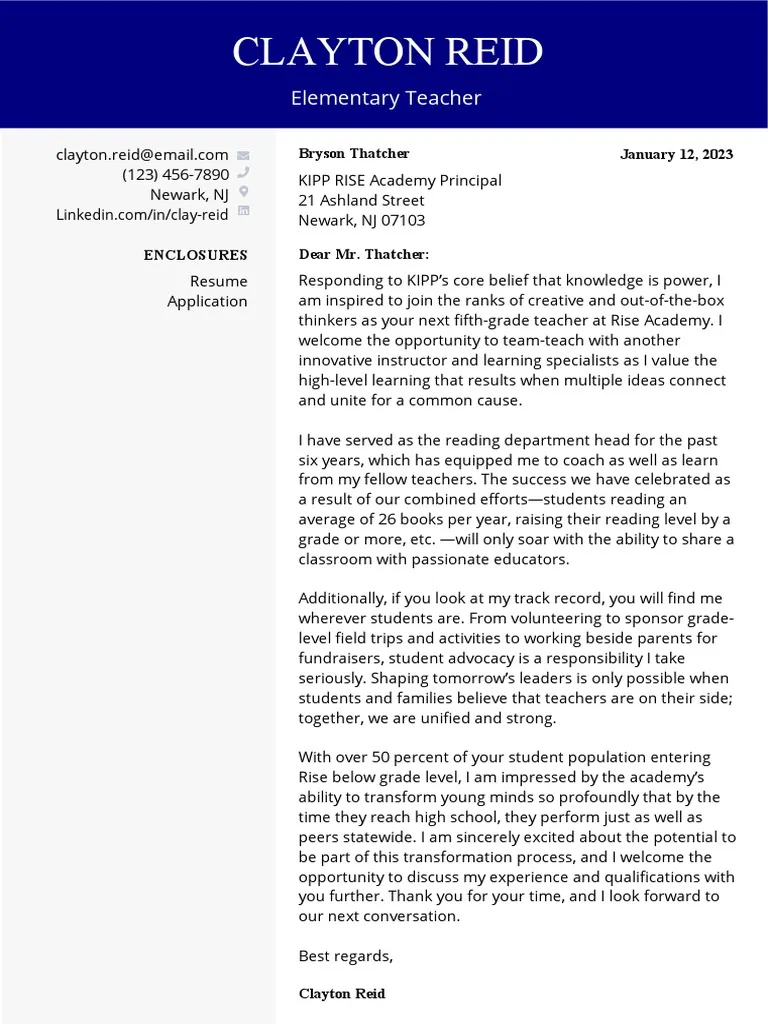
Crafting a Stellar Teacher Cover Letter
A well-written cover letter is your first chance to make a strong impression on a potential employer. For elementary school teachers, this is especially important because it showcases not only your qualifications but also your personality, teaching philosophy, and commitment to student success. A stellar cover letter complements your resume, providing a narrative that brings your experiences and skills to life. It’s a chance to demonstrate why you are the perfect fit for the role and the school. This guide will walk you through each step, ensuring you craft a cover letter that stands out and gets you noticed.
Understanding the Purpose of a Cover Letter
The primary purpose of a cover letter is to introduce yourself to a hiring manager and express your interest in a specific teaching position. Unlike a resume, which provides a chronological overview of your experience, a cover letter allows you to elaborate on your qualifications, connect them to the needs of the school, and highlight your unique value proposition. It’s your opportunity to demonstrate your communication skills, writing proficiency, and your understanding of the school’s mission and values. A compelling cover letter grabs the reader’s attention and encourages them to delve deeper into your qualifications, increasing your chances of landing an interview. Think of it as your personal sales pitch.
Highlighting Your Qualifications and Skills

When writing your cover letter, focus on the skills and qualifications that are most relevant to the elementary school teaching position. This section is where you showcase your strengths and explain how they align with the job requirements. Start by identifying the key skills mentioned in the job description, such as classroom management, curriculum development, or differentiated instruction. Then, provide specific examples from your experience that demonstrate these skills in action. Use action verbs to describe your accomplishments and quantify your achievements whenever possible. For example, instead of saying ‘I managed a classroom,’ you could say ‘I implemented a positive behavior support system that reduced disruptive behavior by 30%.’ This approach makes your qualifications more tangible and impressive.
Education and Certifications
Your educational background and certifications are fundamental to your application, and it’s essential to present them clearly and concisely in your cover letter. Begin by stating your degree and the institution from which you graduated. Include the specific degree, such as a Bachelor of Science in Elementary Education or a Master of Education. Then, highlight your teaching certifications, such as state-specific credentials or endorsements in specialized areas like special education or early childhood development. Mention any honors or awards you received during your academic career, as they demonstrate your dedication and excellence. Make sure the details align perfectly with the job requirements and the specific needs of the school.
Experience and Achievements
Your experience is the backbone of your cover letter. Provide details about your teaching experience, including the schools you’ve worked at, the grades you’ve taught, and the subjects you’ve covered. Focus on specific accomplishments and results achieved in previous roles. Instead of simply stating that you ’taught math,’ describe how you ‘developed and implemented a new math curriculum that improved student test scores by 20%.’ Quantify your achievements whenever possible, as this provides concrete evidence of your effectiveness. Include any special projects you led, such as implementing new technology, organizing field trips, or leading after-school programs. Tailor your examples to the specific needs of the school and the job description.
Showcasing Your Passion for Teaching

Elementary school teachers are not just educators; they are also mentors, role models, and sources of inspiration for young children. In your cover letter, it’s crucial to convey your passion for teaching and your enthusiasm for working with elementary-aged students. Describe what motivates you to teach and what you find most rewarding about the profession. Share any experiences that ignited your passion for education, such as volunteering with children, tutoring, or working in a summer camp. Express your commitment to creating a positive and engaging learning environment where every child can thrive. Your passion is a key differentiator and can make a lasting impression on the hiring committee.
Demonstrating Classroom Management Skills
Effective classroom management is a critical skill for elementary school teachers. In your cover letter, provide examples of how you manage your classroom, maintain a positive learning environment, and handle challenging behaviors. Describe any specific strategies or techniques you use, such as positive reinforcement, clear expectations, or restorative justice practices. Explain how you create a structured and organized classroom environment that supports learning. If you have experience using specific classroom management tools or software, mention them. Highlight your ability to build rapport with students and their families, as this is essential for creating a supportive and collaborative learning community. Show that you are proactive in creating a conducive atmosphere for learning.
Tailoring Your Cover Letter
Generic cover letters are easy to spot and often end up in the ‘rejected’ pile. To make your application stand out, you must tailor your cover letter to each specific teaching position. Review the job description carefully and identify the key requirements and desired qualifications. Then, customize your letter to highlight the skills and experiences that align with these requirements. Mention the specific school or district and show that you understand their mission, values, and unique needs. Demonstrate your genuine interest in the school by referencing specific programs, initiatives, or philosophies that resonate with you. This personalization shows that you have done your research and are truly interested in the opportunity.
Researching the School

Before you start writing your cover letter, thoroughly research the school. Visit their website, review their mission statement, and read any recent news or publications about the school. Understand the school’s values, culture, and priorities. If possible, try to find out about the school’s specific needs or challenges. This information will help you tailor your cover letter to address the school’s unique requirements. Identify any specific programs or initiatives the school is known for, and explain how your skills and experiences align with these. Mentioning the school by name and demonstrating your knowledge of their work shows your genuine interest in the position and your commitment to their success.
Personalizing Your Message
While tailoring your cover letter to the school is essential, also make sure your message reflects your personality and teaching style. Use a professional but friendly tone, and let your enthusiasm for teaching shine through. Share a brief anecdote or personal story that illustrates your passion for education. Avoid clichés and generic statements. Instead, use your unique voice to communicate your experiences and qualifications. Make the letter memorable by highlighting what makes you, you. This can be your teaching philosophy, how you approach challenges in the classroom, or your commitment to a specific teaching method. Personalization helps build a connection with the hiring manager and make them want to learn more about you.
Formatting and Structure
The format and structure of your cover letter are just as important as the content. A well-organized and visually appealing cover letter is easier to read and leaves a positive impression. Use a standard business letter format with clear headings, concise paragraphs, and appropriate spacing. Start with a professional heading that includes your contact information and the date. Then, address the letter to the hiring manager by name if possible. Use a formal salutation such as ‘Dear Mr./Ms. [Last Name]’. Keep your paragraphs relatively short and focused, and use bullet points or numbered lists to highlight key achievements. Ensure the layout is clean and easy to follow, making it easier for the reader to quickly grasp your main points. A well-formatted letter shows you pay attention to detail.
Effective Opening and Closing

The opening and closing sections of your cover letter are particularly important. The opening paragraph should immediately grab the reader’s attention and state the purpose of your letter. Clearly state the position you are applying for and how you learned about the opportunity. In the body of your letter, highlight your key qualifications and experiences that align with the job requirements. In your closing paragraph, reiterate your interest in the position and express your enthusiasm for the opportunity. Include a call to action, such as ‘I look forward to the opportunity to discuss my qualifications further in an interview’ or ‘Thank you for your time and consideration.’ End with a professional closing such as ‘Sincerely’ or ‘Best regards,’ followed by your name.
Proofreading and Editing
Before submitting your cover letter, thoroughly proofread and edit it to ensure it is free of errors. Errors in grammar, spelling, and punctuation can create a negative impression and undermine your credibility. Read your cover letter several times, paying close attention to details. Check for any typos, grammatical errors, or inconsistencies in your writing. Consider using grammar and spell-check tools, but don’t rely on them completely. Have a friend, family member, or career advisor review your cover letter as well. A fresh pair of eyes can often catch mistakes you may have missed. Correct any errors and revise the letter to improve clarity and conciseness. Proofreading is a critical step in ensuring your cover letter is polished and professional.
Reviewing the Content
Beyond checking for errors, review the content of your cover letter to ensure it effectively communicates your key messages. Make sure your cover letter accurately reflects your skills, experience, and qualifications. Does it align with the job description and the needs of the school? Is the language clear, concise, and professional? Are your accomplishments quantified with specific examples? Does your letter showcase your passion for teaching and your commitment to student success? Review the tone and style of your writing. Is it appropriate for the teaching profession and the specific school you are applying to? Ensure your cover letter represents you and your career goals in the best possible light.
Seeking Feedback

Seeking feedback on your cover letter can significantly improve its effectiveness. Ask trusted individuals to review your cover letter and provide constructive criticism. Consider asking experienced teachers, mentors, career counselors, or friends and family members. Provide them with the job description and ask them to assess whether your cover letter effectively addresses the requirements. Ask for feedback on clarity, organization, grammar, and tone. Be open to suggestions and willing to make revisions based on their input. Consider the reviewer’s perspective and any insights they have. The feedback process will not only help you improve your cover letter but also build your confidence and help you get closer to your goal of landing a teaching position.