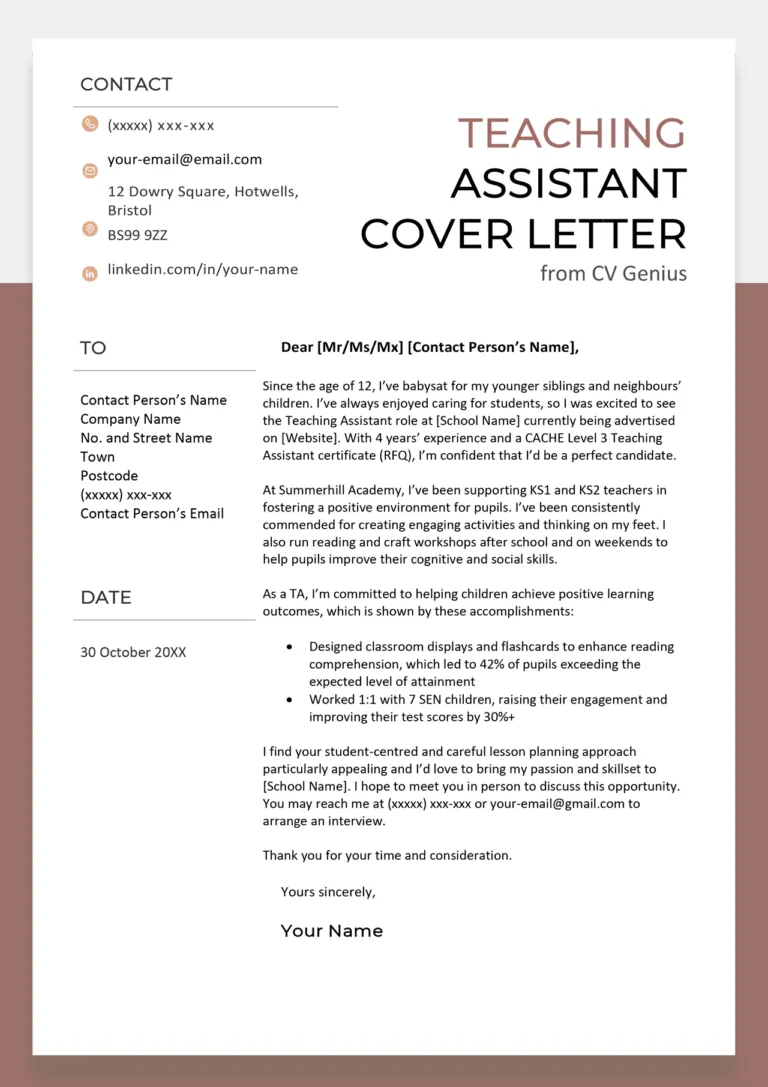
Understanding the Primary School TA Role
A Teaching Assistant (TA) in a primary school plays a vital role in supporting both teachers and students. This encompasses a wide range of duties, from helping to prepare learning materials and assisting with classroom management to providing one-on-one support to students who may need extra help. Understanding the multifaceted nature of the role is the first step in crafting a compelling cover letter. It shows you’re informed and serious about the position. Primary school TAs contribute significantly to a positive and effective learning environment.
Key Responsibilities of a Primary School TA
Primary school TAs have a diverse set of responsibilities, making each day unique. These can include providing learning support, supervising pupils during activities, preparing the classroom, and managing resources. The role involves working with individual children or small groups to reinforce learning concepts, ensuring they grasp the material effectively. Maintaining a safe and stimulating environment is also a core function. Demonstrating awareness of these responsibilities in your cover letter showcases your understanding of the role’s demands.
Essential Skills for a Successful Primary School TA

To excel as a primary school TA, certain skills are crucial. Strong communication and interpersonal skills are paramount, allowing you to connect with children, teachers, and parents effectively. Patience, empathy, and a genuine enthusiasm for working with children are equally important. Organizational skills are vital for managing resources and supporting classroom activities. In your cover letter, highlight these skills and provide specific examples of how you’ve demonstrated them in previous roles or situations. Remember to use the keywords from the job description.
Crafting Your Cover Letter — The Foundation
Your cover letter is your first introduction to the school, making a strong first impression essential. It should complement your resume, providing context and depth to your qualifications. The best cover letters are tailored to the specific job and school, showcasing your understanding of their needs and values. Use a professional and clear tone, highlighting your most relevant skills and experiences. The goal is to convince the hiring manager that you are a perfect match for the position. Consider it a sales pitch for your abilities.
Header & Contact Information
Start with a professional header that includes your full name, address, phone number, and email address. Make sure the contact information is up-to-date and easily accessible. If you have a LinkedIn profile, include the URL. Then, add the date and the hiring manager’s name (if known) and the school’s address. This section sets the tone for a professional communication and shows you’ve paid attention to detail. A well-formatted header demonstrates your professionalism right from the start. (Image filename: primary-school-ta-cover-letter-header)
The Opening Paragraph — Captivating the Reader

Your opening paragraph should immediately grab the reader’s attention. State the position you’re applying for and where you saw the advertisement. Briefly explain why you’re interested in the role and the school. Consider mentioning something specific that attracted you to the school, like its values or a particular program. Show enthusiasm and make a strong initial impression that entices the reader to continue reading the rest of your letter.
Highlighting Your Relevant Experience
This is where you demonstrate your experience. Provide examples of previous roles and responsibilities that align with the primary school TA position. Quantify your accomplishments whenever possible. Instead of simply stating you assisted students, describe how you improved student grades or contributed to a positive classroom environment. Focus on experiences that demonstrate your skills and abilities in supporting children’s learning and well-being. Provide clear examples and specific achievements to illustrate your qualifications. (Image filename: primary-school-ta-experience)
Showcasing Your Skills & Abilities
Go beyond simply listing skills; demonstrate them through specific examples. If you have strong communication skills, describe a situation where you successfully communicated with a child, parent, or teacher to address a challenge. If you’re patient and empathetic, provide an example of how you supported a child struggling with a task. Use the job description as a guide, ensuring that you address the key skills and requirements mentioned in the ad. Showing, rather than just telling, makes your cover letter more impactful and memorable. (Image filename: primary-school-ta-skills)
Tailoring Your Letter to the School

A generic cover letter is easily overlooked. Customize your letter for each school you apply to. This shows you’ve taken the time to research the school and understand its needs. Mention the school’s specific programs, values, or initiatives that resonate with you. Explain why you’re a good fit for their environment and culture. This personalization demonstrates genuine interest and increases your chances of getting noticed. Make it clear why you want to work at this particular school. (Image filename: primary-school-ta-tailoring)
Researching the School’s Values & Mission
Before writing your cover letter, thoroughly research the school’s website, mission statement, and any available information. Understand their values, such as a focus on inclusive education, student well-being, or specific teaching methodologies. Demonstrating this understanding in your cover letter shows that you’re a good match for their culture. Incorporate keywords and phrases from their website into your cover letter. This shows you’ve done your homework and are serious about aligning with their mission.
Demonstrating Your Passion for Education
Expressing your passion for working with children and contributing to their education is crucial. Share your enthusiasm for supporting their learning and development. Discuss what motivates you in this role. Show how you’ve gone the extra mile in past roles, such as participating in additional training or volunteering for extra tasks. Letting your passion shine through makes you stand out from other candidates. Let them know why you are truly invested in the children’s growth. (Image filename: primary-school-ta-passion)
Addressing the Specific Job Requirements

Carefully review the job description and address each of the required qualifications and skills. Provide specific examples of how you meet each requirement. If the job ad mentions a specific skill, such as experience with a particular teaching method or software, be sure to mention it and provide concrete examples of your experience. Make it easy for the hiring manager to see that you fulfill their needs. Show how your skills and experience specifically align with the job requirements.
The Closing Paragraph & Call to Action
In your closing paragraph, reiterate your interest in the position and the school. Thank the reader for their time and consideration. Include a clear call to action, such as expressing your availability for an interview and providing your contact information again. This provides a clear next step and encourages them to move forward with your application. Always express your enthusiasm and a willingness to discuss your qualifications further.
Proofreading & Polishing Your Cover Letter
Before submitting your cover letter, carefully proofread it for any grammatical errors, spelling mistakes, and typos. A polished cover letter demonstrates attention to detail and professionalism. Use a grammar checker and, ideally, have someone else read it over to catch any errors you might have missed. Ensure your language is clear, concise, and easy to understand. A well-written cover letter increases your chances of making a positive impression. (Image filename: primary-school-ta-proofread)
Formatting Your Cover Letter for Impact

Use a clear and professional font, such as Times New Roman, Arial, or Calibri, with a font size between 11 and 12 points. Use single spacing and leave a space between paragraphs. Ensure your margins are consistent. A well-formatted cover letter is easy to read and makes a positive visual impression. Divide your letter into concise paragraphs to keep it visually appealing and make it easy for the reader to scan. Ensure the layout is balanced and professional-looking.
Common Mistakes to Avoid
Avoid generic cover letters that could be used for any job. Don’t use jargon or overly complex language. Avoid negative statements or complaints about previous jobs. Do not include information that is irrelevant to the primary school TA role. Make sure to avoid any spelling or grammar errors as well. Carefully proofread and review your cover letter before submitting. Make sure to address the person you are writing to by name.
Using Action Verbs Effectively
Use action verbs to describe your accomplishments and responsibilities. Instead of stating you ‘helped students,’ use action verbs like ‘supported,’ ‘assisted,’ ‘facilitated,’ or ’encouraged.’ Use strong verbs to create a more dynamic and compelling narrative. Use words that showcase your skills and make your qualifications more impactful and memorable. This makes your experience more tangible and demonstrates what you did in your previous roles. (Image filename: primary-school-ta-action-verbs)
Example Cover Letter Snippets

To illustrate, an experience section snippet might read, ‘Provided one-on-one support to students with special educational needs, resulting in a 15% improvement in their reading comprehension scores within six months.’ A skills section example might include, ‘Excellent communication skills, with the ability to build rapport with children from diverse backgrounds, demonstrated through successful conflict resolution and positive classroom management.’ Tailor these examples to your own experiences.
Experience Section Examples
Here are some examples for the experience section: ‘Assisted lead teachers with classroom management and lesson preparation.’ ‘Provided individualized support to students struggling with literacy, utilizing differentiated instruction techniques.’ ‘Organized and maintained classroom resources, ensuring a tidy and conducive learning environment.’ ‘Collaborated with teachers to create engaging learning activities and materials.’ ‘Successfully managed small group activities, fostering collaboration and critical thinking skills.’ Highlight quantifiable results when possible. (Image filename: primary-school-ta-experience)
Skills Section Examples
Some examples for the skills section include: ‘Excellent communication and interpersonal skills, able to build positive relationships with children, parents, and staff.’ ‘Patience, empathy, and a nurturing approach, essential for supporting children’s emotional and social development.’ ‘Proficiency in using educational software and technology.’ ‘Ability to adapt teaching strategies to meet the diverse learning needs of students.’ ‘Strong organizational and time management skills, with the ability to prioritize tasks effectively.’ Tailor your skills section to the job description. (Image filename: primary-school-ta-skills)
Final Review & Submission
Before submitting, carefully review your cover letter one last time. Ensure that all the information is accurate, the formatting is consistent, and your contact information is correct. Make sure the file name is professional. If possible, save it as a PDF to preserve the formatting. Send your cover letter and resume together, and ensure they’re well-organized and easy to access. A final review helps to ensure that your cover letter represents you in the best possible light.
Ensuring Your Cover Letter Stands Out
To make your cover letter stand out, consider including any relevant certifications, volunteer experiences, or achievements. If you have experience with specific teaching methods, mention them. Highlight any experience working with children with special educational needs. Use a professional tone and a clear, concise writing style. Ensure that your letter is well-structured, easy to read, and tailored to the specific job and school. Show enthusiasm and passion for the position and the school’s mission. Demonstrate why you are the ideal candidate for the job.