Why Cover Letters Matter
In today’s competitive job market, a well-crafted cover letter is not just an optional extra – it’s a critical tool that can significantly boost your chances of landing an interview. Far from being a mere formality, a cover letter serves as your first introduction to a potential employer, offering a unique opportunity to showcase your personality, enthusiasm, and the specific value you bring to the table. It allows you to go beyond the confines of your resume, providing a narrative that connects your skills and experiences with the requirements of the job and the needs of the company. A compelling cover letter can highlight your most relevant accomplishments, explain any career gaps or unconventional career paths, and demonstrate your genuine interest in the role and the organization. In essence, it’s your chance to make a memorable first impression and persuade the hiring manager that you’re not just qualified, but also the right fit for the position.
Moreover, a cover letter provides a platform to demonstrate your communication skills, which are essential in virtually every professional setting. It allows you to showcase your writing ability, attention to detail, and your capacity to convey information clearly and concisely. By tailoring your cover letter to each specific job, you can demonstrate your commitment to the application process and your understanding of the employer’s needs. This personalization, along with the ability to articulate your career goals and aspirations, can set you apart from other candidates who may have submitted a generic resume without an accompanying letter. Therefore, mastering the art of writing a powerful cover letter is a strategic investment in your job search, helping you to stand out, make a strong impression, and ultimately, secure more interview opportunities.
The Basic Cover Letter Structure
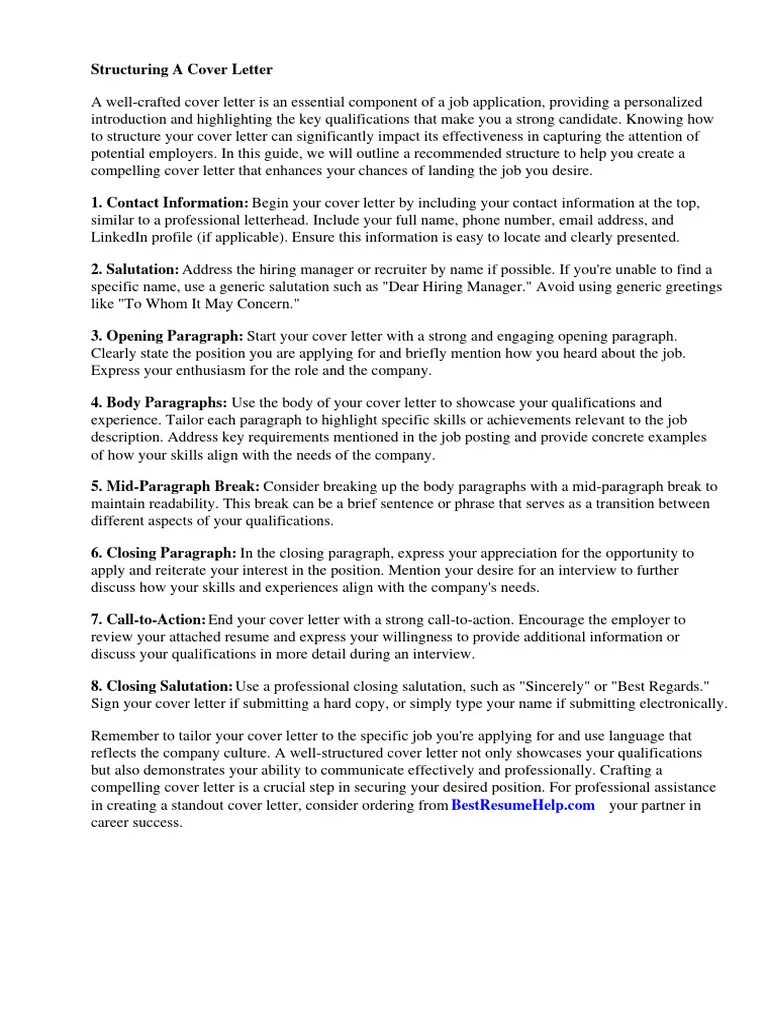
A well-structured cover letter is easy to read and allows the hiring manager to quickly grasp your key qualifications and your enthusiasm for the role. A clear structure makes your letter more impactful and ensures that you effectively communicate your value. It’s crucial to understand the basic components that will help you create a compelling narrative that captures the reader’s attention. The following outlines the fundamental structure of a powerful cover letter.
Header Section

The header is your first chance to make a professional impression. It should include your contact information and the date. This ensures that the hiring manager can easily reach you and also shows attention to detail.
Your Contact Information
Begin with your full name, followed by your phone number, email address, and optionally, your LinkedIn profile URL. Make sure your email address is professional and your LinkedIn profile is up-to-date. Ensure all information is correct and easy to read, providing a clean and accessible look at the top of your letter. This sets a professional tone from the outset and helps the reader quickly find the way to contact you. Accuracy here is critical.
Date
Always include the current date, written out fully (e.g., March 8, 2024). This demonstrates that your application is current and shows you’ve prepared it recently. The date is typically placed directly under your contact information, aligning the header elements neatly.
Recipient’s Contact Information

Directly below the date, include the recipient’s name and title, the company name, and the company’s address. If you know the hiring manager’s name, use it; otherwise, use a general title such as ‘Hiring Manager’. Researching the correct contact information shows your attention to detail and genuine interest in the role. Correct formatting adds professionalism to your approach.
Greeting or Salutation
Start your letter with a professional greeting. If you know the hiring manager’s name, use ‘Dear Mr./Ms. [Last Name]’. If not, ‘Dear Hiring Manager’ or ‘Dear [Department Name] Team’ are safe options. Avoid generic greetings. Personalizing the greeting shows you’ve taken the time to research the company and role, making your letter more impactful.
The Body of Your Cover Letter
The body of your cover letter is where you make your case. It’s the space where you provide context, highlight your skills, and explain why you are the best fit for the job. The body should consist of three to four paragraphs that flow logically and keep the reader engaged. Each paragraph serves a specific purpose in building your narrative and persuading the employer. This is your opportunity to shine; ensuring the body is polished and persuasive is essential.
First Paragraph Introduction

Your opening paragraph should immediately grab the reader’s attention and state the purpose of your letter. Mention the specific position you are applying for and where you found the job posting. Briefly state why you are interested in the role and the company. Avoid clichés and aim for a concise and compelling introduction. This sets the tone for the rest of your letter and encourages the reader to continue.
Middle Paragraphs Highlighting Relevant Skills
The middle paragraphs are where you showcase your skills, experiences, and accomplishments. Tailor these paragraphs to the job description, highlighting the most relevant qualifications. Provide specific examples of how your skills and experiences align with the job requirements. Use action verbs and quantify your achievements whenever possible to demonstrate the impact of your work. Focus on what you can do for the company.
Showcase Your Accomplishments
Instead of simply listing your responsibilities, focus on your accomplishments. Use the STAR method (Situation, Task, Action, Result) to provide context and illustrate how you added value in previous roles. This method makes your experiences more impactful and memorable. Quantifying your achievements (e.g., ‘Increased sales by 20%’) strengthens your claims and provides concrete evidence of your abilities.
Tailor Your Letter

Customize your cover letter for each job. Review the job description carefully and identify the key skills and qualifications the employer is seeking. Align your skills and experiences with these requirements. This shows you have taken the time to understand the role and the company’s needs, and it significantly increases your chances of getting noticed.
The Closing Paragraph
In your closing paragraph, reiterate your interest in the position and the company. Summarize why you are a strong candidate and express your enthusiasm for the opportunity. Indicate that you are available for an interview and include a call to action. Keep it concise and professional, leaving the reader with a positive impression.
Call to Action
Include a clear call to action, such as ‘I am eager to discuss my qualifications further in an interview’ or ‘I look forward to hearing from you soon.’ This encourages the hiring manager to take the next step and shows your proactive attitude. Providing your availability or contact information again can also be helpful.
Formal Closing

Choose a professional closing such as ‘Sincerely’, ‘Best regards’, or ‘Respectfully’. Avoid overly casual closings. The closing should align with the overall tone of your letter. Ensure the closing is followed by a comma and enough space for your signature, if printing and mailing.
Signature
If you’re submitting a digital cover letter, simply type your name below the closing. If you’re printing the letter, leave space for your handwritten signature between the closing and your typed name. A signature adds a personal touch to your application, demonstrating your attention to detail and professionalism.
When composing your cover letter, ensure that each section is clear, concise, and directly related to the job requirements. Proofread meticulously for any grammatical errors or typos, and maintain a professional tone throughout. Your cover letter is a reflection of your commitment and attention to detail, so take the time to get it right.