Why a Nonprofit Cover Letter Matters
In the competitive world of nonprofit job applications, a well-crafted cover letter is your essential tool. It is your first interaction with the hiring manager, providing an opportunity to present yourself beyond your resume. Unlike a resume, a cover letter allows you to express your passion, showcase your understanding of the organization’s mission, and highlight how your skills and experiences align with their needs. A compelling cover letter dramatically increases your chances of getting noticed and securing an interview, setting you apart from other applicants and demonstrating your genuine interest in the cause.
Understanding the Nonprofit Sector
Before writing your cover letter, it’s crucial to grasp the nature of the nonprofit sector. Nonprofits are driven by a mission to serve a specific cause, whether it’s environmental conservation, social justice, or educational advancement. Understanding this mission is crucial, and it should be reflected in your cover letter. Research the organization’s values, goals, and recent initiatives. Tailor your letter to demonstrate that you understand their work and are aligned with their mission. This understanding shows that you’re not just looking for a job but are genuinely invested in contributing to their cause and making a difference, which is highly valued in the nonprofit world.
Key Elements of a Compelling Nonprofit Cover Letter

A compelling nonprofit cover letter goes beyond simply restating your resume. It requires a strategic approach to highlight your qualifications and demonstrate your alignment with the organization’s values. Focus on tailoring your letter to each specific role and organization. Highlight relevant skills, quantify your achievements, and express your passion for the cause. Show how your experience and skills align with their needs, and provide concrete examples. A well-structured letter includes clear contact information, a compelling opening, impactful body paragraphs, and a strong closing. Proper formatting and proofreading are essential for presenting a polished and professional image.
Contact Information
Start your cover letter with your contact information. Include your full name, address, phone number, and email address. This ensures the hiring manager can easily reach you. Place this information at the top of the letter, typically aligned to the left or right. Ensure your email address is professional, using a combination of your name or initials rather than nicknames. Double-check that the information is accurate and up-to-date before submitting your application to prevent any missed communication opportunities.
Addressing the Hiring Manager
Always address the hiring manager by name. Research the organization to find out the name of the person responsible for hiring. This personal touch shows that you’ve taken the time to understand the organization and are genuinely interested in the opportunity. If you are unable to find a name, addressing the letter to “Hiring Manager” or “Hiring Committee” is a better alternative than using a generic salutation. Avoid vague greetings, and maintain a formal and respectful tone throughout the letter.
Opening Paragraph Grab Attention

The opening paragraph is your chance to make a strong first impression. Start with a captivating hook that immediately grabs the reader’s attention. Express your enthusiasm for the opportunity and state the specific position you’re applying for. Briefly mention why you’re interested in the organization and how your values align with their mission. Make it clear that you understand the organization’s mission and are passionate about the cause. This initial impression sets the tone for the rest of your letter and encourages the hiring manager to keep reading.
Highlighting Your Qualifications
In the body of your cover letter, showcase your qualifications and relevant experience. Focus on highlighting the skills and achievements that directly align with the job requirements outlined in the job description. Provide specific examples to support your claims, and quantify your accomplishments whenever possible. Tailor your examples to show how your past experiences have prepared you for success in this specific role. Avoid simply repeating your resume; instead, provide context and elaborate on your contributions to demonstrate your capabilities and what you can bring to the organization.
Showcasing Relevant Skills
Identify the key skills required for the position and illustrate how you possess them. Nonprofits often seek candidates with specific skills such as grant writing, fundraising, volunteer management, program coordination, and communication. Provide concrete examples of how you’ve used these skills in previous roles or volunteer experiences. Mention any relevant software, tools, or methodologies you are proficient in. By clearly demonstrating these skills, you prove your ability to contribute effectively to the organization’s goals. Your ability to articulate the ways you have used relevant skills is vital.
Quantifying Your Achievements

Whenever possible, quantify your achievements to make them more impactful. Instead of stating that you “increased fundraising efforts,” specify the percentage increase or the amount of funds raised. Use numbers to showcase your accomplishments, such as the number of volunteers you managed, the number of programs you coordinated, or the specific results you achieved. Providing concrete data gives the hiring manager a clear understanding of your capabilities and the value you can bring to the organization. Quantifiable results provide strong evidence of your capabilities and past successes.
Demonstrating Passion for the Cause
Nonprofits seek individuals who are genuinely passionate about their mission. Express your enthusiasm for the cause and explain why you are drawn to their work. Share personal experiences or insights that demonstrate your commitment to the mission. Show that you have done your research and understand the impact the organization has on the community. Mention any volunteer work, personal involvement, or relevant experiences that highlight your dedication. Demonstrating your passion helps build a connection with the hiring manager and positions you as a candidate who is truly invested in the organization’s success.
Expressing Your Understanding of the Organization’s Mission
Clearly state that you understand the organization’s mission and how your skills can support its goals. Research the organization’s recent projects, goals, and values to demonstrate your knowledge. Explain why their mission resonates with you and how you can contribute to their objectives. Show that you are not just looking for a job but that you are interested in helping the organization achieve its goals and make a difference in the world. Tailoring your letter to reflect a deep understanding of their specific mission is key.
Tailoring Your Letter to the Specific Role

Customize your cover letter for each position you apply for, using the job description as your guide. Highlight the skills, experiences, and qualifications most relevant to the specific role. Avoid using a generic template, as it will diminish your chances of getting noticed. Show that you have taken the time to understand the position’s requirements and are tailoring your application accordingly. This shows you’ve paid attention to what they need and how you fit the role and is a vital part of showing your commitment and attention to detail.
Researching the Organization
Before writing your cover letter, conduct thorough research on the organization. Visit their website, read their mission statement, and explore their recent projects and initiatives. Follow them on social media to learn about their activities and values. Understanding the organization’s culture and priorities will help you tailor your letter to match their needs. This knowledge will also enable you to show your genuine interest and demonstrate that you are a suitable fit for their team. Research also gives you talking points for the interview if you get one.
Identifying Key Needs
Identify the organization’s key needs, challenges, and goals. Review the job description carefully to understand the specific requirements. Identify how your skills and experiences can address these needs and contribute to the organization’s success. Tailor your cover letter to demonstrate how you can solve problems, achieve goals, and add value to their team. Being able to show how you fit in is essential, so knowing their needs and explaining how you can meet those needs will increase your likelihood of a positive outcome.
Customizing Your Skills to Match Requirements

Align your skills and experience with the job requirements outlined in the job description. Highlight the skills and experiences most relevant to the role, and provide specific examples to support your claims. For instance, if the job requires grant writing experience, provide details on successful grants you’ve written and the impact they made. Demonstrate that you possess the skills necessary for success and clearly articulate how your abilities align with the specific needs of the position. Use keywords from the job description to ensure your qualifications are clearly presented.
Writing a Strong Closing
End your cover letter with a strong closing paragraph that reinforces your interest in the position and the organization. Restate your enthusiasm and summarize why you are the ideal candidate. Express gratitude for their time and consideration and include a clear call to action. Clearly state your willingness to provide additional information or participate in an interview, and make it easy for the hiring manager to contact you.
Reiterating Your Interest
In your closing, reiterate your interest in the position and the organization. Show your enthusiasm and remind the hiring manager why you are a great fit for the role and the organization’s mission. Show that you are passionate about the cause, and that you are ready to contribute to their goals. This final statement reinforces your commitment and motivates the hiring manager to take the next step, increasing your chances of getting an interview.
Call to Action

Include a clear call to action in your closing paragraph. Request an interview or the opportunity to discuss your qualifications further. Make it easy for the hiring manager to take the next step by providing your contact information, including your phone number and email. This direct approach shows your enthusiasm and initiative, encouraging the hiring manager to contact you. A clear call to action guides the process and increases your chances of getting an interview.
Formatting and Proofreading Your Cover Letter
Proper formatting and meticulous proofreading are crucial for a professional and impactful cover letter. A well-formatted letter is easy to read and demonstrates attention to detail, while proofreading ensures that your writing is error-free and polished. These aspects reflect your professionalism and increase your chances of making a positive impression. Following a structured format, choosing a professional font, ensuring clarity, and proofreading your work are all essential steps to a successful job application in the nonprofit sector.
Choosing a Professional Font
Choose a professional and easy-to-read font, such as Times New Roman, Arial, or Calibri. Use a standard font size (11 or 12 points) to ensure readability. Avoid using overly decorative fonts, as they can make your letter look unprofessional. Maintain consistency in font style and size throughout the document, and use clear formatting to enhance readability and make it easy for the hiring manager to review your application. This ensures a polished and professional appearance that reflects well on your attention to detail.
Ensuring Clarity and Conciseness
Write in a clear and concise manner, using simple language and direct sentences. Avoid jargon or overly complex phrasing. Ensure your paragraphs are well-structured, with each paragraph focusing on a specific point. Use bullet points to highlight key skills or achievements, making the information easy to digest. Avoid unnecessary words and ensure that your message is clear and easy to understand. Clarity and conciseness will help the hiring manager easily grasp your qualifications and appreciate your ability to communicate effectively.
Proofreading for Errors
Meticulously proofread your cover letter for any spelling, grammar, or punctuation errors. Errors undermine your credibility and can lead to your application being rejected. Read your letter aloud to catch mistakes you might miss when reading silently. Use a spell checker and grammar checker, but also rely on manual proofreading to ensure accuracy. Consider having a friend or colleague review your letter for any errors. A carefully proofread cover letter shows attention to detail and professionalism, which are essential in the nonprofit sector.
Additional Tips for Success
Besides the core elements of a great cover letter, several additional tips can help you stand out from the competition. Showcasing your personality, using keywords effectively, and following up after submission can all increase your chances of landing an interview and securing your desired role in the nonprofit sector. Implementing these strategies will make your application even more effective and leave a lasting impression on the hiring manager.
Showcasing Your Personality
While maintaining professionalism, allow your personality to shine through in your cover letter. Show your enthusiasm for the cause and let your passion come across in your writing. Inject a bit of your unique voice and perspective, so that your personality is reflected throughout. This will make your application more memorable and help the hiring manager get a sense of who you are beyond your qualifications. Authenticity and a genuine voice can make you stand out.
Using Keywords Effectively
Carefully review the job description and identify key keywords related to the position’s requirements. Incorporate these keywords naturally throughout your cover letter to demonstrate that you possess the necessary skills and experience. Ensure your resume also includes these keywords, and align the language used in both documents. This practice helps the hiring manager quickly identify your qualifications and increases your chances of being selected. However, avoid keyword stuffing; focus on using keywords naturally within the context of your writing to enhance readability and impact.
Following Up After Submission
A week or two after submitting your cover letter and resume, follow up with the hiring manager to express your continued interest. A brief email or phone call demonstrates your enthusiasm and initiative. Politely inquire about the status of your application and reiterate your interest in the position. Ensure you are respectful of the organization’s time and understand they are busy. Following up shows you are proactive and eager to contribute to their work and mission.
Example Cover Letter for Nonprofit Roles
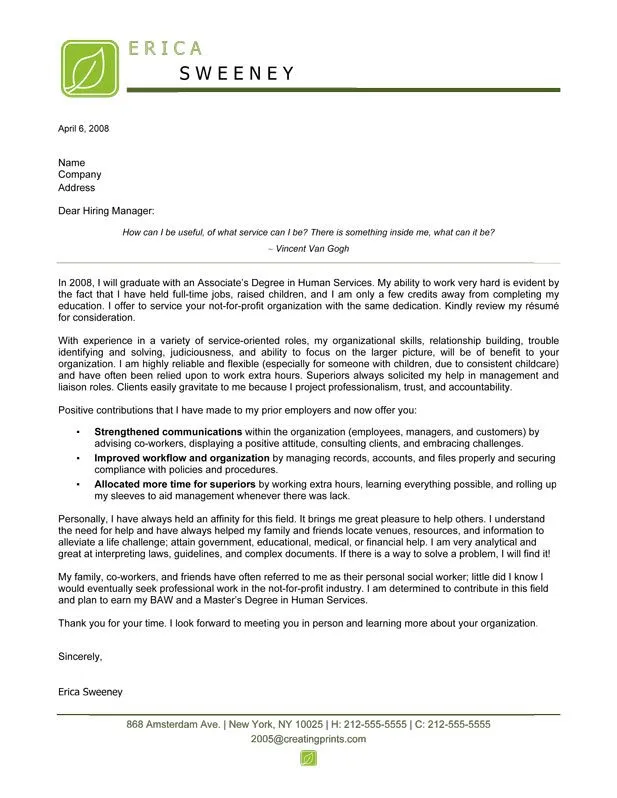
To help you get started, here is a sample cover letter you can adapt. Remember to customize this template to fit the specific role and organization. Include your contact information, and address the hiring manager directly by name. Show your passion for the cause, highlight your skills and experiences, and express your understanding of the organization’s mission. Make sure the tone is professional, and that the language is appropriate for the organization and position. Proofread meticulously, and use keywords from the job description. Following this template will allow you to create an impactful cover letter to help you achieve your career goals.