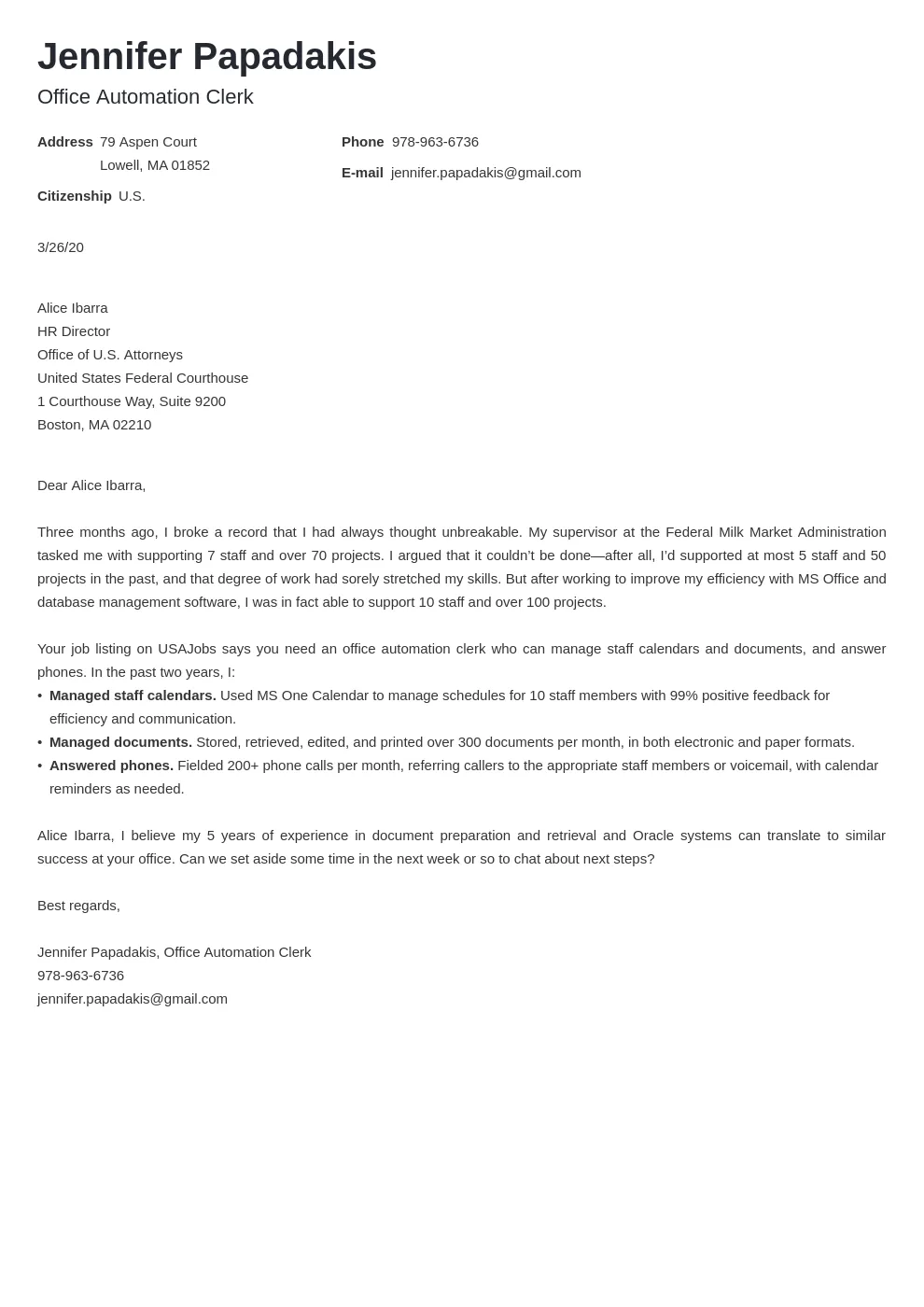
Understanding the Federal Cover Letter
Navigating the federal job application process can feel like entering a new world. One of the most crucial tools in your arsenal is the federal cover letter. Unlike cover letters for private sector jobs, federal cover letters have specific requirements and expectations. They are your opportunity to make a strong first impression and convince hiring managers that you are the ideal candidate. This guide will break down the essential steps to crafting a compelling federal cover letter that highlights your qualifications and increases your chances of landing an interview. Understanding the nuances of federal applications is the first step toward success.
Key Differences Federal vs Private
The approach to writing a federal cover letter differs significantly from a private sector cover letter. Federal cover letters often need to be more detailed and specifically address the qualifications outlined in the job announcement. They must demonstrate how your skills and experience align with the specific requirements of the position. Private sector cover letters might be more focused on expressing your enthusiasm and general suitability for a role. Federal jobs, on the other hand, require a clear and concise presentation of how you meet the stated criteria. Failing to address each requirement can lead to immediate rejection. The primary goal is to prove you are the best qualified candidate based on the job description.
Why Is a Federal Cover Letter Important?

In the competitive landscape of federal jobs, a well-crafted cover letter is not merely optional, it is essential. It provides context for your resume, offering a narrative that explains why you are the perfect fit for the position. The cover letter allows you to elaborate on your qualifications in detail, highlighting specific achievements and skills that directly address the job’s needs. The selection process for federal jobs is rigorous, and a compelling cover letter can make the difference between getting an interview and being overlooked. It is your first opportunity to prove your attention to detail and ability to follow instructions, which are both critical in any federal role. A strong cover letter sets the stage for a successful application.
Essential Components of a Federal Cover Letter
A strong federal cover letter has several key components that work together to create a compelling argument for your candidacy. Each element serves a specific purpose, and neglecting any of them could weaken your application. Paying close attention to detail is a must. Accuracy and clarity are paramount to demonstrate your professionalism. The best way to create a cover letter that stands out is to make sure that all parts are complete and provide a full picture to the employer. Let’s examine the crucial components of a successful federal cover letter.
Contact Information
Begin your cover letter with your full name, address, phone number, and professional email address. Ensure that your contact information is current and accurate. Also, include the date and the hiring manager’s name and title, if available. If you can’t find the hiring manager’s name, use the title of the position. Proper formatting of your contact information makes it easy for the hiring manager to reach you and shows you are detail-oriented.
Salutation

Use a professional salutation. If you know the hiring manager’s name, use “Dear Mr./Ms./Mx. [Last Name]”. If you don’t have a name, use “Dear Hiring Manager” or “Dear Selection Committee.” Avoid using generic salutations like “To Whom It May Concern.” The salutation sets the tone for your letter and shows respect for the reader.
Opening Paragraph
The opening paragraph should immediately state the position you’re applying for and how you found the job (e.g., USAJOBS, agency website). Briefly mention your key qualifications and express your enthusiasm for the role and the agency. Make it clear that you meet the basic requirements of the job. Use a sentence that grabs the reader’s attention, and makes them want to continue reading.
Body Paragraphs Highlighting Qualifications
This is the most important section of your cover letter. Each paragraph should address specific requirements listed in the job announcement. Provide concrete examples of how your skills and experiences match these requirements. Use keywords from the announcement to show that you have read and understood the job description. The more detailed you are, the better your chances will be. Don’t just list your skills; demonstrate them with specific examples. Ensure that each paragraph is focused and relevant.
How to showcase your skills and experience

When showcasing your skills and experience, focus on the most relevant qualifications. Use the STAR method (Situation, Task, Action, Result) to describe your accomplishments. Start with a brief description of the situation, explain the task you were responsible for, describe the action you took, and highlight the positive results. This helps the hiring manager understand the impact of your work. Include details to prove you were able to solve a problem. Tailor your examples to match the specific needs of the job description.
Quantify accomplishments
Whenever possible, quantify your accomplishments. Use numbers, percentages, and data to demonstrate the impact of your work. For example, instead of saying “Improved customer service,” say “Improved customer satisfaction scores by 15% within six months.” Quantifiable results provide concrete evidence of your abilities. Using data makes your claims more credible and shows you can deliver results. It provides a way for the employer to understand how much impact you can bring to the role.
Closing Paragraph and Call to Action
In your closing paragraph, reiterate your interest in the position and express your appreciation for the opportunity. Include a call to action, such as requesting an interview or stating your willingness to discuss your qualifications further. Keep it concise and professional. Thank the hiring manager for their time and consideration. Make sure your tone is positive and enthusiastic.
Formatting Your Federal Cover Letter

Proper formatting is crucial for creating a professional and easy-to-read federal cover letter. Formatting can have a significant impact on how your letter is received. Consistent and clean formatting shows attention to detail and respect for the reader. Adhering to formatting guidelines makes your letter more readable and improves your chances of a positive outcome. Ensure that the formatting aligns with federal standards.
Font and Font Size Recommendations
Use a professional and easy-to-read font such as Times New Roman, Arial, or Calibri. The font size should be between 10 and 12 points. Avoid using overly decorative fonts, as they can be difficult to read. Consistency in font and font size throughout the document is essential. Proper font selection and size enhance readability and make your letter look polished.
Margins and Spacing
Set your margins to 1 inch on all sides of the page. Use single spacing within paragraphs and double spacing between paragraphs. This ensures your letter is well-organized and easy to read. Proper spacing makes your letter visually appealing and prevents the text from appearing cluttered. Proper use of white space makes your letter more accessible.
File Format and Naming Conventions

Save your cover letter as a PDF to preserve the formatting. Name your file clearly, including your name and the position you are applying for (e.g., “JohnDoe_CoverLetter_ITSpecialist”). This helps the hiring manager easily identify your documents. Ensure that the file name is professional and consistent with your resume file name. Using the correct file format will help with the submission process.
Proofreading and Editing
Before submitting your cover letter, carefully proofread it for any grammatical errors, typos, or inconsistencies. Read the letter aloud to catch any awkward phrasing. Have a friend or colleague review it as well. Fresh eyes can often spot mistakes you might miss. Proofreading is essential to ensure your letter presents you in the best possible light. It reflects attention to detail and professionalism. Proofreading is the last step to making sure your letter is perfect.
Common Mistakes to Avoid
Avoiding common mistakes can significantly improve the quality of your cover letter and increase your chances of success. Being aware of the pitfalls is essential. Be diligent in making sure that your letter reflects your best self. By avoiding these common errors, you will create a stronger cover letter.
Ignoring the Job Announcement

One of the biggest mistakes is failing to tailor your cover letter to the specific job announcement. Federal job announcements are very detailed, outlining the required qualifications and duties of the position. Failing to address these specific points will likely result in your application being rejected. Carefully read the job announcement and address each requirement in your cover letter. This will demonstrate that you understand the job and that you’re a good fit for the role.
Using Generic Language
Avoid using generic language and clichés. Phrases like “team player” and “hard worker” are overused and don’t provide specific details about your skills and experience. Instead, use concrete examples and quantifiable achievements to showcase your qualifications. Generic statements do not allow the hiring manager to see what you can offer. Use specific examples that support your claims.
Typos and Grammatical Errors
Typos and grammatical errors can damage your credibility and make you appear unprofessional. Always proofread your cover letter carefully and have someone else review it. Even a minor error can lead to your application being rejected. Errors show a lack of attention to detail. Thorough proofreading is a must-have for your letter.
Final Checklist for Your Federal Cover Letter

Before submitting your federal cover letter, use a checklist to ensure that you have addressed all the essential components and avoided common mistakes. This checklist can help you create a high-quality letter and is useful when you’re applying to different jobs. Use this checklist to ensure that you’ve covered all the necessary points.
- Contact information is accurate and complete.
- Salutation is professional and appropriate.
- Opening paragraph states the position and your interest.
- Body paragraphs address specific job requirements.
- Skills and experiences are demonstrated with concrete examples.
- Accomplishments are quantified.
- Closing paragraph includes a call to action.
- Formatting is consistent and professional.
- Font and size are readable.
- Margins and spacing are correct.
- File is saved as a PDF and named properly.
- Letter has been proofread and edited.
Following these steps and tips will help you create a compelling federal cover letter that showcases your qualifications and increases your chances of getting an interview. Remember, the cover letter is your opportunity to make a strong first impression and set yourself apart from the competition. Take the time to craft a letter that reflects your best self, and you will be well on your way to landing your desired federal job. Good luck with your application!