What is a Cover Letter and Why Do Students Need It
A cover letter is a crucial document accompanying your resume when applying for jobs, internships, or other opportunities. It serves as a personalized introduction, allowing you to highlight your skills, experiences, and enthusiasm for the specific position. For students, a well-crafted cover letter is particularly important, as it provides a platform to showcase potential and bridge the gap between limited professional experience and the requirements of the role. It allows you to articulate your career goals and demonstrate your understanding of the company and the position. By effectively communicating your value proposition, a cover letter can significantly increase your chances of landing an interview and ultimately, securing your desired opportunity.
Importance of a Cover Letter for Students
Students often have less professional experience than seasoned professionals, making the cover letter a vital tool for demonstrating their potential. It allows you to explain how your academic achievements, extracurricular activities, and transferable skills align with the job requirements. The cover letter also allows you to showcase your personality, communication skills, and genuine interest in the opportunity. It provides context to your resume and helps the hiring manager understand your career aspirations and motivations. Furthermore, a well-written cover letter demonstrates attention to detail, strong writing skills, and a proactive approach to the job application process – all highly valued by potential employers.
Key Components of a Cover Letter

A compelling cover letter is more than just a summary of your resume; it’s a targeted document designed to persuade the hiring manager to consider your application further. It typically includes a header with your contact information, a personalized introduction, a body highlighting your relevant skills and experiences, and a compelling closing paragraph with a call to action. Each component plays a vital role in presenting you as a strong candidate. By understanding the purpose of each section and how they work together, you can craft a cover letter that effectively showcases your qualifications and makes a memorable impression on potential employers.
Header and Contact Information
The header of your cover letter should be clear, concise, and easy to read. It should include your full name, address, phone number, and email address. This information ensures that the hiring manager can easily contact you. Ensure your email address is professional; avoid using nicknames or informal language. Consider including a link to your LinkedIn profile for a quick way to share more about your professional background. The header sets the stage for a professional presentation, making it easy for recruiters to reach out. Consistency in the header format across your resume and cover letter is crucial.
Formatting Your Header
When formatting your header, align the text to the left or right of the page; centered alignment is also acceptable. Choose a clear, professional font like Arial, Calibri, or Times New Roman. Use a font size between 10 and 12 points to ensure readability. The goal is to provide all necessary contact details in a way that is visually appealing and easy for the reader to find. Ensure the header information is formatted consistently throughout your application documents to project professionalism and attention to detail. Remember to proofread all the details for accuracy.
The Introduction Paragraph

The introduction paragraph is your first opportunity to capture the reader’s attention and make a strong first impression. It should state the position you’re applying for and how you learned about the opportunity. Immediately convey your enthusiasm for the role and the company. Consider including a brief, compelling statement about your key qualifications or a relevant achievement that immediately demonstrates your value. The introduction should be concise and designed to encourage the reader to continue reading the entire cover letter. It sets the tone for the rest of your application, showcasing your communication skills and enthusiasm.
Grabbing Attention Immediately
To grab the reader’s attention, start with a hook that highlights your value. Instead of a generic opening, try mentioning a specific project you’ve worked on, a skill that aligns directly with the job description, or a significant accomplishment. If you were referred by someone, mention their name. Demonstrate your understanding of the company by referencing their mission, recent news, or a specific product or service. The goal is to immediately show why you’re a good fit for the role and that you’ve taken the time to research the organization. Your initial impression will set the tone for the rest of your application.
Highlighting Relevant Skills and Experience
The body of your cover letter should focus on highlighting the skills and experiences most relevant to the job description. Use this section to connect your abilities and experiences to the requirements of the role. Provide specific examples from your academic projects, extracurricular activities, internships, or volunteer work. Tailor this section for each application; don’t simply rehash your resume. Explain how your skills and experiences have prepared you for the position and what unique value you can bring to the company. Quantify your achievements whenever possible and use action verbs to describe your accomplishments, making your skills more tangible and impressive.
Showcasing Academic Achievements

As a student, your academic achievements are important. Mention your GPA if it’s impressive, relevant coursework, research projects, or any academic awards or honors you’ve received. Highlight skills you’ve developed through your studies, such as critical thinking, problem-solving, or communication. Connect your academic background to the job requirements; emphasize any projects that align with the position’s responsibilities. Providing examples of your academic accomplishments demonstrates your dedication, work ethic, and ability to excel. These accomplishments help you stand out among other candidates.
Quantifying Accomplishments
Quantifying your achievements is a powerful way to demonstrate your impact and success. Use numbers and data to illustrate your accomplishments whenever possible. For example, instead of saying you “managed social media,” say “Increased social media engagement by 30% by implementing targeted content strategies.” Similarly, if you contributed to a project, state how your actions impacted the outcome. Quantifying your achievements not only shows your ability to achieve results but also provides concrete evidence of your capabilities. Be specific and use metrics that show your accomplishments’ importance and value.
Expressing Enthusiasm for the Opportunity
Throughout your cover letter, express your genuine enthusiasm for the opportunity and the company. Show that you’ve researched the company and understand their mission, values, and recent activities. Mention what specifically excites you about the role and how you believe you can contribute to their success. Tailor your letter to reflect your understanding of the company’s specific needs and how you can help meet them. Your enthusiasm signals your commitment and desire to join the organization. This passion can set you apart from other applicants and make a lasting impression on the hiring manager.
The Closing Paragraph

The closing paragraph provides an opportunity to summarize your key qualifications and reiterate your interest in the position. Thank the hiring manager for their time and consideration. Express your eagerness for the opportunity to discuss your qualifications further in an interview. Keep your tone professional and confident. This final paragraph should leave a positive impression. Conclude by restating your availability and expressing a willingness to provide further information. A well-crafted closing paragraph shows that you are proactive and serious about the job.
Call to Action
Include a clear call to action in your closing paragraph. This can involve expressing your availability for an interview and providing your contact information again. Use phrases like, “I am eager to discuss my qualifications further in an interview,” or “Thank you for your time and consideration; I look forward to hearing from you.” Providing a call to action encourages the hiring manager to take the next step. Ensure you include your contact information again to make it simple for them to get in touch.
Formatting and Design Tips
The formatting and design of your cover letter are essential for readability and professionalism. A well-formatted cover letter is easier to read, demonstrates attention to detail, and enhances the overall presentation of your application. Consider choosing a font that is clean and easy to read, as well as a layout that is visually appealing. Proofread every detail for grammar and spelling errors.
Choosing the Right Font

Choose a professional and readable font like Arial, Calibri, or Times New Roman. The font size should be between 10 and 12 points for comfortable reading. Avoid using overly stylized fonts or those that are difficult to read, as they can detract from your content and make the letter appear less professional. Consistency in font choice throughout your resume and cover letter demonstrates attention to detail. Opt for a font that looks good both in print and on screen.
Maintaining Readability
To maintain readability, use clear formatting. Use adequate spacing between paragraphs and sections, and choose a font size that’s easy on the eyes. Use bolding or italics sparingly to emphasize key points. Organize your content logically, using headings and subheadings to break up large blocks of text. Avoid long paragraphs and use bullet points for lists to make your cover letter easy to scan. Ensure the layout is clean and uncluttered, with consistent margins and alignment.
Proofreading and Editing Your Cover Letter
Proofreading and editing are critical steps to ensuring your cover letter is polished and professional. Even minor errors can undermine your credibility and make a negative impression on potential employers. Take the time to carefully review your cover letter for grammatical errors, spelling mistakes, and any inconsistencies in formatting or content.
Checking for Grammar and Spelling Errors

Carefully check your cover letter for any grammatical errors, spelling mistakes, and typos. Use a grammar and spell checker to catch any obvious mistakes. But don’t rely solely on these tools; review your cover letter closely, as they may not always identify all errors. Consider reading your cover letter aloud to catch awkward phrasing or any missing words. Having a friend or career advisor review your cover letter can provide a fresh perspective and identify any mistakes you may have missed.
Ensuring a Professional Tone
The tone of your cover letter should be professional, enthusiastic, and appropriate for the job and company. Use formal language and avoid slang, colloquialisms, and overly casual language. Proofread your letter to ensure the tone is consistent throughout. Avoid using overly long sentences or complex phrasing. Strive for clarity and conciseness in your writing. Maintain a positive tone, focusing on your skills and experiences and your enthusiasm for the opportunity.
Tailoring Your Cover Letter
Tailoring your cover letter to each application is crucial for demonstrating your genuine interest in the specific role and company. A generic cover letter will likely be overlooked. Tailoring demonstrates your understanding of the job requirements and allows you to highlight the most relevant skills and experiences. It also shows that you have taken the time to learn about the company and its needs.
Customizing for Each Application
Carefully review the job description and identify the key requirements, skills, and qualifications the employer is seeking. Then, adjust your cover letter to directly address these requirements. Emphasize the skills and experiences that are most relevant to the position. Use the same keywords and phrases used in the job description. Customize your examples to show how your previous experiences align with the role’s needs. By customizing your cover letter, you demonstrate to the hiring manager that you’re the perfect fit for the job.
Researching the Company
Researching the company before writing your cover letter is essential. Visit their website, read their “About Us” section, and explore their social media profiles. Understand their mission, values, products, services, and recent news or developments. Mention something specific about the company that resonates with you, showing you have done your homework. This research allows you to personalize your letter by highlighting your enthusiasm for the company and explaining why you want to work there. Show you align with their values and goals. This will leave a lasting impact.
Cover Letter Examples for Students
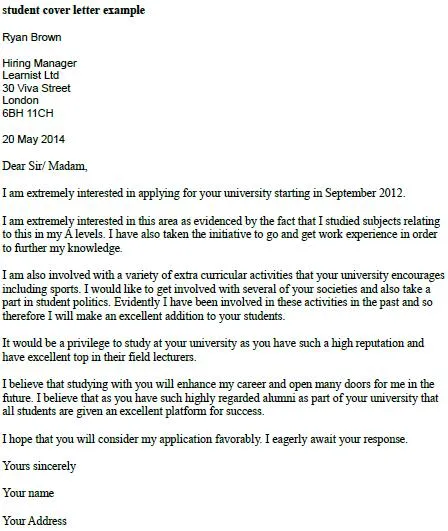
Reviewing cover letter examples can give you a good understanding of format, structure, and the level of detail expected. Here are examples tailored for students applying for entry-level positions and internships. You can adjust these according to your field and situation.
Entry-Level Cover Letter Example
An entry-level cover letter should emphasize your enthusiasm, transferable skills, and any relevant academic or extracurricular experiences. It should demonstrate your understanding of the role and your willingness to learn and grow. Focus on highlighting your relevant academic projects, skills acquired through coursework, and participation in clubs or organizations. Showcase your soft skills, such as communication, teamwork, and problem-solving. Provide specific examples of how you’ve applied these skills. Clearly articulate your career goals and why you are a great fit.
Internship Cover Letter Example
An internship cover letter should highlight relevant coursework, projects, and any internship experiences. Connect your academic background to the requirements of the internship. Detail your research of the company. Focus on what you hope to gain from the internship. Explain how your skills and experiences would contribute to the company’s success. Demonstrate your eagerness to learn and your commitment to the industry. Always tailor the example to the specific internship requirements and showcase your genuine interest in the opportunity.
Common Mistakes to Avoid
Avoiding common mistakes in your cover letter can significantly increase your chances of making a positive impression. Common errors can quickly disqualify your application, so it is crucial to review carefully and ensure your letter is polished and professional.
Generic Content
Avoid using generic, canned language or a one-size-fits-all cover letter. Hiring managers can easily spot cover letters that are not tailored to the specific job or company. Always customize your letter to demonstrate that you have researched the organization, understand the role, and know what the company is seeking in an applicant. Focus on what you bring to the company, rather than just stating what you are looking for.
Typos and Grammatical Errors
Typos and grammatical errors can damage your credibility and professionalism. Always proofread your cover letter carefully, and consider using a grammar checker. Avoid writing errors that will make your letter appear unprofessional and indicate a lack of attention to detail. Double-check all the facts, names, dates, and contact information to make certain everything is correct. Asking a friend or career advisor to review your letter can also provide you with a new perspective and helps you identify the mistakes you may have missed.
Lengthy Letters
Keep your cover letter concise and to the point. Hiring managers are busy and may not have time to read long letters. Aim for a one-page cover letter, and ensure every paragraph is relevant and adds value. Focus on highlighting your key skills, achievements, and experiences relevant to the role. Avoid irrelevant information or filler content that detracts from the core message. Be precise and convey your message in a clear, efficient manner.
Final Thoughts
Writing a compelling cover letter is a valuable skill for students. By following these guidelines, you can create a cover letter that stands out and increases your chances of getting noticed. Always remember to tailor your letter to each specific opportunity, highlighting relevant skills and experiences, and showcasing your enthusiasm for the company and the role. A well-crafted cover letter is a powerful tool for advancing your career. Start writing today!