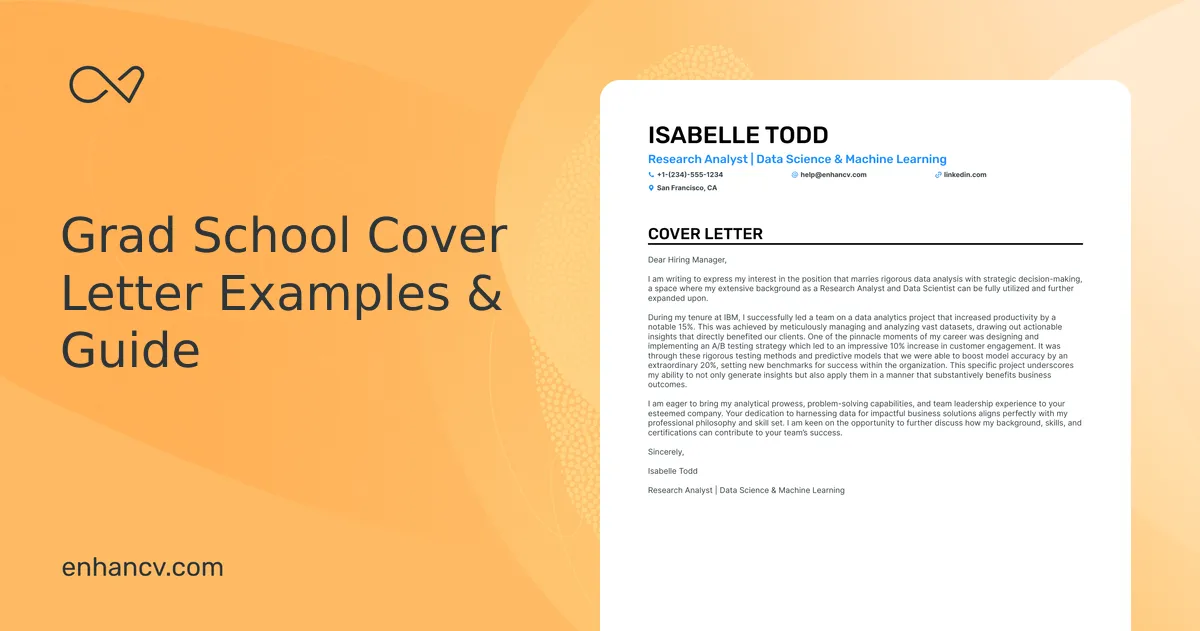
What is a Grad School Cover Letter?
A grad school cover letter is a crucial document that accompanies your application to a graduate program. It serves as your personal introduction to the admissions committee, providing them with a comprehensive overview of your qualifications, experiences, and motivations. Unlike your resume, which lists your accomplishments, the cover letter gives you the opportunity to tell your story, explain your aspirations, and demonstrate why you are a suitable candidate for the program. It is your chance to make a positive first impression and set yourself apart from other applicants. It should highlight how your background aligns with the program’s goals and what you hope to achieve through your studies. Consider it as a way to showcase your personality and communication skills.
Why Is a Cover Letter Important?
The cover letter is exceptionally important because it offers context to your application. It enables you to bridge any gaps in your academic or professional history and explain choices you have made. This document gives you a platform to articulate your passion for the field, your research interests, and your future career goals. Moreover, a well-written cover letter showcases your writing proficiency, an essential skill for graduate-level study. It helps admissions committees gauge your communication skills, organizational abilities, and attention to detail. A compelling cover letter can significantly boost your chances of getting accepted into your desired program. It gives you a human touch, letting you express what is not visible on your resume or transcripts.
Key Components of a Winning Cover Letter

A winning cover letter is well-structured, persuasive, and tailored to the specific program. It should include the following key components to present a strong case for your application. These elements work in harmony to create a cohesive and impactful narrative. Each of these parts of the cover letter needs specific and careful consideration, to ensure that it has the desired effect and leaves a lasting impression on the admissions committee. The goal is to make a lasting impression that makes you stand out.
Header & Contact Information
Your cover letter should start with a professional header that includes your contact information and the date. This information should be clearly presented at the top of the document. A well-organized header ensures that the admissions committee can easily reach you. This part of the letter sets the tone, showcasing your attention to detail and professionalism. Ensuring the header is accurate and current is a small but essential step.
Applicant’s Name & Contact Details
Include your full name, address, phone number, and email address. Use a professional-sounding email address. Double-check all details for accuracy. Ensuring accuracy in your contact details is crucial. It ensures you don’t miss any important communication about your application. It demonstrates your professionalism from the outset.
University or Program Details

Below your contact information, include the date and the recipient’s information. If possible, address the letter to a specific person, such as the admissions committee chair or the program director. If you don’t know the name of the person, you can search on the internet or email the program to ask. If you cannot find a specific name, use a general greeting like ‘Dear Admissions Committee.’ Always double-check the spelling of the university and program names. Addressing the letter correctly shows your attention to detail and genuine interest.
Salutation
Start your cover letter with a formal salutation, such as ‘Dear Dr. [Last Name]’ or ‘Dear Admissions Committee.’ If you have a specific contact name, use it. Avoid generic greetings like ‘To Whom It May Concern.’ The salutation sets the tone for your letter and should be professional and respectful. Addressing the letter to the right person is a good way to get the reader’s attention. Using the name of the admissions officer is a great touch and it shows that you’ve done your research and are attentive to details.
Writing the Body of the Cover Letter
The body of your cover letter is the most important part, where you make your case for admission. It should be concise, well-organized, and tailored to the specific program. Your body should have a strong introduction, several paragraphs describing your experiences, and a powerful conclusion. It provides a detailed look into your qualifications, motivations, and fit for the program. This part should convince the admissions committee that you are a good fit. Every sentence should contribute to the overall narrative, clearly communicating your value to the program.
Expressing Your Intent and Motivation

In the opening paragraph, clearly state your purpose for writing and express your strong interest in the program. Mention the specific program you are applying for and briefly explain why you are interested in it. Clearly express your passion for the field and why you are choosing this specific program and university. Make it clear that you have researched the program and its offerings. Briefly indicate what you hope to achieve through your studies. Make the reader understand why you are a perfect candidate.
Highlighting Relevant Experiences and Skills
Use the subsequent paragraphs to showcase your relevant experiences and skills. Focus on experiences that align with the program’s requirements and your future goals. Highlight achievements and provide concrete examples. Quantify your accomplishments whenever possible to demonstrate your impact. Emphasize skills such as research, critical thinking, and teamwork. This helps in portraying you as a well-rounded candidate. Relate these experiences to the program and explain how they have prepared you for graduate-level study. This is the most crucial part of the letter as it gives a detailed understanding of your experiences.
Showcasing Research Interests and Goals
Discuss your research interests and academic goals in detail. Specify the areas of research that you are most interested in and explain why. If you have a specific professor you would like to work with, mention their name and research. Explain how the program will help you achieve your goals. Briefly describe your long-term career aspirations. Showcasing your long-term goals and research interests will indicate your ambitions and make your application stand out. Connect your interests with the program’s focus.
Demonstrating Alignment with the Program

Demonstrate how your qualifications, experiences, and goals align with the program’s mission and values. Research the program thoroughly and mention specific aspects that appeal to you. Explain why you believe this program is the best fit for your aspirations. Connect your skills and experiences to the program’s curriculum and research opportunities. Showing genuine alignment indicates that you are a thoughtful and dedicated candidate. This helps in making your cover letter more customized.
Crafting a Powerful Conclusion
The conclusion of your cover letter should leave a lasting impression. It should summarize your key qualifications, reiterate your interest in the program, and express your enthusiasm for the opportunity. The closing paragraph should be concise, memorable, and action-oriented. Your conclusion is where you can give a final reminder to the admissions committee of your strengths and why you’re a great fit for their program. This is a good way to reinforce your interest and make your application memorable.
Reiterating Interest and Enthusiasm
Restate your strong interest in the program and reiterate why you are a good fit. Re-emphasize your key qualifications and how they align with the program’s goals. Express your enthusiasm for the opportunity to contribute to the program’s community. Reinforce your commitment to pursuing your academic goals. This way you’re making sure the reader remembers why you’re a great candidate.
Thanking the Committee

Thank the admissions committee for their time and consideration. Express your gratitude for the opportunity to apply to the program. Offer to provide any additional information they may need. Use a professional closing, such as ‘Sincerely’ or ‘Respectfully’. Showing your gratitude leaves a positive impression. It helps your cover letter end on a polite and respectful note. This is a professional way to end your letter and showcase your appreciation.
Proofreading and Editing Your Cover Letter
Proofreading and editing are essential steps to ensure your cover letter is error-free and polished. Errors can make your cover letter look unprofessional and can negatively affect your application. Proofreading is an extremely important step of the writing process. Always take the time to check your letter before submitting it. To make sure everything is great, follow these points to ensure you deliver a perfect letter.
Formatting and Style
Use a professional font, such as Times New Roman, Arial, or Calibri, with a font size of 11 or 12 points. Use single spacing within paragraphs and double spacing between paragraphs. Make sure your margins are set to one inch on all sides. Ensure that your cover letter is well-organized and easy to read. Pay attention to the length of your paragraphs, and break up long blocks of text. Maintain a professional tone throughout your letter. By paying attention to these details, you show the admissions committee your attention to detail and professionalism. A well-formatted letter is easy to read and makes a good impression.
Common Mistakes to Avoid

Avoid common mistakes, such as grammatical errors, spelling mistakes, and typos. Ensure that your cover letter is free of errors. Don’t use generic language or templates. Make sure the letter is tailored to the specific program. Avoid repeating information found in your resume. Keep your cover letter concise, usually one page long. Don’t exceed the suggested length. Make sure your tone is professional and enthusiastic. Avoiding these common pitfalls will enhance the quality of your cover letter. Tailor the letter to each specific program. A personalized, well-edited letter shows you’ve put in the effort and care needed to write a solid application.