Why a Cover Letter Matters for Forklift Operators
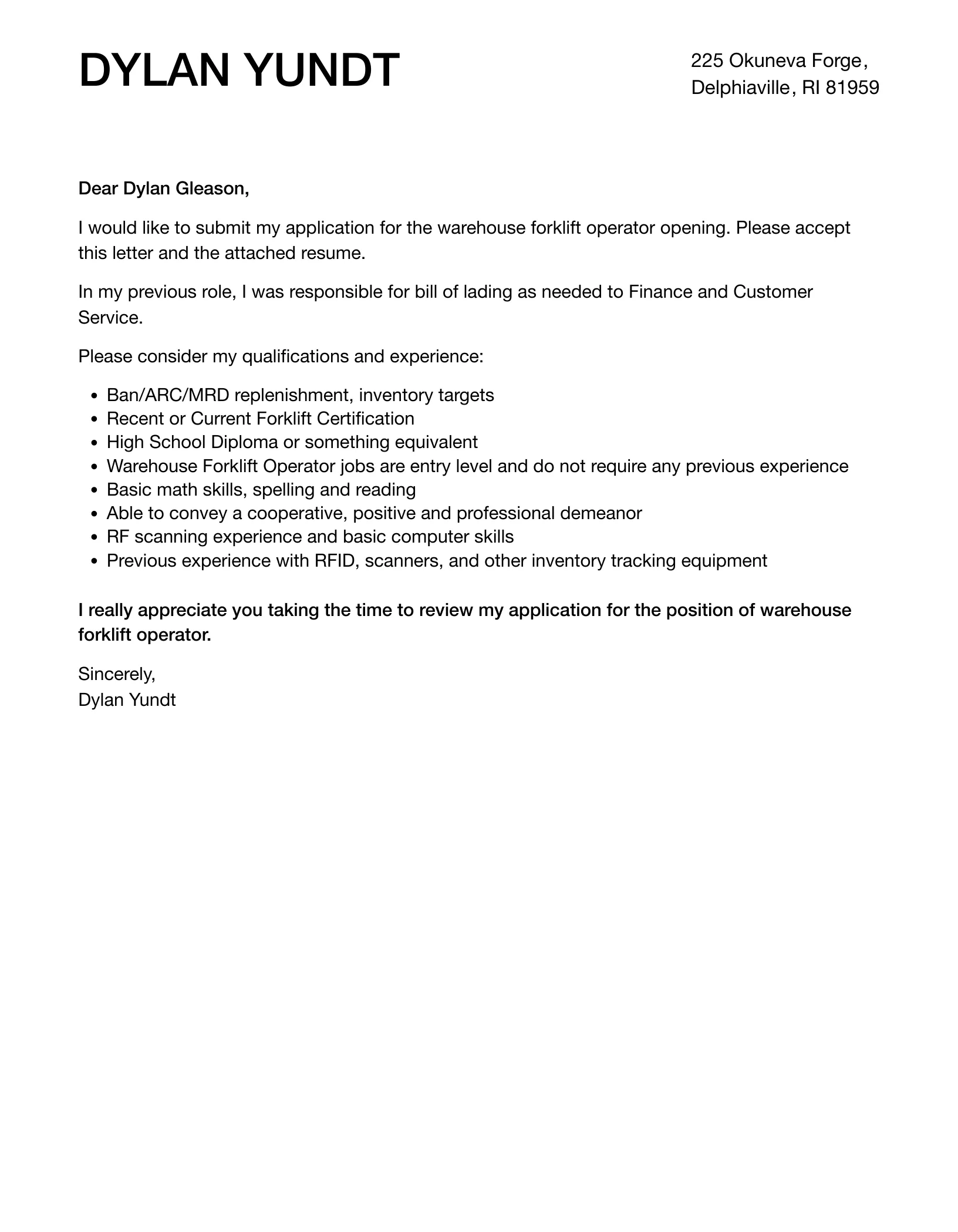
In the competitive world of forklift operation, a well-crafted cover letter can be the key that unlocks your next job. It serves as your first impression, providing a crucial opportunity to showcase your personality, skills, and enthusiasm beyond what’s listed in your resume. While your resume outlines your experience and qualifications, your cover letter allows you to tell a story, highlighting how your skills and experiences align with the specific requirements of the job and the values of the company. It demonstrates your communication skills, attention to detail, and genuine interest in the position, setting you apart from other applicants. A strong cover letter can significantly increase your chances of securing an interview by making a compelling case for why you’re the ideal candidate for the role.
Key Components of a Forklift Operator Cover Letter
A successful forklift operator cover letter is meticulously structured and contains several essential components designed to capture the hiring manager’s attention. Begin by including your contact information, the date, and the recipient’s details. Then, craft a compelling opening paragraph that grabs the reader’s interest, followed by a detailed discussion of your relevant skills and experience. Quantify your achievements, demonstrate your work ethic and soft skills, and express your enthusiasm for the role. Finally, conclude with a strong call to action and ensure your cover letter is thoroughly proofread and professionally formatted.
Your Contact Information and the Date

Start your cover letter with your contact information, including your full name, phone number, email address, and optionally, your LinkedIn profile URL. Place this information at the top left or top right of the document. Below your contact details, include the date of the cover letter. This information helps the hiring manager easily identify and reach you. Ensure your email address is professional and suitable for a job application; avoid using informal or outdated email addresses.
The Hiring Manager’s Information
Direct your cover letter to a specific person whenever possible; research the hiring manager’s name and title. Use professional titles such as ‘Mr.’, ‘Ms.’, or ‘Mx.’ followed by their last name. If you cannot find the name of the hiring manager, use a general salutation like ‘Dear Hiring Manager’ or ‘Dear [Company Name] Hiring Team’. Including this information shows that you’ve done your research and are genuinely interested in the position.
The Salutation
The salutation sets the tone for your cover letter. Use a formal and professional salutation such as ‘Dear Mr./Ms./Mx. [Last Name]’ when addressing a specific person. If you don’t know the hiring manager’s name, use a general salutation like ‘Dear Hiring Manager’. Avoid overly casual salutations like ‘Hi’ or ‘Hello’, which can appear unprofessional. Ensure you match the level of formality in your cover letter with the company culture.
Crafting a Compelling Opening

The opening paragraph is your chance to make a strong first impression. Begin by stating the specific position you are applying for and where you found the job posting. Briefly mention what interests you about the role or the company. Consider using a hook to capture the reader’s attention, such as highlighting a specific skill, experience, or accomplishment that aligns with the job requirements. Show enthusiasm and immediately establish the value you bring to the company to encourage the reader to continue reading.
Highlighting Your Forklift Operator Skills and Experience
The main body of your cover letter should emphasize your relevant skills and experience as a forklift operator. Carefully review the job description and identify the key requirements. Use specific examples from your past roles to demonstrate how you meet these requirements. Focus on what you have achieved and the value you brought to previous employers. Tailor this section to align with the specific demands of the job you’re applying for, showcasing your understanding and ability to perform the required tasks efficiently and safely. Include a narrative about your best skill related to forklifts.
Certifications and Licenses
Clearly state your forklift operator certifications and licenses in your cover letter. List the types of forklifts you are certified to operate, the issuing organization, and the expiration dates of your certifications. Mention any additional training or certifications, such as those related to safety, hazardous materials handling, or warehouse operations. Ensure all certifications are current and valid, as this is a critical aspect of the job.
Safety Knowledge and Procedures

Emphasize your knowledge of safety procedures and your commitment to safe forklift operation. Describe your understanding of workplace safety regulations, pre-operation inspections, and hazard identification. Provide examples of how you have maintained a safe work environment in previous roles. Mention your experience with safety equipment, such as seatbelts, horns, and warning devices. Showing that you prioritize safety is a crucial selling point for any forklift operator position.
Specific Forklift Types Experience
Specify your experience with different types of forklifts, such as counterbalance, reach trucks, order pickers, and pallet jacks. Highlight any specialized experience, such as operating forklifts in confined spaces or handling specific types of materials. Mention the environments you’ve worked in, like warehouses, construction sites, or distribution centers. Providing detailed information about the types of forklifts you have operated demonstrates your versatility and adaptability, showing the hiring manager that you possess the necessary experience.
Quantifiable Achievements and Accomplishments
Include quantifiable achievements to make your cover letter more impactful. Instead of simply stating your responsibilities, quantify your accomplishments using numbers and data. For example, mention how you reduced workplace accidents by a certain percentage, increased the efficiency of loading/unloading operations, or improved inventory management. Using numbers makes your claims more credible and illustrates the value you brought to previous employers. Make sure you have these numbers available.
Showcasing Your Work Ethic and Soft Skills

In addition to your technical skills, highlight your work ethic and soft skills. Mention qualities like reliability, attention to detail, time management, and teamwork. Provide examples of situations where you demonstrated these skills, such as how you solved a workplace issue. Show how you work well in a team environment. Demonstrating these soft skills shows you are a well-rounded candidate and that you will be an asset to the team.
Expressing Enthusiasm for the Position
Convey your enthusiasm for the specific position and the company. Show that you’ve researched the company and understand its values and mission. Explain why you are interested in working for them and how your skills and experience align with their goals. Tailor your cover letter to each job application, expressing a genuine interest in the opportunity. Be honest and let your personality shine through.
Proper Closing and Call to Action
Conclude your cover letter with a strong call to action. Reiterate your interest in the position and express your availability for an interview. Thank the hiring manager for their time and consideration. Provide a clear way for them to contact you, such as your phone number or email address. Make sure the closing is professional and demonstrates your desire to move forward in the hiring process.
Proofreading and Formatting Your Cover Letter

Proofread your cover letter carefully to eliminate any grammatical errors, spelling mistakes, and typos. Ensure the formatting is consistent and professional; use a standard font, such as Arial or Times New Roman, with a readable font size. Maintain a clean and organized layout with appropriate spacing and margins. Having a well-formatted and error-free cover letter demonstrates your attention to detail and professionalism. Before submitting, ask a friend or family member to proofread your cover letter for any errors you might have missed.