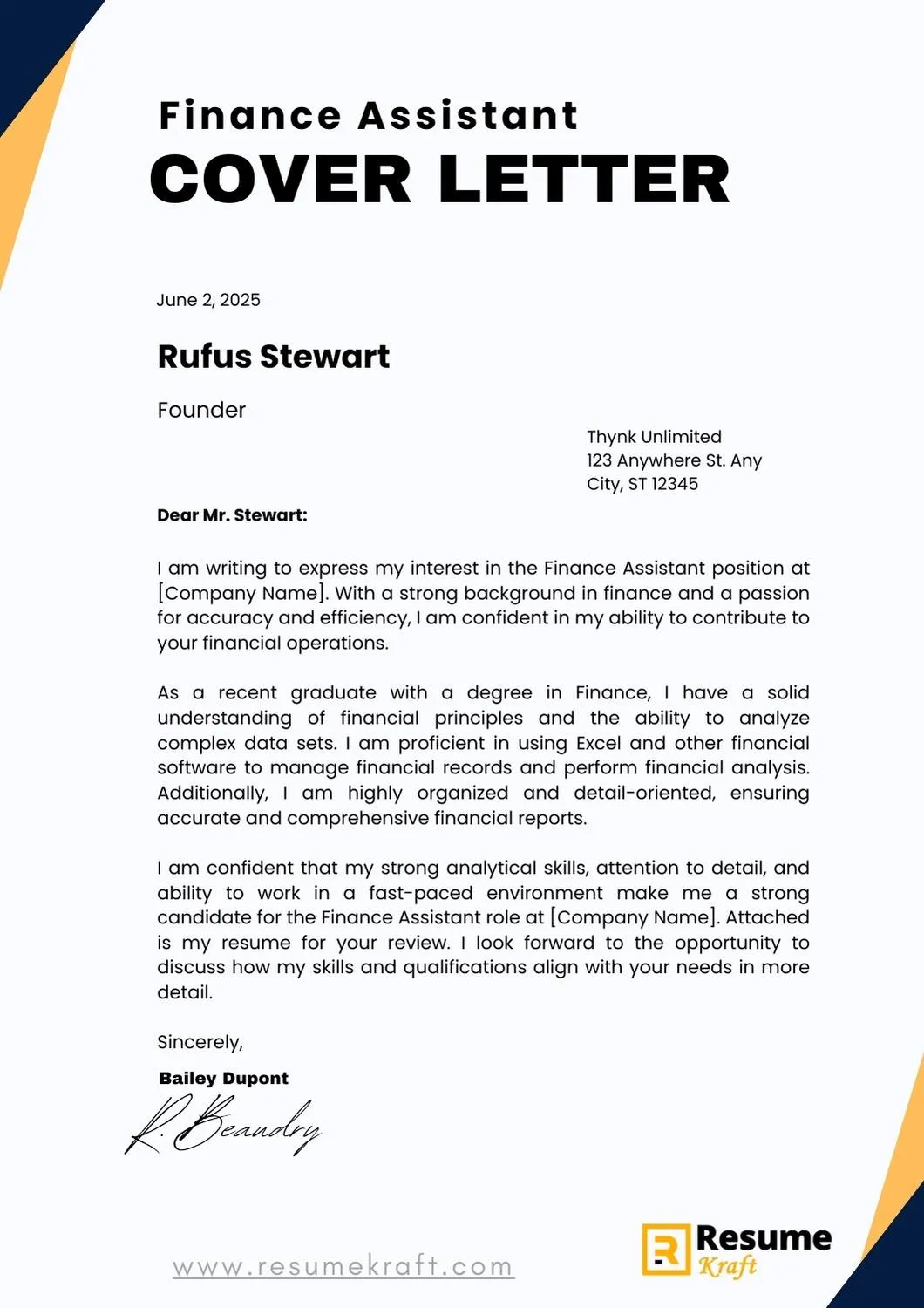
Crafting a Winning Finance Manager Cover Letter
A compelling cover letter is your first opportunity to impress a potential employer and secure an interview. For a Finance Manager, this is particularly crucial, as it showcases not just your skills but also your understanding of the financial landscape and your ability to communicate effectively. This guide unveils the secrets to crafting a cover letter that grabs attention, highlights your strengths, and sets you apart from the competition. From understanding the core components to avoiding common pitfalls, we’ll equip you with the knowledge and tools needed to create a winning cover letter that opens doors to your dream finance manager role. Remember, your cover letter is not just a formality; it’s a powerful marketing tool.
Highlighting Your Financial Acumen
Your cover letter should immediately demonstrate your financial expertise. Begin by clearly stating your experience in financial management, including the number of years you’ve spent in the field. Then, delve into specific areas where you excel, such as financial planning, budgeting, forecasting, or risk management. Showcasing your understanding of financial statements, including the balance sheet, income statement, and cash flow statement, is also vital. Consider mentioning any specific financial software or systems you are proficient with, such as SAP, Oracle, or QuickBooks. Tailor this section to align with the job description, emphasizing the skills and experience most relevant to the role you are applying for. This will show the hiring manager that you understand the job’s requirements and have the necessary expertise to succeed.
Quantifying Achievements with Data

Numbers speak louder than words in finance. Whenever possible, quantify your accomplishments with hard data. Instead of simply stating that you improved efficiency, specify by what percentage you reduced costs or improved the accuracy of financial reporting. For example, you could write, ‘Successfully implemented a new budgeting process that reduced departmental expenses by 15% within one year.’ Did you identify and mitigate financial risks? Provide specific examples and the impact of your actions, such as ‘Identified and resolved a significant accounting discrepancy, preventing a potential loss of $50,000’. Using data and metrics not only validates your skills but also demonstrates your ability to deliver tangible results. This will make your cover letter more impactful and memorable.
Showcasing Leadership and Management Skills
A Finance Manager often leads and mentors a team. Your cover letter should reflect your leadership and management abilities. Describe your experience in managing teams, delegating tasks, and fostering a positive work environment. Mention any successful projects you led, highlighting your ability to drive results and motivate your team. Include examples of how you have developed team members, provided training, or resolved conflicts. If you have experience with performance evaluations, setting goals, or conducting performance reviews, make sure to include that as well. Employers want to see how you inspire and manage your team to achieve financial objectives, so demonstrate your leadership capabilities with specific examples. Illustrate how you’ve built high-performing teams and created a culture of accountability.
Demonstrating Knowledge of Financial Regulations and Compliance
Finance managers must be well-versed in financial regulations and compliance. Mention your understanding of relevant laws, such as Sarbanes-Oxley (SOX), Generally Accepted Accounting Principles (GAAP), and other industry-specific regulations. Describe your experience in ensuring compliance and mitigating financial risks. Highlight any certifications or training you’ve completed, such as Certified Public Accountant (CPA) or Certified Management Accountant (CMA), which demonstrate your commitment to professional standards. Providing this information reassures the employer of your ability to navigate the complex regulatory environment and maintain financial integrity. This knowledge is crucial for protecting the company from legal and financial repercussions.
Tailoring Your Cover Letter to the Job Description

A generic cover letter is unlikely to impress. To make your application stand out, customize your letter to each job you apply for. Carefully review the job description and identify the key skills, experiences, and qualifications the employer is seeking. Then, tailor your cover letter to address those specific requirements. Use the same keywords and phrases from the job description to ensure that your letter aligns with the employer’s needs. This shows that you have taken the time to understand the role and are a good fit for the company. Research the company to get a better understanding of its values, goals, and culture. This will enable you to personalize your letter even further and show genuine interest in the organization.
Structuring Your Finance Manager Cover Letter
A well-structured cover letter is easier to read and more impactful. Start with a professional heading that includes your contact information, the date, and the recipient’s name and title. Then, follow a standard format, including a strong opening paragraph, a few body paragraphs highlighting your relevant experience and skills, and a concise closing paragraph. Use clear headings and subheadings to break up the text and make it more digestible. Maintain a consistent tone and style throughout the letter. Organize your content logically, with each paragraph building upon the previous one. Using bullet points to list key skills or achievements can also improve readability and make your letter more visually appealing. Remember to proofread your letter thoroughly to catch any errors in grammar or punctuation.
The Importance of a Strong Opening
Your opening paragraph is crucial, as it’s your first chance to grab the reader’s attention. Avoid generic openings such as ‘I am writing to apply for the Finance Manager position.’ Instead, start with a compelling statement that immediately highlights your qualifications. You might mention a significant achievement or a skill that aligns with the job description. For example, ‘With over ten years of experience in financial planning and analysis, including a proven track record of increasing profitability by 20% in the last three years, I am confident that my skills align perfectly with the requirements of the Finance Manager role at your organization.’ Clearly state the position you are applying for and express your enthusiasm for the opportunity, showcasing why you are the perfect candidate.
Highlighting Relevant Experience

The body of your cover letter should focus on your relevant experience. Select your most relevant experiences that align with the job description and provide specific examples of how you have excelled in those roles. Describe your responsibilities, the challenges you faced, and the results you achieved. Use action verbs to emphasize your accomplishments, and quantify your achievements whenever possible. For example, instead of writing ‘Managed the budget,’ write ‘Managed a $10 million budget, consistently delivering projects under budget by an average of 5%’. This level of detail demonstrates the value you can bring to the role and assures the hiring manager of your capabilities.
Showcasing Key Skills and Competencies
In addition to your experience, highlight the key skills and competencies that make you a successful Finance Manager. This might include financial analysis, budgeting, forecasting, risk management, financial reporting, and leadership. Mention your proficiency in relevant software and systems. Also include soft skills, such as communication, problem-solving, and attention to detail. Provide specific examples of how you have utilized these skills to achieve positive outcomes. Tailor these to the specific requirements of the role you are applying for. By providing a well-rounded picture of your capabilities, you can demonstrate your suitability for the position and show the hiring manager that you are a well-rounded professional.
Closing Your Cover Letter Effectively
The closing paragraph should reinforce your interest in the role and encourage the employer to contact you. Reiterate your enthusiasm for the position and briefly summarize your key qualifications. Thank the employer for their time and consideration. State your availability for an interview and provide your contact information. Be confident and assertive, but avoid sounding overly eager or presumptuous. Use a professional closing, such as ‘Sincerely’ or ‘Best regards.’ Remember to proofread your closing paragraph to ensure it is error-free and reflects a positive and professional tone.
Formatting for Readability and Impact

The formatting of your cover letter affects its readability and impact. Choose a professional font, such as Arial, Calibri, or Times New Roman, and use a font size between 10 and 12 points. Use single-spacing with a blank line between paragraphs. Maintain consistent margins and avoid excessive use of bolding, italics, or underlining. Use headings and bullet points to break up the text and make your letter more visually appealing. Keep your letter concise and avoid lengthy paragraphs. Aim for a maximum of one page, unless the job description specifically asks for additional information. A well-formatted cover letter is easier to read and leaves a more positive impression.
Proofreading and Editing Your Cover Letter
Before submitting your cover letter, proofread it carefully to eliminate any errors in grammar, spelling, and punctuation. Typos and grammatical mistakes can detract from your professionalism and make a negative impression. Read your letter aloud to catch any awkward phrasing or sentences that don’t flow smoothly. It can be helpful to have a friend, colleague, or career counselor review your letter for you. They can provide an objective perspective and catch any mistakes that you might have missed. Ensuring your cover letter is error-free will show that you pay attention to detail and take pride in your work. Thorough proofreading is crucial for presenting yourself in the best possible light.
Common Mistakes to Avoid
Avoid these common mistakes to ensure your cover letter is successful. Do not use a generic, one-size-fits-all letter. Each cover letter must be customized to the specific job and company. Avoid rambling and keep your letter concise. Ensure it does not exceed one page. Do not include irrelevant information or personal details that do not pertain to your qualifications for the role. Avoid using overly formal or informal language. Make sure your tone is professional and engaging. Do not provide negative information about past employers or colleagues. Always focus on your strengths and the positive contributions you made. Do not misspell the hiring manager’s name or company name. Pay close attention to detail.
Using Action Verbs for Impact

Action verbs make your cover letter more dynamic and demonstrate your accomplishments. Start each bullet point or sentence with a strong action verb to highlight your activities and achievements. Examples include ‘managed,’ ‘developed,’ ‘implemented,’ ‘analyzed,’ ‘reduced,’ ‘increased,’ ‘improved,’ ’led,’ ‘oversaw,’ ‘coordinated,’ and ‘achieved.’ Using active verbs keeps your writing engaging and helps the reader quickly understand your contributions. When possible, use a variety of action verbs to avoid repetition. This variety will add depth to your cover letter and showcase the scope of your experience. Use a thesaurus to find synonyms and keep your writing fresh and interesting.
Examples of Successful Cover Letters
Reviewing successful cover letter examples can provide valuable insight. Look for cover letters that demonstrate strong writing skills, highlight relevant qualifications, and are tailored to specific jobs. Analyze how the writers structure their letters, use action verbs, and quantify their achievements. Pay attention to the tone and how the writers express their interest in the role and the company. There are many online resources and career websites that provide cover letter examples. Use these examples as a guide, but always remember to customize your cover letter to reflect your unique skills, experience, and the specific requirements of the job you are applying for. Use these templates to help refine your own approach.
Finance Manager Cover Letter Example
Here is a sample cover letter to guide you. This is a template, and the content needs to be adapted to fit your specific experience and the job you are applying for. [Your Name] [Your Address] [Your Phone Number] [Your Email Address] [Date] [Hiring Manager Name] [Hiring Manager Title] [Company Name] [Company Address] Dear [Mr./Ms./Mx. Last Name], I am writing to express my strong interest in the Finance Manager position. With over [Number] years of experience in financial management, I have a proven track record of [Quantifiable achievement]. In my previous role at [Previous Company], I was responsible for [Key responsibilities]. I successfully [Quantifiable achievement]. I possess a strong understanding of [Key skills] and am proficient in [Software/Systems]. I am a [CPA/CMA], and I am dedicated to [Compliance/Regulations]. I am eager to learn more about this position and how my skills can benefit [Company Name]. Thank you for your time and consideration. Sincerely, [Your Name]