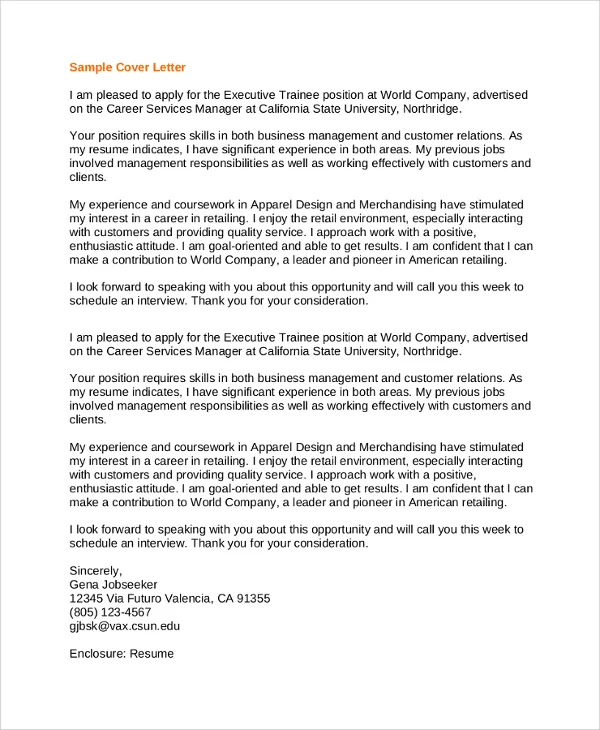
What is an Executive Cover Letter
An executive cover letter is a crucial document that accompanies a resume when applying for high-level leadership positions. Unlike a standard cover letter, an executive cover letter is specifically tailored to showcase the unique skills, experiences, and achievements of a seasoned professional. It serves as a powerful introduction, a means of highlighting key qualifications, and a way to articulate the value the candidate brings to the organization. This letter provides a focused narrative that emphasizes leadership abilities, strategic thinking, and tangible results. It goes beyond a simple summary of qualifications, offering a compelling story that captures the attention of hiring managers and sets the stage for a successful interview.
Why is an Executive Cover Letter Important
In the competitive world of executive recruitment, a well-crafted cover letter is essential. It provides an opportunity to distinguish oneself from other candidates by presenting a personalized pitch that goes beyond the standard resume bullet points. This document highlights the candidate’s strategic insights, leadership prowess, and ability to drive tangible results. Moreover, it enables the executive to frame their career narrative in a way that aligns with the specific needs and objectives of the target organization. It gives the hiring manager a clear vision of the applicant’s experience and also demonstrates the ability to communicate effectively and persuasively. An effective cover letter increases the likelihood of securing an interview and ultimately landing the desired executive role.
Highlighting Key Achievements

When crafting an executive cover letter, it’s crucial to focus on key achievements that directly relate to the target role. Instead of listing generic job responsibilities, concentrate on accomplishments that demonstrate leadership, strategic thinking, and the ability to drive positive change. These achievements should be specific, relevant to the industry, and clearly illustrate the candidate’s ability to deliver results. Think about quantifiable outcomes, such as increased revenue, cost savings, market share growth, or successful project completions. Highlighting these accomplishments provides compelling evidence of the applicant’s value and ability to contribute to the organization’s success. By showcasing these successes, you demonstrate the leadership capabilities and potential impact on the company.
Quantifying Accomplishments
Quantifying accomplishments is a key component of an effective executive cover letter. Whenever possible, back up claims of success with concrete data and metrics. Instead of stating “Improved sales,” specify “Increased sales by 20% in one year.” This provides tangible evidence of the candidate’s impact and makes the achievements more compelling. Use numbers, percentages, and financial figures to showcase the measurable results of the candidate’s actions. For example, “Led a team that reduced operational costs by 15%” or “Successfully launched a new product line that generated $5 million in revenue.” Quantifying accomplishments helps to demonstrate the candidate’s ability to deliver results and provides concrete evidence of their value to the company.
Tailoring the Cover Letter
Tailoring the cover letter to each specific job application is critical. Generic cover letters that simply repeat the information from the resume are unlikely to impress hiring managers. Research the company and the specific role thoroughly. Understand the organization’s mission, values, and recent achievements. Identify the key requirements of the position and align the cover letter with these needs. Demonstrate how the candidate’s experience and skills directly address the company’s challenges and goals. Show that you have taken the time to understand the organization and are genuinely interested in the opportunity. By customizing the cover letter, you show that you have the skills and commitment required to meet the specific needs of the target company.
Cover Letter Structure

Structuring an executive cover letter effectively is vital for conveying information clearly and making a strong impression. The standard structure includes a header with contact information, a personalized greeting, a compelling opening paragraph, body paragraphs that highlight key achievements and demonstrate value, and a strong closing that reiterates interest and includes a call to action. Use clear and concise language, and organize the content logically. Ensure the format is easy to read and visually appealing. The layout should guide the reader through the document, making it easy for the hiring manager to quickly understand the candidate’s qualifications and value proposition. Properly structured cover letters leave a professional impression and increase the chance of a positive response.
Header and Contact Information
Begin the executive cover letter with a professional header that includes the candidate’s name, address, phone number, and email address. Ensure this information is accurate and up-to-date. If applying online, you can also include a link to the candidate’s LinkedIn profile. The header should be formatted consistently and visually appealing. Make sure the header matches the style of the resume. A well-designed header presents a professional image and makes it easy for the hiring manager to contact the candidate. It is important to make sure your email and phone number is working and ready to receive potential interviews.
Greeting the Hiring Manager
Whenever possible, address the cover letter to a specific person, such as the hiring manager or the CEO. Research the name of the decision-maker through the company’s website, LinkedIn, or other sources. If the name is unavailable, use a professional greeting such as “Dear Hiring Manager” or “Dear [Company Name] Hiring Team.” Avoid generic greetings like “To Whom It May Concern.” Personalizing the greeting shows initiative and attention to detail. Addressing the hiring manager directly also helps to establish a personal connection, making the cover letter more engaging and memorable. This approach demonstrates that you have researched the company and are genuinely interested in the opportunity.
Crafting the Opening Paragraph

The opening paragraph is your first opportunity to grab the hiring manager’s attention. Start with a strong statement that immediately highlights your qualifications and demonstrates your understanding of the role and the company. Briefly state the position you are applying for and how you learned about the opportunity. Include a brief, impactful statement that summarizes your most relevant skill or achievement. For example, “With over 15 years of experience leading successful marketing teams, I am eager to apply my expertise to the CMO position at [Company Name].” The opening paragraph should be concise and compelling, making the hiring manager want to continue reading. It sets the tone for the entire letter and captures interest from the very beginning.
Body Paragraphs and Demonstrating Value
The body paragraphs should elaborate on the key achievements and skills mentioned in the opening paragraph. Use these paragraphs to demonstrate how your experience aligns with the requirements of the role and the company’s goals. Provide specific examples of your successes, quantifying results whenever possible. Use action verbs and highlight leadership skills, strategic thinking, and problem-solving abilities. Tailor the content to address the specific needs and challenges of the company. In each paragraph, focus on a particular aspect of your experience and show how you have delivered value in similar situations. Demonstrate how your skills and experience make you the ideal candidate for the position.
Closing the Cover Letter
The closing paragraph should reiterate your interest in the position and summarize your key qualifications. Express enthusiasm for the opportunity and reiterate how your skills and experience align with the company’s needs. Include a call to action, such as inviting the hiring manager to contact you for an interview. Keep the tone positive and confident. Express gratitude for their time and consideration. Proofread the closing paragraph carefully to ensure it is professional and error-free. A well-crafted closing leaves a lasting positive impression and increases the likelihood of the hiring manager contacting you.
Formatting and Design of the Cover Letter
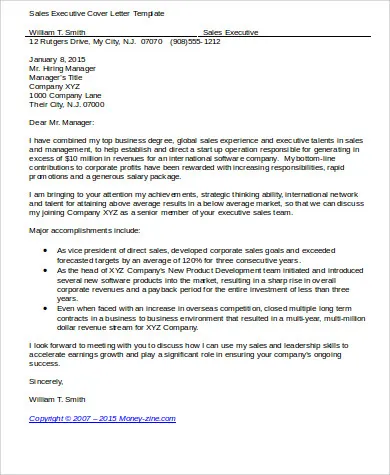
The formatting and design of the executive cover letter are critical for making a professional and polished impression. Choose a professional font, such as Times New Roman, Arial, or Calibri, in a readable size (11 or 12 points). Use appropriate margins (1 inch on all sides) and double-space between paragraphs for easy reading. Ensure the letter is visually balanced and organized. Use headings and bullet points to break up large blocks of text and highlight key information. The formatting should be consistent throughout the document and should match the style of the resume. A well-formatted cover letter is easy to read and demonstrates attention to detail, which can make a positive impact.
Choosing the Right Font and Size
Selecting the right font and size is crucial for readability and professionalism. Opt for a standard, easy-to-read font like Times New Roman, Arial, or Calibri. Avoid using overly stylized or unusual fonts that may be difficult to read. Choose a font size between 11 and 12 points. This is generally considered the optimal size for comfortable reading. Ensure the font size is consistent throughout the document. Bold and italicize sparingly, and use these features to highlight important information. Using a professional font and size enhances the overall appearance of the cover letter, making it more appealing and easier for the hiring manager to read.
Using White Space Effectively
Effective use of white space improves the readability and visual appeal of the cover letter. Use ample white space around the margins, between paragraphs, and between sections. Avoid overcrowding the page with text. Double-space between paragraphs to separate the ideas clearly. Use bullet points and lists to break up large blocks of text. This allows the reader’s eye to rest and makes it easier to absorb the information. A well-balanced use of white space creates a clean and professional appearance, making the cover letter more inviting to read. It demonstrates an attention to detail and makes it easier for the hiring manager to quickly grasp the essential information.
Proofreading and Editing
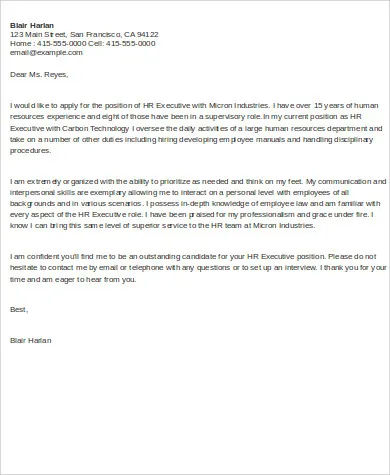
Proofreading and editing are essential steps in finalizing an executive cover letter. Errors in grammar, spelling, and punctuation can undermine the candidate’s credibility and professionalism. Carefully proofread the entire document multiple times. Use a spell checker and grammar checker, but also review the content manually. Check for consistency in formatting, such as capitalization, punctuation, and the use of bolding and italics. Ask a trusted colleague or friend to review the cover letter for any errors or areas for improvement. A well-proofread and edited cover letter demonstrates attention to detail and respect for the hiring manager, which is vital for any executive position.
Cover Letter Samples Executive
Reviewing cover letter samples is an effective way to understand the nuances of executive cover letter writing. These samples provide practical examples of formatting, language, and content. However, do not copy the samples directly; rather, use them as a guide for creating a personalized cover letter. By studying different samples, you can gain insights into how to highlight achievements, quantify results, and tailor the content to the specific role and company. Look for examples that are relevant to your industry and experience level. Pay attention to the overall tone and style of the letters and note how they showcase the candidate’s expertise and leadership skills. Understanding the format is crucial, but make it your own and make it shine. An example can be a great inspiration.
Sample Cover Letter Executive
Here’s a general cover letter format that you can model yours after:
[Your Name] [Your Address] [Your Phone Number] [Your Email]
[Date]
[Hiring Manager Name] (if known), or “Hiring Manager” [Company Name] [Company Address]
Dear [Mr./Ms./Mx. Last Name or Hiring Manager],
[Opening paragraph - State the position you are applying for, how you heard about it, and a brief, impactful statement summarizing your most relevant skill or achievement.]
[Body paragraph 1 - Highlight a key achievement or skill, providing specific details and quantifying results whenever possible.]
[Body paragraph 2 - Further elaborate on your qualifications, demonstrating how your experience aligns with the company’s goals and the job requirements.]
[Body paragraph 3 - (Optional) Include another achievement or skill if relevant and showcase how you can bring added value to the team.]
[Closing paragraph - Reiterate your interest, summarize your qualifications, include a call to action (inviting them for an interview), and express gratitude.]
Sincerely, [Your Typed Name]
Always tailor your sample to the specific job requirements.
Cover Letter Executive Sample 2

When writing a second executive cover letter, one thing to consider is that is slightly different than the first one. You can focus on a different aspect of your experience to reach different audience or you can focus on a different achievement, so the hiring manager knows you have many different skills. For example, for some executive positions, you could use a more technical tone and more data for the body paragraphs. Also, you can focus on showing some problems you solved on the previous company, and the results after you did something.
Cover Letter Executive Sample 3
For a third executive cover letter sample, it’s a good idea to go for a more personal approach. Demonstrate your leadership style and the qualities that make you unique, rather than focusing solely on achievements. Express your passion for the work and show how your values align with the company culture. Showcase your ability to inspire and motivate your team to achieve common goals. Share an anecdote that illustrates your leadership capabilities, and convey a sense of what it would be like to work under your leadership. This approach helps to create a connection with the hiring manager and show your character.
Tips for Customizing Executive Cover Letters
Customizing an executive cover letter is essential for making a strong impression. Generic cover letters fail to capture the hiring manager’s attention. Adapt the content to the specific job, company, and industry. Research the company’s mission, values, and recent initiatives. Analyze the job description carefully and identify the key requirements and desired qualifications. Tailor the cover letter to address these needs directly. Showcase relevant skills, experiences, and achievements that align with the company’s goals. Demonstrating your understanding of the role and the company demonstrates your genuine interest and commitment to success.
Researching the Company and Role
Thorough research is critical before writing an executive cover letter. Visit the company’s website, read its mission statement, and explore its recent news and achievements. Learn about the company’s products, services, and target market. Understand the company’s culture and values. Research the role itself by carefully reviewing the job description. Identify the key responsibilities, required skills, and desired qualifications. Understand the company’s strategic priorities and challenges. This research will give you the insights needed to customize the cover letter effectively, demonstrating that you’ve done your homework and are genuinely interested in the opportunity. Make sure you know the company’s core values.
Addressing Specific Needs
Tailor the cover letter to address the specific needs and challenges of the company and the role. Identify the key problems the company is facing or the objectives it is trying to achieve. Show how your experience and skills can help the company overcome these challenges or achieve its goals. Use the cover letter to demonstrate your strategic thinking, problem-solving abilities, and leadership skills. Provide concrete examples of how you have delivered results in similar situations. Show how you have successfully led teams, managed budgets, and implemented strategic initiatives. By addressing the specific needs of the company, you can make your application more compelling and demonstrate your value.
Using Keywords Strategically
Strategically using keywords is a key aspect of customizing an executive cover letter. Carefully analyze the job description and identify the key skills, qualifications, and keywords used by the hiring manager. Incorporate these keywords naturally into the cover letter, ensuring that they align with your experience and accomplishments. This helps to ensure that the cover letter will be noticed by applicant tracking systems (ATS) and reviewed by hiring managers. Do not simply stuff the cover letter with keywords. Instead, weave the keywords into the text. This strategy boosts the chances of the application being noticed and understood.
Executive Cover Letter Best Practices
Following best practices can significantly increase the effectiveness of your executive cover letter. Keep the letter concise and focused on the most important information. Highlight the value proposition and demonstrate your leadership skills. Use a professional tone and format the letter in a clear and easy-to-read manner. Tailor the content to each specific job application. Proofread the document thoroughly for any errors in grammar or spelling. By following these best practices, you can make a positive impression and increase your chances of securing an interview and the desired role. It can be the difference between getting a yes or a no from the hiring manager.
Keep it Concise
Keep the executive cover letter concise and focused. Hiring managers are busy, so they appreciate documents that are easy to read and get to the point quickly. Aim for a length of one page. Highlight only the most relevant achievements and skills. Avoid providing excessive detail or repeating information from your resume. Use clear and concise language and eliminate unnecessary jargon. A well-written, concise cover letter is more likely to capture the hiring manager’s attention and make a positive impression. Focus on what is most important and provide the required information, but keep it easy to read.
Focus on Value Proposition
Focus on the value proposition, highlighting how your skills and experience can benefit the company. Clearly articulate what you bring to the table. Demonstrate how your accomplishments align with the company’s goals and the requirements of the role. Highlight any unique skills, experiences, or perspectives that set you apart from other candidates. Show what you can do for the company, not just what you have done in the past. Emphasize how you can help the company achieve its objectives, solve its problems, and generate positive results. A strong value proposition is essential to capture the hiring manager’s attention and demonstrate your worth.
Showcase Leadership Skills
Showcase leadership skills throughout the executive cover letter. Emphasize your ability to lead, motivate, and manage teams. Demonstrate your strategic thinking, decision-making abilities, and communication skills. Provide examples of successful leadership initiatives you’ve undertaken. Highlight how you have inspired teams to achieve ambitious goals. Emphasize your experience in developing and implementing strategies that have driven positive results. Showcase your emotional intelligence and your ability to build relationships with others. These actions help to make you a leader and a person that can contribute to any company.
Conclusion
An executive cover letter is more than just a formality; it is a strategic tool for career advancement. By following the strategies in this guide, you can create a compelling document that highlights your value, showcases your leadership abilities, and increases your chances of securing your dream job. Remember to tailor each cover letter to the specific role and company. Proofread your work carefully, and present yourself in a professional manner. By applying these principles, you will be well on your way to success. The most important thing is to express yourself and be honest, while highlighting your achievements.