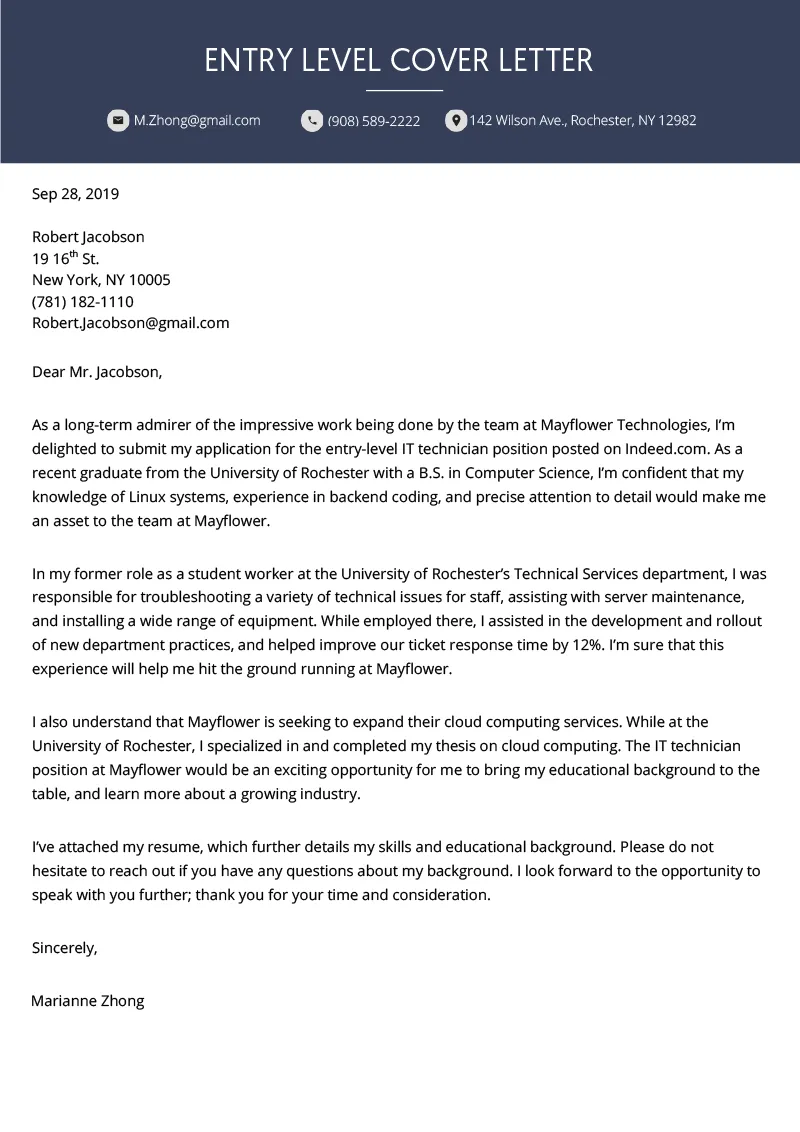
Why Cover Letters Matter for Entry Level Positions
In the competitive landscape of entry-level job applications, a well-crafted cover letter can be your secret weapon. While a resume provides a snapshot of your qualifications, a cover letter gives you the opportunity to tell your story, highlight your passion, and demonstrate why you’re the perfect fit for the role. For entry-level positions, where experience might be limited, a cover letter becomes even more critical. It’s your chance to showcase your soft skills, explain any gaps in your resume, and express your enthusiasm for the company and the position. Think of it as a conversation starter, a way to introduce yourself beyond the bullet points on your resume. It allows you to personalize your application and make a memorable impression on the hiring manager, setting you apart from other candidates who may have similar qualifications.
Highlighting Relevant Skills
Entry-level positions often seek candidates with transferable skills – those abilities and qualities you’ve honed through various experiences, even if they aren’t directly related to the job. Your cover letter is the perfect place to highlight these. Identify the key skills the employer is seeking in the job description and then provide specific examples from your past experiences where you demonstrated these skills. For instance, if the job description emphasizes teamwork, share a brief anecdote about a group project where you successfully collaborated with others, highlighting your communication, problem-solving, and conflict-resolution abilities. Quantify your accomplishments whenever possible; instead of saying you ‘assisted with social media,’ state you ‘increased social media engagement by 15% through content creation and strategic posting.’ This concrete evidence of your skills will make your application more compelling. Remember to tailor your skills to each application, focusing only on the skills most relevant to the specific job.
Tailoring to the Job Description

The most effective cover letters are those that are specifically tailored to the job description. Begin by carefully reviewing the job posting, paying close attention to the required and preferred qualifications, skills, and responsibilities. Then, structure your cover letter to directly address these points. For each key requirement mentioned in the job description, provide a specific example from your experience that demonstrates how you meet that requirement. This shows the hiring manager that you’ve taken the time to understand the role and that you possess the skills and qualifications they’re looking for. Don’t simply repeat what’s in your resume; elaborate on your experiences and explain how they align with the job’s needs. Use keywords from the job description throughout your letter, but be sure to integrate them naturally within your sentences. This will not only help your letter get noticed by the hiring manager but also optimize your application for applicant tracking systems (ATS) that many companies use.
Showcasing Education and Training
For entry-level candidates, education and training often play a significant role in demonstrating qualifications. In your cover letter, briefly mention your degree or relevant coursework. Highlight any special projects, academic achievements, or relevant training programs that support your application. Even if your degree isn’t directly related to the job, you can still emphasize transferable skills you developed during your studies, such as research, critical thinking, or project management. If you’ve participated in any internships, volunteer work, or extracurricular activities that align with the job’s requirements, be sure to mention those as well. These experiences not only showcase your skills but also demonstrate your initiative and commitment to learning. Remember to frame your educational background in a way that aligns with the employer’s needs and demonstrates your readiness to contribute to their organization.
Formatting Your Education Section
The way you present your education in your cover letter can greatly impact its effectiveness. Generally, include your degree, major, the name of your university, and the dates of your attendance or graduation. If you have a high GPA or received any academic honors, it’s appropriate to mention these achievements, especially if you’re a recent graduate. You can also highlight relevant coursework or projects that align with the job requirements. Keep the education section concise and focused; it’s not necessary to list every single course you took. Instead, select the most relevant information to demonstrate your preparation for the role. If you have limited work experience, you can place greater emphasis on your educational background, but always ensure it remains relevant to the job and supports your overall application. Use a clear and professional format, such as bullet points or a brief paragraph, to make the information easy to read and understand.
Demonstrating Enthusiasm and Fit

Your cover letter is also your opportunity to demonstrate your genuine interest in the company and the specific role. Avoid generic statements; instead, show that you’ve researched the company and understand its mission, values, and recent developments. Explain why you’re drawn to the company and how your skills and aspirations align with its goals. Mention specific projects or initiatives that resonate with you. This could include the company’s products, its culture, or its commitment to innovation. Express your enthusiasm in a sincere and professional manner. Show that you’re not just looking for any job, but specifically this job at this company. Conclude your letter by reiterating your interest in the position and your eagerness to contribute. A well-crafted closing paragraph can leave a lasting impression on the hiring manager, demonstrating your passion and commitment to the opportunity.
5 Top Entry Level Cover Letter Examples
Example 1 Recent Graduate
A recent graduate cover letter typically focuses on academic achievements, internships, and relevant coursework. The goal is to highlight how your education has prepared you for the role. In this letter, you will emphasize any practical experiences, projects, or research that demonstrate your skills. Tailor the content to match the job description, using keywords and examples from your academic and professional background. Show your potential and eagerness to learn. A good closing reiterates your interest and thanks the employer for their time and consideration. Use the company’s name, and customize the letter to show you are applying specifically for their opening. Highlight any relevant coursework or special projects. Focus on any skills and experiences, such as research, project management, or teamwork. State your career goals.
Example 2 Student

A cover letter for a student should highlight relevant coursework, part-time jobs, volunteer experiences, and any extracurricular activities. The focus is on demonstrating your skills and your willingness to learn. Even if your experience is limited, focus on transferable skills. Highlight projects, volunteering, or part-time jobs that show initiative. Tailor the content to the specific job description. Emphasize your enthusiasm to learn and grow within the company, and mention any relevant clubs or organizations. Show how your skills apply to the role. If you have any relevant skills, for example coding or any software, make sure to mention it. Make sure the letter is well formatted and has the correct tone. Express your career goals.
Example 3 Career Changer
A cover letter for a career changer should focus on transferable skills. Showcase how your previous experiences are relevant to the new role. Explain why you are making the career change, and address any potential concerns the employer may have. Highlight the skills that you have already. Use examples to show these skills. Tailor the content to the job description and explain why you are interested in the new field. Make the most of the skills that you have. Provide the most relevant information, and avoid including irrelevant experiences. Focus on the skills that the job description is looking for, and keep the letter concise. Explain why you have a passion for the new career, and what your goals are.
Example 4 Limited Experience
When you have limited experience, focus on skills you have gained through education, volunteer work, or any part-time jobs. Highlight your potential and your enthusiasm to learn and grow in the role. Emphasize transferable skills that you have. Show how your experiences relate to the job requirements. Tailor the content to the job description. Address any gaps in your employment history. Focus on your skills and potential, and show that you are eager to learn. Make the letter concise and professional, and show how your goals align with the company’s. Don’t be afraid to mention your education and any other important experiences. Explain how you plan to succeed in the role.
Example 5 No Experience

In the absence of experience, a cover letter must emphasize your education, skills, and potential. Highlight the skills you have acquired through coursework, projects, and personal development. Focus on your transferable skills, such as communication, problem-solving, and teamwork. Emphasize your passion for the industry and the company. Tailor the content to the job description, and show your ability to learn. Demonstrate your enthusiasm and eagerness. Showcase any personal projects, volunteer experiences, or extracurricular activities that demonstrate your potential. Explain why you are interested in the specific role and company. Make your letter sincere and professional. Show that you are willing to put the time in, and express your long-term goals.
Key Takeaways for Writing Effective Cover Letters
Formatting and Design Tips
The appearance of your cover letter is just as important as its content. Start with a professional font such as Arial, Calibri, or Times New Roman. Use a font size between 10 and 12 points for easy readability. Maintain consistent formatting throughout the letter, including line spacing and margins. Use clear headings and subheadings to break up large blocks of text, making it easier for the reader to scan and digest the information. Keep the letter concise, aiming for one page. Proofread carefully for any errors in grammar and spelling. Choose a layout that is visually appealing and easy to navigate. Using white space effectively can make your cover letter look clean and professional. Save your cover letter as a PDF to ensure that the formatting remains consistent when the recipient opens it.
Proofreading and Editing

Before you submit your cover letter, take the time to proofread and edit it carefully. Check for any grammatical errors, spelling mistakes, and typos. Have a friend, family member, or career counselor review your letter as well. They can provide a fresh perspective and catch any errors you might have missed. Ensure that the language is clear, concise, and professional. Verify that the information in your letter is accurate and up-to-date. Check that you have tailored the letter to the specific job and company. Double-check the contact information for the hiring manager and the company. A well-proofread and edited cover letter demonstrates your attention to detail and your commitment to presenting yourself in the best possible light. This final step can significantly improve your chances of making a positive impression.
Final Thoughts
Writing an effective cover letter for an entry-level position requires careful planning, research, and attention to detail. By highlighting your relevant skills, showcasing your education and training, demonstrating your enthusiasm, and tailoring your letter to the specific job description, you can significantly increase your chances of getting noticed. Remember to proofread and edit your letter carefully, and to present yourself in a professional and compelling manner. The examples provided offer insight into how to structure your letter based on your unique background. Use these tips and examples as a guide to create a cover letter that effectively communicates your qualifications and helps you land your dream entry-level job. Good luck with your job search!