Crafting a Winning Customer Service Cover Letter
A customer service cover letter is your first opportunity to make a strong impression on a potential employer. It’s more than just a formality it’s a vital tool in your job search arsenal. A well-crafted cover letter provides a snapshot of your skills, experience, and enthusiasm, setting the stage for a successful application. In the competitive field of customer service, a standout cover letter can be the key to unlocking your dream job. By following the guidelines in this guide, you’ll be well on your way to crafting a cover letter that captivates hiring managers and highlights your suitability for the role.
Understanding the Importance of a Cover Letter
Many job seekers underestimate the importance of a cover letter, viewing it as merely a formality. However, a cover letter serves as a powerful introduction, giving you the chance to explain why you are the ideal candidate for the customer service position. It allows you to showcase your personality, passion, and skills in a way that a resume alone cannot. A great cover letter can be the deciding factor in whether you get an interview or not, especially in the customer service field where soft skills are critical. It’s your chance to communicate your unique value proposition to a potential employer.
Why a Cover Letter Matters

A cover letter gives you a space to expand on your resume. You can share stories of your successes. You can express your enthusiasm for the company and the specific role, demonstrating that you’ve taken the time to learn about the opportunity. It is your opportunity to stand out from the crowd and show the hiring manager that you’re not just another applicant, but a person who truly wants the job. It is a way to highlight your key skills, and it shows the hiring manager that you are serious about applying for the role.
Highlighting Your Unique Value
Your cover letter is your chance to shine. In a customer service role, this means highlighting skills like communication, problem-solving, and empathy. Briefly detail experiences that showcase your abilities. Quantify your achievements. Use examples to demonstrate your ability to resolve issues, handle difficult customers, and go the extra mile. Show potential employers what sets you apart from other applicants, and how you can make a difference for the company. Explain your value and convince them that you are the best candidate.
Key Components of a Customer Service Cover Letter
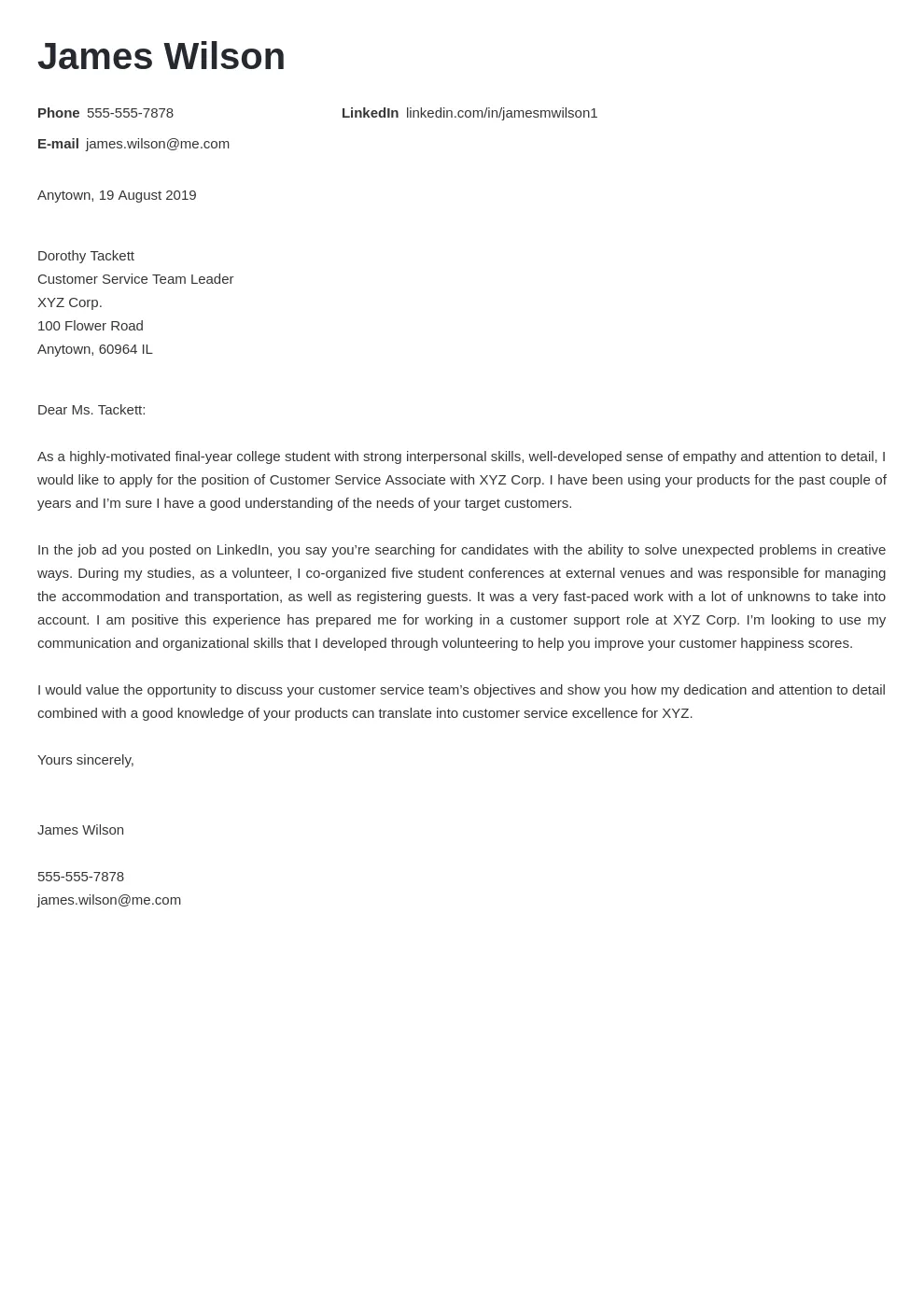
A well-structured cover letter follows a clear format. Each section serves a specific purpose, contributing to a cohesive and compelling narrative. From the heading with contact information to the closing with a call to action, every element should work together to present you in the best possible light. Keep it concise, professional, and tailored to the specific customer service position for which you are applying. Ensure each component of your cover letter is well-executed to make a strong impression.
Contact Information and Date

Start with your contact information your name, phone number, email address, and LinkedIn profile (if applicable). Include the date. Address the letter to the hiring manager using their name, if possible. This shows attention to detail and a personal touch. It makes your cover letter stand out from the many generic applications. Getting these basics correct is important to ensure the hiring manager can contact you if they want to move forward.
Greeting the Hiring Manager
Use a professional and appropriate greeting. If you know the hiring manager’s name, use it. If not, use a generic greeting, such as “Dear Hiring Manager,” or “Dear [Company Name] Hiring Team.” Avoid casual greetings. Ensure the greeting is professional and sets the tone for the rest of your letter. This establishes a positive first impression before you begin to discuss your qualifications.
Writing a Compelling Opening Paragraph
Your opening paragraph is your chance to grab the reader’s attention. State the position you are applying for and how you found it. Briefly summarize your experience and highlight your key skills. Express your enthusiasm for the role and the company. Make sure this is something that makes you stand out. This opening serves as your introduction and sets the tone for the rest of your cover letter, so make sure it is attention-grabbing and professional. Start strong to encourage them to read the rest of your letter.
Showcasing Relevant Skills and Experience

The body of your cover letter should elaborate on your skills and experience. Provide specific examples that demonstrate your abilities. Highlight the customer service skills that align with the job description. Give clear examples of how you used these skills in the past. Tailor your content to the specific requirements of the job, emphasizing the most relevant aspects of your background and experiences. Use the opportunity to connect your experiences to the requirements of the role.
Communication Skills
Communication is crucial in customer service. Highlight your written and verbal communication skills. Mention any specific training or certifications. Use examples of how you successfully communicated with customers, both in person and remotely. Describe how you adapted your communication style to different situations. Demonstrate your ability to listen actively and convey information clearly and concisely. Showcase skills like active listening, empathy, and clear articulation.
Problem-Solving Abilities
Customer service often involves resolving issues. Demonstrate your problem-solving skills by providing examples of how you identified, analyzed, and resolved customer issues. Detail the steps you took to find solutions, and emphasize positive outcomes. Explain how you can address customer complaints. Show examples of how you turned a negative situation into a positive one. Show you are able to make decisions and find solutions to keep customers happy.
Empathy and Patience

Customer service representatives must have empathy and patience. Mention your ability to understand and relate to customers’ concerns. Provide examples of how you handled difficult customers with patience and a positive attitude. Emphasize your ability to remain calm under pressure. Show how you can de-escalate situations. Explain your experience in showing empathy towards customers and providing a positive experience for them.
Quantifying Achievements with Numbers
Whenever possible, quantify your achievements. Instead of saying “improved customer satisfaction,” say “improved customer satisfaction scores by 15% in six months.” Quantifiable metrics provide concrete evidence of your abilities. Use numbers to demonstrate the impact you had in previous roles. Show how you improved processes or metrics. Highlighting accomplishments with numbers makes your application more compelling.
Demonstrating Company Research and Interest
Show that you’ve researched the company and understand its values, mission, and culture. Tailor your cover letter to the specific company. Explain why you’re interested in working there. Mention specific products, services, or initiatives that resonate with you. Demonstrate a genuine enthusiasm for the opportunity. Let them know you understand what the role is. This makes your cover letter stand out by showing your commitment.
Expressing Enthusiasm and a Call to Action

End your cover letter by expressing your enthusiasm for the role and the opportunity to contribute to the company. Reiterate your interest and highlight your key skills one last time. Include a clear call to action, such as “I am eager to discuss how my skills and experience can benefit your team” or “I welcome the opportunity to discuss my qualifications in an interview.” Make sure you thank the hiring manager for their time and consideration.
Formatting and Proofreading Your Cover Letter
The format and the presentation of your cover letter are just as important as its content. A well-formatted letter that is free of errors demonstrates professionalism and attention to detail. Before sending your cover letter, take the time to ensure that everything is in perfect order. Make sure the layout is neat, readable, and reflects your commitment to excellence. This section will walk you through some important formatting considerations.
Font and Layout Considerations
Choose a professional and readable font, such as Times New Roman, Arial, or Calibri, with a size between 11 and 12 points. Use a simple layout with clear headings and paragraphs. Ensure consistent spacing. Keep the layout clean and organized. A well-formatted letter is easy to read. Avoid using excessive formatting or fancy fonts. Ensure the layout is professional and consistent throughout the entire letter.
Proofreading for Errors

Proofread your cover letter carefully for any typos, grammatical errors, or spelling mistakes. Errors can undermine your credibility. Ask a friend or colleague to review your cover letter. Proofreading ensures the letter is free of mistakes and presents you in a professional light. Pay close attention to details and punctuation. Eliminate any errors. Ensure your cover letter makes a positive impression.
Customizing Your Cover Letter
A generic cover letter is unlikely to impress hiring managers. Take the time to customize your cover letter for each job you apply for. Tailor it to the specific requirements of the role and the company’s values. Research the company, and mention specific aspects that appeal to you. Use keywords from the job description to show your alignment with the role. Customization is crucial for demonstrating that you understand the role and are genuinely interested.
Tailoring to the Specific Job Description
Carefully review the job description and identify the key skills and requirements. Highlight your experience and qualifications that match these requirements. Use keywords from the job description. Adjust your examples to align with the needs of the role. Tailoring shows that you understand the role and are a good fit. Customization is the key. Don’t just submit a generic cover letter to multiple applications.
Using Keywords Strategically

Incorporate keywords from the job description throughout your cover letter. This helps your application pass through applicant tracking systems (ATS) and catch the hiring manager’s attention. Use relevant keywords naturally within the context of your sentences. The use of keywords ensures your application is seen. It is important to highlight your most relevant skills and experiences.
Customer Service Cover Letter Examples
Reviewing cover letter examples can give you a better understanding of how to structure and write your own. Each example showcases various approaches, depending on the applicant’s experience level and the specific job requirements. These examples serve as a guide and inspiration for crafting a compelling cover letter. Whether you’re starting out or have years of experience, understanding the nuances of different formats can elevate your application.
Entry-Level Cover Letter Example
For entry-level positions, focus on highlighting your soft skills, education, and any relevant volunteer or internship experience. Example: “Dear Hiring Manager, I am writing to express my keen interest in the Customer Service Representative position at [Company Name]. As a recent graduate with a degree in Communication, I have honed my skills in active listening, problem-solving, and clear communication. During my internship at [Previous Company], I gained experience in handling customer inquiries and resolving issues, consistently receiving positive feedback for my patience and empathy. I am enthusiastic about the opportunity to contribute to [Company Name]’s commitment to excellent customer service.” The objective is to highlight transferable skills from any applicable experience. Show enthusiasm for the opportunity.
Experienced Professional Example
Experienced professionals should emphasize their track record and specific achievements. Example: “Dear Hiring Manager, I am writing to apply for the Senior Customer Service Manager role at [Company Name]. In my previous role at [Previous Company], I led a team of customer service representatives and improved customer satisfaction scores by 20% within one year. I have extensive experience in developing and implementing customer service strategies, managing escalations, and training teams. I am adept at analyzing customer feedback and using data-driven insights to improve service delivery. I am confident that my experience and expertise align perfectly with the requirements of this role.” Demonstrate your value by presenting your relevant successes. Make your letter specific, and include your accomplishments.
Common Mistakes to Avoid
Avoiding common mistakes is crucial for submitting a strong cover letter. Mistakes can easily eliminate your application from consideration. These common pitfalls can cost you an opportunity. Be aware of the potential errors and take steps to prevent them.
Generic Content
Avoid using generic cover letters. Customize your letter for each job. Show a genuine interest in the company and the role. A generic letter suggests a lack of interest. Demonstrate enthusiasm. Make an effort to show that you have researched the company.
Typos and Grammatical Errors
Typos and grammatical errors are a red flag. Proofread your cover letter carefully. Ask someone else to review it. Pay attention to detail, spelling, and punctuation. Errors indicate a lack of professionalism and a lack of attention to detail.
Ignoring the Job Description
Always tailor your cover letter to the job description. Addressing the requirements of the job shows you understand the role and what is needed. Highlighting the requirements shows that you have understood the job. Demonstrate that your skills and experiences align with the job requirements, as this indicates you are a good fit for the role. Be sure to meet all of the job requirements.
In conclusion, a well-crafted customer service cover letter is essential for a successful job search. By following the steps outlined in this guide, you can create a cover letter that captures the attention of hiring managers and showcases your skills and experience. Remember to highlight your communication skills, problem-solving abilities, and empathy. Quantify your achievements whenever possible, and tailor your letter to each specific job description. By avoiding common mistakes and presenting yourself professionally, you can significantly increase your chances of landing an interview and securing your dream customer service job. Good luck with your job search!