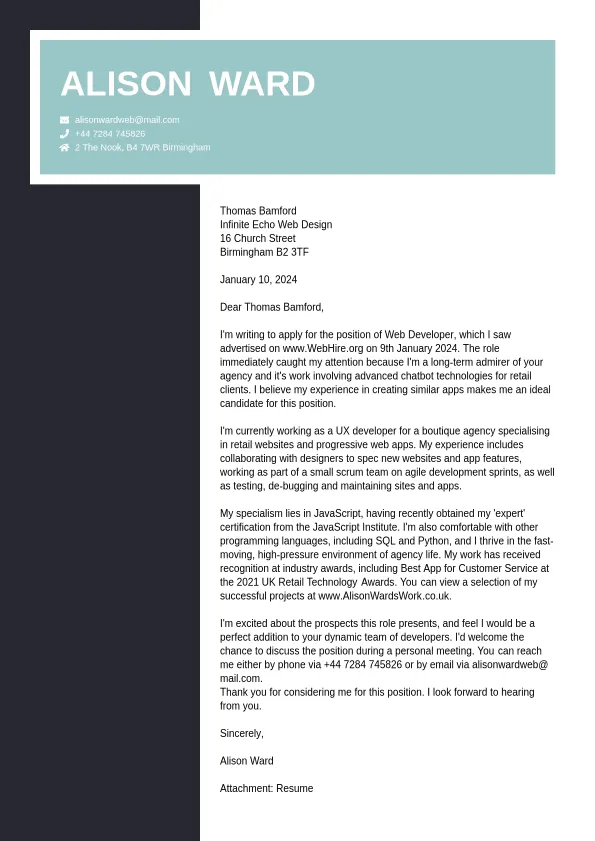
Why a Web Developer Cover Letter Matters
In the competitive world of web development, a well-crafted cover letter can be your golden ticket to landing your dream job. It’s more than just a formality; it’s your first chance to make a strong impression on potential employers. Unlike a resume, which provides a factual overview of your experience, a cover letter allows you to showcase your personality, express your enthusiasm, and demonstrate how your skills align with the specific requirements of the role. It’s a crucial opportunity to differentiate yourself from other applicants and persuade the hiring manager that you’re the perfect fit for the company. A great cover letter is also a testament to your communication skills, attention to detail, and understanding of the company’s needs. By taking the time to create a tailored cover letter, you show that you are genuinely interested in the position and eager to contribute your expertise to their team. Neglecting this essential step could mean missing out on opportunities, so make sure you take the time to create a standout cover letter.
Highlighting Your Skills and Experience
Your cover letter is the ideal place to shine a spotlight on your most relevant skills and experience. Avoid simply restating your resume; instead, provide concrete examples of how you’ve used your skills to achieve tangible results in previous projects. Quantify your achievements whenever possible. For instance, instead of saying “Improved website performance,” you could say “Improved website loading speed by 30% through code optimization.” Focus on experiences that align with the job description. Carefully review the requirements outlined in the job posting and highlight the skills and experiences that match. By tailoring your cover letter to the specific needs of the employer, you demonstrate that you have taken the time to understand the role and are confident in your ability to succeed. Remember that you are selling yourself, so ensure you emphasize your successes and the positive impact you’ve made in prior positions. The more compelling you make your case, the greater your chances of getting noticed by the hiring manager.
Showcasing Relevant Technical Skills

Web development encompasses a broad range of technical skills. Your cover letter should specifically highlight the technologies you are proficient in, based on the job requirements. For front-end roles, emphasize your expertise in HTML, CSS, and JavaScript. Mention any experience with JavaScript frameworks like React, Angular, or Vue.js. If the role involves back-end development, showcase your knowledge of server-side languages such as Python, Java, PHP, or Node.js. Detail your experience with databases like MySQL, MongoDB, or PostgreSQL, and highlight any relevant experience with cloud platforms, such as AWS, Azure, or Google Cloud. Be specific about your level of proficiency and experience with each technology. Don’t just list technologies; demonstrate how you have used them in your projects. Make sure to align your skill set with the employer’s technical stack. Providing clear and concise examples of your hands-on experience gives hiring managers a clear picture of your capabilities and how you can add value to their team.
Mentioning Programming Languages
Programming languages are the building blocks of web development, and your cover letter should clearly articulate your proficiency. For front-end development, highlight your skills in JavaScript, including its frameworks and libraries like React, Angular, or Vue.js. If you have experience with TypeScript, definitely include it. For back-end roles, showcase your skills in server-side languages such as Python, Java, PHP, or Node.js. Indicate your level of expertise, whether you’re a beginner, intermediate, or expert. Mention any certifications or specific projects where you utilized these languages. Tailor the languages you highlight to match the requirements of the job description. For example, if the job emphasizes Python, make sure to feature your Python projects and experience prominently. Describing how you have used the languages to solve real-world problems shows that you are not just familiar with the syntax but can effectively use them to create robust and functional web applications. This provides tangible evidence of your capabilities.
Presenting Frameworks and Libraries
Frameworks and libraries streamline the development process and boost efficiency. Your cover letter should highlight your experience with relevant frameworks and libraries. For front-end, showcase your experience with React, Angular, Vue.js, jQuery, or other popular libraries. Mention any experience with state management libraries like Redux or Vuex. If you are working on back-end, mention your experience with frameworks such as Django, Spring, Laravel, or Express.js. Describe how you’ve used these frameworks to build complex applications, noting specific features or functionalities you’ve implemented. Provide concrete examples of how you’ve used these tools in your projects to solve problems and deliver successful outcomes. Emphasize your expertise with any testing frameworks, version control systems, and build tools used in your projects. By showcasing your experience with these tools, you’re indicating that you possess practical skills to improve your work.
Demonstrating Project Portfolio

Your project portfolio is a tangible demonstration of your web development skills. In your cover letter, highlight the projects that best showcase your capabilities and align with the job requirements. Briefly describe each project, focusing on your role, the technologies used, and the results achieved. If possible, include links to your portfolio or live project demos. Mention specific features or functionalities you developed, and quantify your achievements whenever possible. For example, you could say “Developed a responsive e-commerce platform using React and Redux, resulting in a 20% increase in user engagement.” Ensure your portfolio is up-to-date and accessible. A well-curated portfolio demonstrates your ability to design, code, and deploy web applications, proving your competence and attracting employers’ attention. A strong portfolio can significantly boost your chances of getting hired.
Tailoring Your Cover Letter to the Job
Generic cover letters are quickly recognizable and often discarded. Instead, tailor your cover letter to each specific job application. Carefully read the job description and identify the key requirements and responsibilities. Customize your cover letter to address these points directly. Highlight the skills and experiences that match the job’s requirements. Research the company to understand its mission, values, and projects. Demonstrate how your skills and experiences align with the company’s goals. This personalization shows the hiring manager that you are genuinely interested in the role and have taken the time to understand their needs. By matching your experience to the employer’s requirements, you increase your chances of making a positive impression and progressing further in the hiring process. Make sure to proofread your cover letter to ensure it aligns with the details.
Researching the Company Culture
Before you write your cover letter, take the time to research the company. Understand their mission, values, and recent projects. Visit their website, read their blog, and check out their social media presence. Understanding the company culture can help you tailor your cover letter to their specific needs and demonstrate your genuine interest. Show how your personal values align with the company’s. This will impress the hiring manager and show that you’re a good fit for the team. Mentioning specific projects or initiatives the company is involved in also shows that you have taken the initiative to learn about their work. This will enhance your chances of being considered a suitable candidate. Research the company’s culture before you apply to make a lasting impression and give you an edge.
Matching Skills to Job Requirements

Carefully review the job description and identify the key skills, qualifications, and experiences that the employer is seeking. Use these details to tailor your cover letter. Focus on how your skills and experiences align with the job requirements. Provide specific examples of your achievements that demonstrate these skills. Use keywords from the job description to help your cover letter get past applicant tracking systems. If the job description mentions a particular technology, make sure to highlight your experience with it. Make it easy for the hiring manager to see that you possess the necessary skills and experience to succeed in the role. By directly addressing the requirements outlined in the job description, you show that you are a serious candidate.
Emphasizing Your Soft Skills
While technical skills are essential, soft skills are equally important. In your cover letter, emphasize your soft skills, such as communication, teamwork, problem-solving, and time management. Provide examples of how you have used these skills to achieve positive outcomes in your previous roles or projects. For example, if the job requires teamwork, describe a project where you collaborated with others to solve a complex problem. If the job emphasizes communication, describe a time you successfully communicated a complex technical concept to a non-technical audience. Soft skills are essential for web developers as they often work in teams and interact with clients. Highlighting these skills will help you stand out, especially in collaborative environments. Demonstrate your ability to communicate, solve problems, and work effectively. These skills will enhance your chances of being considered.
Communicating Your Passion for Web Development
Let your enthusiasm for web development shine through in your cover letter. Show the hiring manager that you are genuinely passionate about the field and eager to contribute your skills and expertise. Share why you enjoy web development, what excites you about the industry, and what motivates you to learn and grow. Mention any personal projects you are working on or any specific technologies you are particularly interested in. Your passion will make you more memorable and show that you will be excited to go to work. Express your enthusiasm in a way that’s authentic and professional. Passion is infectious. When you show excitement, you make a better impression on the hiring manager and make the hiring manager want to read on. Highlight your personal projects to showcase your expertise and enthusiasm.
Structuring Your Cover Letter for Impact

A well-structured cover letter is essential. The format must be clear, concise, and easy to read. The standard structure should have an opening, body paragraphs, and a closing statement. Your opening should grab the reader’s attention and state the position you are applying for. The body paragraphs should highlight your skills and experience. Use bullet points to break up long blocks of text. In your closing, express your enthusiasm for the role and reiterate your interest in an interview. Keep each section focused and relevant. A clear and concise format makes your cover letter more impactful and easier to navigate. Proper formatting can show attention to detail. Ensure your cover letter is easy to read, professional, and effectively showcases your abilities.
Writing a Compelling Opening
Your opening paragraph is the first impression you make on the hiring manager, so make it count. Start with a strong opening statement that grabs the reader’s attention. State the specific position you are applying for. Mention how you found out about the job, and consider including a brief statement of your enthusiasm for the opportunity. Your opening should clearly communicate your intent and make the reader want to learn more. Avoid generic opening statements. Instead, try to personalize your opening, perhaps by referencing something specific about the company or the role. Avoid vague introductions. Instead, capture attention with a compelling and concise opening.
Crafting Engaging Body Paragraphs
The body paragraphs of your cover letter are where you showcase your skills and experience. Each paragraph should focus on a specific aspect of your qualifications and accomplishments. Use strong action verbs to describe your achievements. Provide concrete examples of how you have used your skills to achieve results. Quantify your achievements whenever possible. Use the STAR method (Situation, Task, Action, Result) to describe your accomplishments. This will help you present your information in a structured, organized, and easy-to-read format. Ensure that your body paragraphs clearly communicate your skills and qualifications, demonstrating how you meet the requirements of the job. Write clear, concise, and well-structured paragraphs.
Creating a Strong Closing Statement

Your closing statement should reiterate your interest in the role and express your enthusiasm for the opportunity. Summarize your key qualifications. Reiterate your excitement for the position and the company. Include a call to action, such as expressing your availability for an interview. Keep your closing concise and professional. Thank the hiring manager for their time and consideration. Avoid sounding overly eager or desperate. A strong closing will leave a positive final impression and make the hiring manager more likely to contact you.
Proofreading and Editing Your Cover Letter
Before submitting your cover letter, it’s crucial to proofread and edit it carefully. Errors in grammar, spelling, and punctuation can undermine your credibility and make a negative impression on the hiring manager. Take the time to review your cover letter multiple times, looking for any mistakes. Use a grammar and spell-checking tool to identify errors, but also read the letter carefully yourself. Read your cover letter out loud to catch any awkward phrasing or sentence structure issues. Have a friend or colleague review your cover letter for feedback. They may be able to catch mistakes that you have missed. The more you proofread and edit your work, the better it will be. Proofreading and editing are essential for creating a polished and professional cover letter. A clean cover letter shows your attention to detail.
Checking for Grammar and Spelling Errors
Grammar and spelling errors can make your cover letter appear unprofessional and careless. Before submitting your cover letter, check it carefully for any grammatical and spelling mistakes. Use a grammar and spell-checking tool to catch errors, but also read your cover letter carefully yourself. Pay close attention to punctuation. Correct any misspelled words, incorrect verb tenses, and grammatical errors. Make sure your sentences are clear, concise, and easy to understand. Proofreading helps ensure you are projecting the right professional image. A clean and professional cover letter makes a good first impression. Proofreading is critical to presenting yourself in the best possible light and creating a favorable impression.
Ensuring Clarity and Conciseness
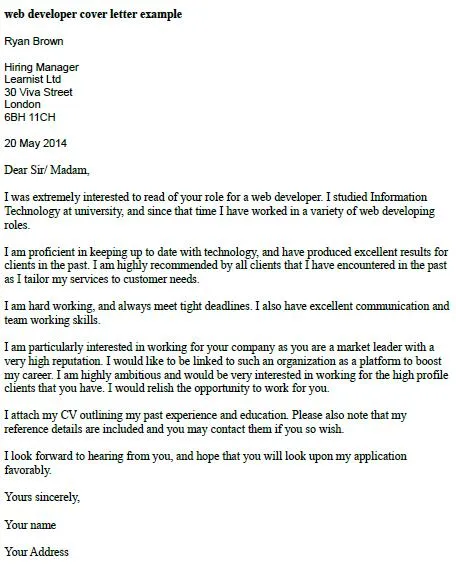
Clarity and conciseness are essential for an effective cover letter. Use clear and concise language. Avoid jargon, technical terms, and complex sentence structures. Focus on conveying your message in a straightforward manner. Use short, active sentences. Keep your paragraphs brief and focused. Avoid using unnecessary words or phrases. Proofread your cover letter to make sure it’s free of any ambiguous or confusing language. Clarity and conciseness make your cover letter easier to read and understand. If your cover letter is easy to read, the hiring manager is more likely to take the time to review it. Clarity and conciseness improve readability. It’s a key element in making your cover letter a success.