What is Form I-751
Form I-751, also known as the Petition to Remove Conditions on Residence, is a crucial document in the immigration process for individuals who obtained their green card through marriage. This form is filed with U.S. Citizenship and Immigration Services (USCIS) to remove the conditional status of their green card, granting them permanent resident status. This process typically applies to those who have been married for less than two years at the time their green card was initially granted. The I-751 form itself is a request, but it is the supporting evidence and the accompanying cover letter that will determine the outcome of the application.
Who Needs to File Form I-751
Generally, anyone who received their green card based on a marriage that was less than two years old at the time of the green card’s approval must file Form I-751. This is because their green card is initially granted on a conditional basis. The condition requires that the couple proves the validity of their marriage to USCIS. If the marriage is still ongoing and the couple wishes to remove the conditions and obtain permanent resident status, they must jointly file the I-751. There are exceptions, however. If the marriage ends due to divorce or the death of the U.S. citizen spouse, or if the foreign national spouse was abused by the U.S. citizen spouse, the foreign national can file the I-751, or a waiver of the joint filing requirement, independently.
Key Components of a Successful Cover Letter

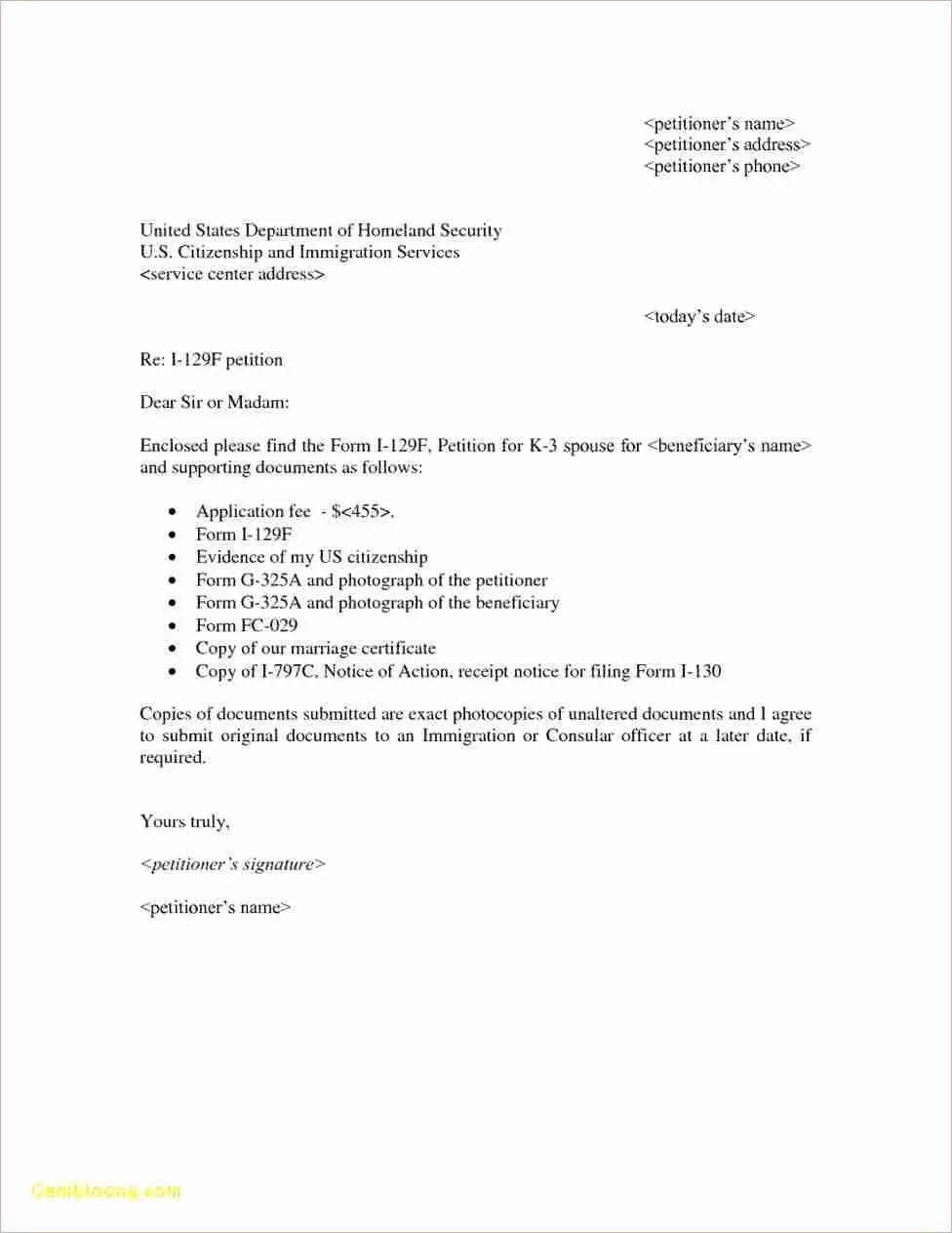
A well-crafted cover letter is essential for a successful I-751 petition. It serves as an introduction to your application and provides the USCIS officer with context for the supporting evidence you’re providing. The cover letter should clearly state the purpose of the filing (to remove the conditions on your permanent resident status), provide your basic information (name, alien registration number, date of birth), and the information of your spouse if applicable, and summarize the evidence being submitted to prove your bona fide marriage. It is also an opportunity to explain any extenuating circumstances, such as a temporary separation or any issues that might raise questions. The best cover letters are well-organized, easy to read, and clearly demonstrate the legitimacy of the marriage. The tone should be respectful and professional.
Detailed Cover Letter Samples that Work
Below are sample cover letters designed to assist in preparing your I-751 application. Remember that these are samples, and they need to be personalized to reflect your specific situation. Each scenario is unique, so it’s important to adapt the examples to your own circumstances, including your individual relationship and the evidence you can provide. You may consider seeking legal advice to make sure that your cover letter is customized to meet all of the necessary requirements for your case. Do not just copy and paste these sample letters.
Sample 1 Marriage-Based Green Card
This sample assumes a couple is still married and filing jointly. This is the most common scenario. The letter should express gratitude to the USCIS, and emphasize the continuing nature of the relationship. It will highlight shared finances, joint property, and ongoing communication. It should also include any important life events that have occurred since the conditional green card was issued, such as the birth of children or significant career changes. The primary goal is to demonstrate the genuine nature of the marriage and the intention to build a life together.
Sample 2 Divorce Cases

In a divorce scenario, the cover letter must explain the end of the marriage while simultaneously demonstrating the validity of the initial marriage. The letter should explain why the marriage ended, and provide supporting documentation such as the divorce decree. This is a waiver filing, and it will be important to show that the marriage was entered into in good faith, even if it did not last. The applicant needs to demonstrate that they did not initiate the divorce maliciously to evade immigration laws. The letter may also include any instances of abuse, if applicable, and the reasons for seeking a waiver of the joint filing requirement.
Sample 3 Joint Petition After Conditional Status
This sample covers a case where the couple is filing jointly but might have experienced significant life changes since obtaining the conditional green card. The letter should detail any periods of separation, financial difficulties, or other challenges the couple has faced. The letter must explain how the marriage has overcome the difficulties, emphasizing the stability and continued validity of the relationship. The main goal here is to reassure USCIS that despite challenges, the marriage is still ongoing and a genuine commitment exists between the couple.
Tips for a Strong Cover Letter
A well-written cover letter is crucial for a successful I-751 petition. Start by clearly stating the purpose of your letter and including your and your spouse’s information (if applicable). Be clear, concise, and honest. Use formal language, proofread carefully, and ensure all information matches the supporting documents. Avoid excessive emotional language; focus on the facts and the evidence. Organize your information logically and address each element of the I-751 requirements. Finally, personalize your letter to your circumstances. A generic letter is less effective than one that reflects your unique experience.
Gathering Evidence
Compiling comprehensive evidence is vital. Include documents that show a shared life, such as lease agreements, utility bills, bank statements, and insurance policies listing both names. Photos from various stages of the relationship – from dating to current events – can provide visual proof. Affidavits from friends, family, or colleagues who can attest to the marriage’s legitimacy can significantly support your case. Any communication records, like emails, texts, or social media posts, can further solidify the relationship, particularly if you’ve lived separately for any period. The more comprehensive your evidence package, the stronger your application will be.
Formatting Your Letter
The format of your cover letter should be professional. Use a standard business letter format with your address and the date at the top. Address the letter to the USCIS office handling your case. Use a clear font like Times New Roman or Arial in a readable size (12 point). Maintain consistent margins and spacing. Each paragraph should address a specific point or provide a piece of information. Organize your letter with clear headings and subheadings to make it easy for the USCIS officer to follow. End with a polite closing and your signature.
Review and Proofreading
Before submitting your I-751 petition, thoroughly review the cover letter and all supporting documents. Check for any errors in grammar, spelling, or punctuation. Ensure all dates, names, and addresses are accurate and consistent throughout the application. It’s advisable to have someone else read your cover letter to provide a fresh perspective and catch any mistakes you may have missed. A well-proofread application demonstrates attention to detail and seriousness about the process. Any errors could lead to processing delays or requests for additional information.
Additional Supporting Documents

Besides the cover letter, you will need to submit additional supporting documents with Form I-751. These include copies of your conditional green card and your spouse’s U.S. identification (if applicable). Include your marriage certificate, birth certificates of any children born during the marriage, and any official documents that support your claim. It is important to include as much supporting documentation as possible. This documentation may include joint bank accounts, insurance policies, and any other evidence that shows a good faith marriage and that you have established a life together. All documents not in English should be accompanied by certified translations.
Common Mistakes to Avoid
Avoid common mistakes that can cause delays or denials. Do not submit an incomplete application. Make sure that every section of Form I-751 is completed accurately and all required evidence is included. Do not provide false information. Honesty is crucial when dealing with USCIS. Avoid submitting a cover letter that is too short, vague, or generic. Customize your letter to fit your specific circumstances and highlight the unique aspects of your relationship. Do not overlook the importance of proofreading and attention to detail. Finally, don’t delay filing the I-751. File within the designated timeframe to avoid any complications with your permanent resident status.
In conclusion, a well-crafted cover letter and supporting documentation are essential for a successful I-751 petition. By following these guidelines and adapting the samples to your unique situation, you can significantly increase your chances of removing the conditions on your permanent residence and securing your future in the United States.