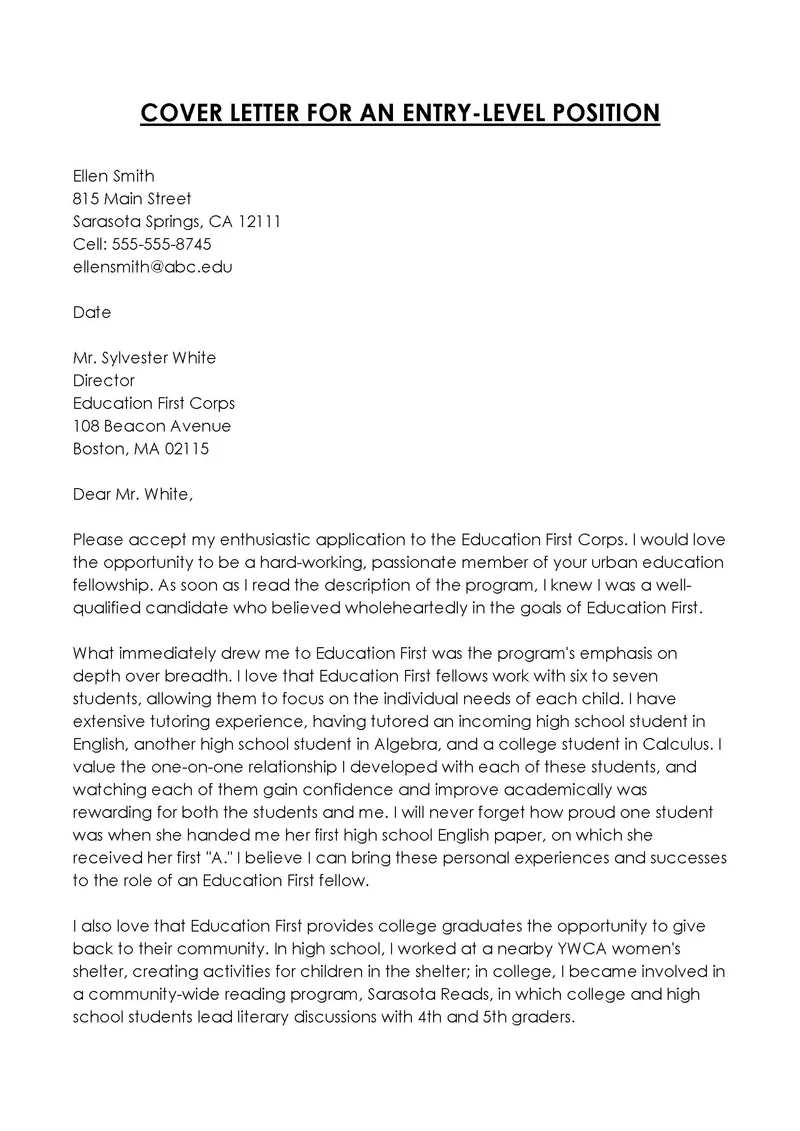
Cover Letter for Entry Level Jobs What is It?
A cover letter for an entry-level job is a crucial document that introduces you to a potential employer and highlights your qualifications, skills, and enthusiasm for the position. Unlike a resume, which provides a factual overview of your work history and education, a cover letter gives you the opportunity to express your personality, explain your career goals, and demonstrate why you’re a perfect fit for the role. This guide provides a comprehensive approach to crafting a compelling cover letter that effectively showcases your potential and helps you stand out from other applicants. It’s not just about listing your experiences; it’s about telling a story that resonates with the hiring manager and persuades them to invite you for an interview. A well-written cover letter significantly increases your chances of landing that first job or transitioning into a new career path.
Key Components of an Entry Level Cover Letter
A well-structured cover letter consists of several key components that work together to create a persuasive narrative. Each section serves a specific purpose, from providing essential contact information to making a strong closing statement. Understanding these elements is essential for constructing a cover letter that effectively captures the attention of the hiring manager and highlights your suitability for the entry-level position. A thoughtful and well-organized cover letter demonstrates professionalism and attention to detail, qualities that are highly valued by employers. Following the recommended structure ensures you present your information clearly and concisely, making it easy for the hiring manager to understand your qualifications and why you’re the right candidate.
Your Contact Information and Date

At the top of your cover letter, you should include your contact information. This typically includes your full name, phone number, email address, and sometimes your LinkedIn profile URL. It’s important to make this information easily accessible so that the hiring manager can contact you quickly. The date should be placed directly below your contact details and should reflect the day you are submitting your application. Ensure that your contact information is current and professional-looking. Double-check for any typos or errors, as a mistake here could hinder the hiring manager’s ability to reach you and follow up with your application.
The Employer’s Contact Information
Below your contact details, include the employer’s information. If possible, find the hiring manager’s name and title; addressing the letter to a specific person shows that you’ve done your research and care enough to tailor your application. This personal touch can make a significant difference. If you can’t find a specific name, use a professional greeting such as ‘Dear Hiring Manager.’ Include the company’s name, address, and any other relevant details. Verifying this information ensures that your letter appears professional and shows your attention to detail, which are important qualities employers seek in entry-level candidates.
Greeting the Hiring Manager
The greeting sets the tone for your cover letter, so it’s crucial to get it right. As mentioned, if you know the hiring manager’s name, use it, for example, “Dear Mr./Ms. [Last Name].” This level of personalization immediately grabs their attention. If a name isn’t available, opt for a professional alternative. Avoid generic greetings like “To Whom It May Concern” or “Dear Sir/Madam,” which can make your letter seem impersonal and less appealing. Use something like ‘Dear Hiring Manager’ or ‘Dear [Department Name] Team.’ The proper greeting shows you’re prepared and serious about the position.
Crafting a Compelling Opening Paragraph

The opening paragraph is your chance to grab the hiring manager’s attention. Start with a strong statement that captures their interest and highlights your enthusiasm for the role. State the position you are applying for and where you found the job posting. Briefly explain why you are interested in the company and the position. Show that you understand the company’s mission and values and how your skills align. This opening serves as your initial pitch, setting the stage for the rest of your letter. A well-written opening paragraph should make the hiring manager want to read more and learn about your qualifications.
Highlighting Your Skills and Experiences
The body of your cover letter is where you highlight your skills and experiences that are relevant to the job. Even if you have limited work experience, you can still showcase your abilities through internships, volunteer work, academic projects, or extracurricular activities. Tailor this section to match the job description. Identify the key skills and qualifications the employer is seeking and provide specific examples of how you have demonstrated those skills. Quantify your accomplishments whenever possible. For instance, instead of saying, ‘Improved customer service,’ you could say, ‘Improved customer satisfaction scores by 15% through proactive communication.’ This gives the employer a concrete idea of your capabilities and potential value.
Showcasing Relevant Skills
Focus on the skills that the employer has mentioned in the job description. If the job requires strong communication skills, give an example of a time you effectively communicated in a professional setting. This could be a presentation you gave, a team project you led, or even a particularly challenging customer interaction you handled well. If the job needs someone with technical skills, describe how you used those skills. Make sure the skills you highlight are directly relevant to the job. Include both hard skills (technical abilities) and soft skills (interpersonal abilities). Soft skills, such as teamwork, problem-solving, and time management, are highly valued by employers because they show your ability to integrate effectively into a team and handle various workplace challenges.
Emphasizing Achievements

Instead of simply listing your responsibilities, focus on your accomplishments. What did you achieve in your previous roles or activities? This is where you show how you made a difference. Use the STAR method (Situation, Task, Action, Result) to structure your examples. Start by describing the situation or context, then explain the task you were assigned. Detail the actions you took to accomplish the task, and finally, share the results or outcomes of your efforts. Quantify your achievements wherever possible. This gives the hiring manager tangible evidence of your capabilities. For example, ‘Managed a social media campaign that increased follower engagement by 20% in six months.’ This makes your accomplishments more compelling and memorable.
Tailoring to the Job Description
Customizing your cover letter to each job application is essential. Don’t use a generic cover letter for every position. Carefully read the job description and identify the key requirements, skills, and qualifications the employer is looking for. Then, adjust your letter to address those specific points. Highlight the relevant skills and experiences that match what the employer seeks. This shows that you’ve taken the time to understand the job and are genuinely interested in the role. When you tailor your cover letter, you demonstrate that you’re not just sending out a mass application. You are specifically targeting the role, which greatly improves your chances of getting noticed.
Expressing Your Enthusiasm and Fit
Let your enthusiasm for the position and the company shine through. Explain why you’re excited about the opportunity and what attracts you to the role and the organization. Show that you’ve researched the company and understand its mission, values, and culture. Describe how your personal and professional goals align with the company’s objectives. This shows the hiring manager that you’re not just looking for a job but are genuinely interested in contributing to the company’s success. Your passion and enthusiasm can make a significant impression, especially for entry-level positions where candidates often need to stand out in a competitive environment. Demonstrate your personality; let your genuine interest be your guide.
Writing a Strong Closing Paragraph

The closing paragraph should summarize your interest in the position and reiterate your qualifications. Reiterate your enthusiasm for the opportunity and your belief that you’re a good fit for the role. Briefly restate your key strengths and skills, tying them back to the job description. Avoid clichés and end with a strong, confident statement. Summarize the key points that demonstrate you are the ideal candidate and leave a lasting positive impression on the hiring manager. The closing is your final opportunity to persuade the employer to contact you, so make it count.
Thanking the Hiring Manager
Express your gratitude to the hiring manager for their time and consideration. This simple gesture of politeness can make a positive impact and show respect for their effort. Indicate that you appreciate the opportunity to apply for the position and are looking forward to hearing from them. This is a professional way to conclude your letter and leave a positive impression. A thank-you message signals professionalism and acknowledges the time and effort the hiring manager is putting into the recruitment process.
Including a Call to Action
End your cover letter with a clear call to action, encouraging the hiring manager to take the next step. State that you are eager for an interview and available at their earliest convenience. Provide your contact information again to ensure it’s easy for them to reach you. Make it as simple as possible for them to invite you for an interview. This direct approach demonstrates your proactiveness and eagerness, and it shows you are genuinely serious about the position. This will make it easier for the hiring manager to move forward with your application.
Formatting and Design Best Practices

The appearance of your cover letter is as important as its content. Proper formatting and design ensure your letter is readable and professional-looking. This includes selecting an appropriate font, using clear formatting, and proofreading carefully. Good formatting not only enhances readability but also demonstrates your attention to detail. A well-designed cover letter will showcase your professionalism and make a positive impression on the hiring manager. By adhering to the recommended guidelines, you can make sure that your letter looks polished and professional.
Choosing the Right Font and Font Size
Choose a professional and easy-to-read font like Arial, Calibri, or Times New Roman. Avoid overly decorative or informal fonts that might distract the reader. The standard font size for cover letters is 10-12 points. This size is large enough to be easily read but not so large that it looks unprofessional. Ensure the font is consistent throughout the entire document. Maintaining a consistent font style and size contributes to a clean, professional appearance. A well-chosen font and size increase the readability and professionalism of your cover letter, making it easier for the hiring manager to review and assess your qualifications.
Ensuring Proper Formatting
Use clear and consistent formatting throughout your cover letter. Set your margins to be one inch on all sides. Use single spacing within paragraphs and double spacing between paragraphs. This allows for a clean and organized layout. Left-align the text. Avoid justification, which can sometimes create uneven spacing between words. Use bullet points or lists to break up long blocks of text and highlight key information. Ensure there are no spelling or grammatical errors; it indicates your attention to detail and professionalism. Well-formatted cover letters are much easier to read and convey professionalism.
Proofreading and Editing Your Cover Letter

Proofreading and editing your cover letter is critical. Errors in grammar, spelling, and punctuation can create a negative impression and undermine your credibility. Carefully review your letter for any mistakes. Read it aloud to catch errors that you might miss when reading silently. Ask a friend, family member, or career counselor to review your cover letter as well. A second pair of eyes can often spot errors that you might have missed. Use a spell checker and grammar checker to help identify any potential mistakes. Ensure your cover letter is error-free before submitting it; it is a reflection of your attention to detail and professionalism.
Common Mistakes to Avoid
Several common mistakes can weaken your cover letter and reduce your chances of getting an interview. By avoiding these errors, you can significantly improve your cover letter’s effectiveness. Being aware of common pitfalls allows you to present yourself more professionally, increase your chances of getting hired, and make a strong, positive impression on the hiring manager. Pay careful attention to details; a flawless cover letter indicates that you pay attention to details and you are committed to excellence in your professional communication.
Grammatical Errors and Typos
Grammatical errors and typos are among the most significant mistakes you can make in a cover letter. They detract from your professionalism and can create a negative impression on the hiring manager. Always proofread your cover letter carefully before submitting it. Use spell-check and grammar-check tools, but also read the letter aloud to catch any mistakes that automated tools might miss. Double-check the names of the company, the hiring manager, and the job title to avoid any embarrassing errors. Take the time to make sure your document is error-free; it shows respect for the hiring manager and your commitment to accuracy.
Generic Cover Letters

Avoid using a generic cover letter that can be sent to any job. Tailor each cover letter to the specific job you are applying for. Highlight the skills, experiences, and qualifications that are most relevant to the position. Show that you have researched the company and understand its needs. Generic cover letters lack personalization and fail to showcase why you are the right fit for the job. Customizing your cover letter to match the job description shows that you are serious about the position and have the attention to detail required to succeed. Research the company to understand the job requirements and company culture.
Cover Letter Examples for Entry Level Jobs
Reviewing examples of successful cover letters can provide you with insights into the structure, tone, and content that make a compelling application. Each example below demonstrates different approaches for various circumstances, ensuring you can adapt the content to your unique background and career goals. Analyzing examples helps you understand how to articulate your strengths and experiences to match the requirements of the entry-level position you desire. These samples offer a template for crafting a cover letter that grabs the attention of the hiring manager.
Example 1 Recent Graduate
A recent graduate might highlight relevant coursework, internships, and extracurricular activities. For instance, a graduate with a degree in marketing can demonstrate how they applied theoretical knowledge in practical scenarios, such as creating social media campaigns or analyzing market research data. They should emphasize transferable skills like teamwork, project management, and communication. The cover letter should focus on the skills acquired and the knowledge gained through academics. Moreover, it is essential to mention any awards or honors, as this shows a level of expertise and achievement. Demonstrate enthusiasm to secure the position, and showcase eagerness to start working in the field. For the first job, a cover letter is a way to convince an employer of your capabilities despite the lack of work experience.
Example 2 Career Changer
A career changer should emphasize transferable skills from previous roles and highlight how those skills align with the requirements of the new position. For instance, a teacher transitioning to a project management role might highlight their experience in organizing and leading teams, managing deadlines, and communicating effectively. This kind of candidate should focus on the skills and experience they have that can be applied to their new career. Include any relevant training or courses they have completed to gain the necessary skills. In the cover letter, the candidate should convince the employer that their experience in a different career is valuable and transferable to the new position. This will require careful crafting of your cover letter to convince a new employer that you possess the qualities they seek.
Example 3 Intern
For an intern applying for a full-time role, the cover letter should showcase what they achieved during their internship, including projects they contributed to, skills they developed, and any positive feedback received. The intern should mention any responsibilities they had. Provide specific examples that demonstrate their ability to add value to the company. They can also mention any professional relationships they formed and how they contributed to the team. The goal is to convince the employer that the intern can contribute to the company on a long-term basis. This should be a way to ensure the intern can demonstrate how they can offer substantial assistance to the company on an ongoing basis.
Final Thoughts Cover Letter for Entry Level Job
Writing a compelling cover letter for an entry-level job is a key step in your job search. It allows you to create a strong first impression. By following this guide, you can create a cover letter that highlights your strengths, expresses your enthusiasm, and convinces employers to invite you for an interview. Remember to tailor each cover letter to the specific job and company. Proofread carefully for any errors. A well-crafted cover letter can significantly improve your chances of landing that entry-level position. Use this information to ensure your application is a success, and good luck with your job search.