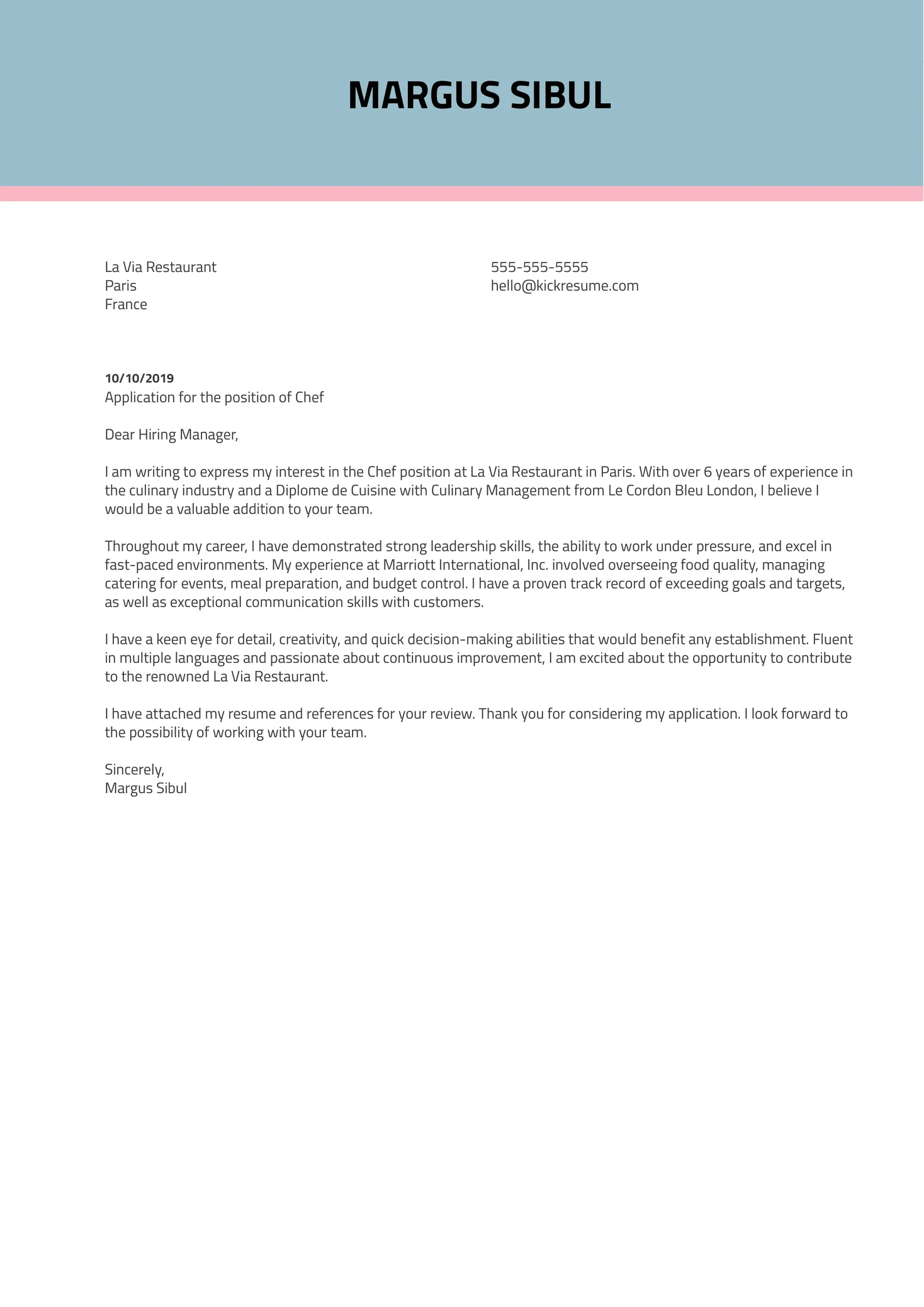
Crafting a Cook Cover Letter
A well-crafted cook cover letter is your first opportunity to impress a potential employer and secure an interview. It’s more than just a formality it’s a chance to showcase your culinary passion, skills, and experience in a way that your resume alone cannot. Your cover letter should be tailored to each specific position, highlighting the aspects of your experience that are most relevant to the job requirements. By taking the time to create a compelling cover letter, you significantly increase your chances of getting noticed and moving forward in the hiring process. This guide provides you with the essential steps for crafting a standout cover letter that will help you get hired.
Highlighting Your Culinary Skills
The core of your cover letter should focus on your culinary skills. Think about what makes you a strong candidate and match your skills with the requirements of the cook position. Do you have expertise in a particular cuisine, such as Italian, French, or Asian? Are you proficient in specific cooking techniques, like grilling, baking, or sautéing? Do not hesitate to mention your experience with food safety and hygiene protocols. Be specific and use action verbs to describe what you can do. Employers look for cooks who are not only skilled but also possess a solid understanding of kitchen operations. Moreover, include any special skills, like menu planning, inventory management, or team leadership, that could further set you apart.
Showcasing Experience and Achievements

Your cover letter should provide a snapshot of your professional history. Start by mentioning the name of the restaurant or establishment and the duration of your employment. Use quantifiable achievements to demonstrate the impact you made in previous roles. For example, if you helped reduce food costs, improved customer satisfaction, or were part of a team that earned a positive review, state it clearly. When possible, align your experience with the current job. Highlighting how your past roles and achievements directly correlate with the requirements of the position will show employers that you are a good fit for the role. Ensure that your achievements highlight not only your abilities, but also your contributions to previous employers.
Tailoring Your Cover Letter for the Position
Each cover letter should be uniquely crafted for the job you are applying for. This is a crucial step in getting hired. Thoroughly review the job description and identify the specific skills, experience, and qualifications the employer is seeking. Integrate these keywords and requirements into your letter, demonstrating how your background aligns with their needs. If the job description emphasizes specific cuisines or cooking styles, make sure your letter highlights your relevant experiences. Avoid using a generic, one-size-fits-all cover letter. Customizing your cover letter will demonstrate to the employer that you’ve taken the time to understand their needs and are genuinely interested in the position. This attention to detail can significantly increase your chances of getting noticed and moving forward in the hiring process.
Formatting Your Cook Cover Letter
The formatting of your cook cover letter is just as important as the content. Use a professional font, such as Times New Roman, Arial, or Calibri, and ensure the font size is easy to read (10-12 points). Maintain consistent spacing and use clear paragraphs to make your letter visually appealing and easy to follow. Keep the letter concise, ideally within one page. Use bullet points when appropriate to highlight specific skills or achievements. Proper formatting makes your cover letter not only readable but also demonstrates your attention to detail, a quality highly valued in the culinary industry. Correct formatting conveys a sense of professionalism that can make a positive first impression on the employer.
Essential Elements of a Cook Cover Letter

A well-structured cover letter includes essential elements. First, start with your contact information including your name, phone number, email address, and if applicable, your LinkedIn profile link. Include the date and the employer’s contact information. The salutation should be formal, addressing the hiring manager by name if possible, otherwise use a professional greeting. The body of the letter should highlight your skills, experience, and accomplishments, as detailed above. Finally, the closing should express your interest in the position and include a call to action, such as a statement that you look forward to hearing from them or that you are available for an interview. Ensure that each element contributes to a cohesive and compelling narrative.
Contact Information and Salutation
Start your cook cover letter with your contact information at the top left or right of the page. Include your full name, phone number, and professional email address. Below your contact information, add the date, followed by the employer’s contact information, including the hiring manager’s name, their title, the restaurant’s name, and the address. Always try to address the hiring manager by name. If the name isn’t listed, you may research it or use a general greeting like ‘Dear Hiring Manager.’ Using the correct salutation demonstrates respect and attention to detail, which are essential qualities for a cook.
Body Paragraph 1 Your Passion for Cooking
The first body paragraph should immediately capture the reader’s attention by expressing your passion for cooking and your genuine interest in the cook position. Start by stating the specific position you are applying for and how you learned about it. Briefly mention what attracts you to the restaurant, perhaps its cuisine, reputation, or company culture. Convey your enthusiasm for food and culinary arts. Express your eagerness to contribute to the team. Demonstrate your enthusiasm for the position, this helps the hiring manager understand why you are applying and what motivates you to excel.
Body Paragraph 2 Highlighting Relevant Experience

The second body paragraph is dedicated to showcasing your relevant experience. Summarize your experience and mention the types of establishments where you’ve worked, such as fine dining restaurants, casual eateries, or hotels. Specify the cuisines you are proficient in and the key culinary techniques you have mastered. Emphasize the length of time you have spent in similar roles. For example, if the job requires experience with a grill, include details about your expertise in grilling techniques. Make sure you present your experience in a way that is relevant to the job requirements outlined in the job description. This will demonstrate that you have the qualifications needed to excel in the position.
Body Paragraph 3 Quantifying Achievements
In your third body paragraph, use quantifiable achievements to demonstrate the impact of your work. For example, mention how you reduced food waste, increased customer satisfaction scores, or improved kitchen efficiency. Instead of just saying that you managed a kitchen team, provide specifics, like the number of employees you supervised and the overall improvements you oversaw. Where possible, use numbers and percentages to show the impact of your contributions. Providing metrics demonstrates your ability to deliver results and adds credibility to your claims. Quantifying your achievements creates a memorable and impactful narrative.
Body Paragraph 4 Demonstrating Skills and Qualifications
In the fourth body paragraph, focus on highlighting specific skills and qualifications relevant to the cook position. Refer back to the job description and tailor your skills to match the employer’s needs. Mention any certifications you hold, such as food safety certifications. Describe your proficiency in specific cooking techniques, like knife skills, sauce preparation, or grilling. Emphasize your ability to work under pressure, maintain cleanliness, and follow recipes accurately. Show that you are a well-rounded cook with the skills the employer is looking for. Clearly outlining your skills and qualifications gives the hiring manager confidence that you are capable of performing the job effectively.
Closing the Cook Cover Letter

Your closing paragraph is crucial as it provides a final opportunity to make a positive impression. Reiterate your interest in the cook position and express your enthusiasm to contribute to the restaurant’s success. Include a call to action, such as stating that you look forward to hearing from them or that you are available for an interview at their earliest convenience. Thank the employer for their time and consideration. Keeping the closing paragraph concise and professional reinforces your interest and leaves a lasting positive impression. It encourages the hiring manager to contact you.
Proofreading and Editing Your Cover Letter
Before submitting your cook cover letter, proofread it carefully. Check for grammatical errors, typos, and spelling mistakes. Poor grammar and typos can diminish the impact of your cover letter and make you appear unprofessional. Read the letter aloud to ensure it flows well and makes sense. Ask a friend or family member to review it as well. A fresh pair of eyes can often catch mistakes that you might miss. Ensure the formatting is consistent throughout. Proofreading is a crucial step in creating a polished and professional cover letter.
Submitting Your Cover Letter
When submitting your cook cover letter, follow the instructions provided in the job posting. If the employer requests a digital submission, ensure your cover letter is in the required format, typically a PDF or a Word document. Name the file clearly (e.g., ‘YourName_CookCoverLetter.pdf’). If the job requires a printed copy, print your cover letter on high-quality paper. Double-check that your contact information is accurate. Submitting a polished, error-free cover letter is the final step in presenting yourself as a professional and qualified candidate.