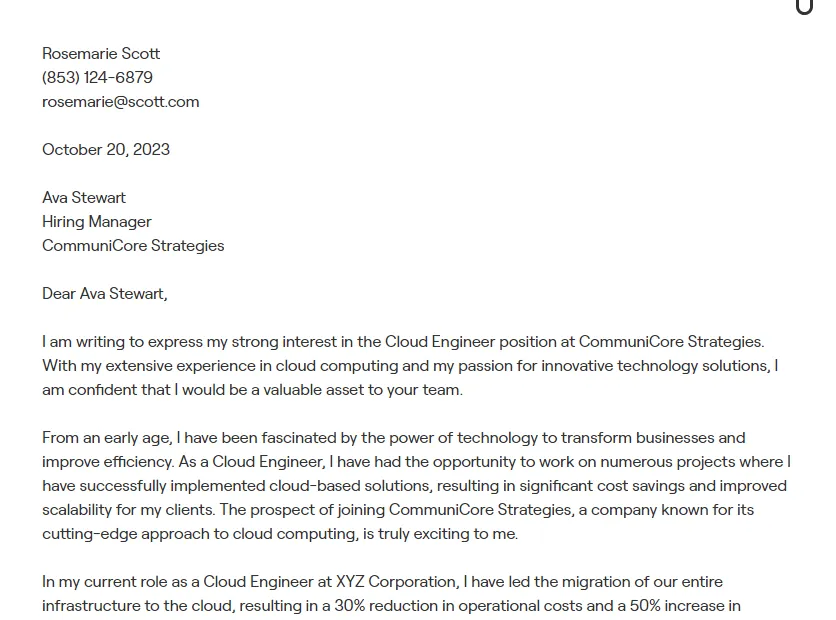
Cloud Engineer Cover Letter How-To Guide
Landing your dream cloud engineer job requires more than just a stellar resume; a well-crafted cloud engineer cover letter is your key to unlocking opportunities. This guide provides a comprehensive, step-by-step approach to writing a cover letter that not only highlights your skills and experience but also captivates potential employers. We will delve into every aspect of the cover letter, from understanding the role to avoiding common pitfalls, ensuring your application stands out in a competitive job market. By following these guidelines, you can create a cover letter that effectively communicates your value and significantly increases your chances of securing an interview.
Understanding the Cloud Engineer Role
Before you even begin writing, it’s essential to understand the cloud engineer role fully. This understanding will inform the content of your cover letter, ensuring it resonates with the specific requirements of the job. Cloud engineers are pivotal in designing, implementing, and managing cloud-based solutions. They work with various cloud platforms, such as AWS, Azure, and Google Cloud, to ensure infrastructure is scalable, secure, and cost-effective. Their responsibilities span across the entire lifecycle of cloud services, from initial planning and architecture to ongoing maintenance and optimization. A strong grasp of these duties is fundamental to tailoring your cover letter effectively.
Key Responsibilities of a Cloud Engineer

Cloud engineers have a wide array of responsibilities that vary based on the organization and specific projects. Core duties include designing and implementing cloud solutions, managing and monitoring cloud infrastructure, automating processes, ensuring data security, and optimizing cloud costs. They often collaborate with development and operations teams to facilitate the migration of applications and data to the cloud and to maintain efficient performance. Other responsibilities may involve troubleshooting technical issues, providing technical support, and staying current with the latest cloud technologies and best practices. Successfully highlighting your expertise in these areas is vital.
Essential Skills for Cloud Engineers
To excel as a cloud engineer, several technical and soft skills are necessary. Technical skills include proficiency in cloud platforms (AWS, Azure, GCP), knowledge of scripting languages (Python, Bash), understanding of networking concepts, and experience with DevOps tools. Soft skills such as problem-solving, communication, teamwork, and the ability to learn quickly are equally important. In your cover letter, explicitly mention these skills and provide examples of how you have utilized them in previous roles or projects. By showcasing a balanced skill set, you present yourself as a well-rounded candidate.
Crafting Your Cloud Engineer Cover Letter
With a firm understanding of the role, it’s time to craft your cover letter. The goal is to provide a concise overview of your qualifications, demonstrate your understanding of the company’s needs, and express your enthusiasm for the position. Each section should be carefully written to ensure your message is clear, professional, and tailored to the specific job. Structure your cover letter to flow logically, making it easy for the hiring manager to quickly assess your suitability for the role. By adhering to these guidelines, you can create a compelling document that grabs their attention.
Header and Contact Information

Start your cover letter with a professional header that includes your name, contact information (phone number, email, and optionally, LinkedIn profile URL), and the date. Ensure your contact information is accurate and up-to-date, as this is how the hiring manager will contact you. Place the header at the top of the document, typically aligned to the left or right, and make it visually appealing. Using a clean and clear format for your header sets a professional tone from the start, indicating that you pay attention to detail and present yourself effectively.
The Opening Paragraph
The opening paragraph is your first chance to make a positive impression. Start by addressing the hiring manager by name, if possible; otherwise, use a professional greeting. State the position you are applying for and briefly mention where you found the job posting. Express your interest in the role and the company, and succinctly highlight your most relevant qualifications. Your opening should be engaging and make the reader want to learn more. A strong opening can significantly impact whether the hiring manager continues reading or moves on to the next application. Make sure you keep it brief and impactful.
Highlighting Your Skills and Experience
This is where you demonstrate your suitability for the role by highlighting your key skills and experience. Align your skills with the requirements listed in the job description. Provide specific examples of your achievements and how your skills have benefited previous employers or projects. Use action verbs to describe your accomplishments and quantify your achievements whenever possible (e.g., “Reduced cloud costs by 20%,” “Implemented a new security protocol that decreased vulnerabilities by 35%”). Show, don’t just tell, the value you bring to the table. This will help your letter stand out.
Quantifying Achievements

Quantifying your achievements is crucial for demonstrating the impact of your work. Instead of saying “Improved system performance,” provide specifics like “Increased system performance by 40% by optimizing database queries.” Use numbers, percentages, and data to support your claims. For example, if you implemented a new cloud solution, mention how much it reduced operational costs or improved efficiency. Quantifiable results make your cover letter more credible and show potential employers that you are results-oriented. Ensure the metrics you provide are relevant and accurately reflect your contributions.
Tailoring Your Letter to the Job
Customize your cover letter for each job application. Carefully review the job description and tailor your letter to match the specific requirements and expectations of the role. This might mean emphasizing certain skills, experiences, or projects that align with the job’s needs. Show that you’ve done your research about the company and understand their goals. This attention to detail demonstrates your genuine interest and commitment to the position. Generic cover letters often get overlooked, so personalization is key to getting noticed.
Showcasing Relevant Projects
If you have worked on relevant projects, briefly describe them in your cover letter. Include details about the technologies used, your role, and the outcomes achieved. This is a great way to showcase your practical skills and knowledge. Provide links to your project if applicable, e.g., a GitHub repository or a portfolio. When describing projects, focus on the aspects that align with the job requirements and highlight how your contributions led to successful results. Your projects are tangible evidence of your capabilities.
The Closing Paragraph

In your closing paragraph, reiterate your interest in the position and the company. Express your enthusiasm for the opportunity to contribute to their team. Thank the hiring manager for their time and consideration. Include a call to action, such as stating that you look forward to hearing from them or are available for an interview. Keep the tone professional and positive, reinforcing your eagerness to move forward in the hiring process. End with a formal closing like “Sincerely” or “Best regards”, followed by your name.
Formatting and Proofreading
Pay close attention to the formatting and proofreading of your cover letter. Use a professional and readable font, such as Arial or Times New Roman, and maintain consistent spacing. Ensure your letter is free of grammatical errors, typos, and spelling mistakes. Poor formatting and errors can detract from your qualifications and make a negative impression. Carefully proofread your letter several times, and consider asking a friend or colleague to review it as well. A polished cover letter reflects your attention to detail and commitment to excellence.
Common Mistakes to Avoid
Avoid common mistakes that can hinder your application. These errors can be detrimental and immediately disqualify your candidacy. Being aware of these pitfalls will help you create a stronger, more effective cover letter, increasing your chances of success. Always strive for accuracy and professionalism to make a positive impression on the hiring manager. Let’s explore some of the most prevalent errors and how to circumvent them.
Generic Letters

Using a generic cover letter is one of the most significant mistakes. A generic letter, also known as a template, is one that you send to every job application without any changes. Generic letters show that you did not take the time to tailor your application to the specific job and company. Hiring managers can easily spot a generic letter, and it often ends up in the rejection pile. Instead, customize each cover letter to the specific role and company. Research the company, understand the job requirements, and highlight the relevant skills and experiences.
Lack of Specificity
Another common mistake is a lack of specificity. Vague statements and generalizations do not convey the value you bring to the role. Instead of simply stating you are good at problem-solving, provide examples of specific problems you solved and the outcomes. Quantify your achievements whenever possible to make your claims more compelling. Specificity helps the hiring manager understand your skills and experience and see the tangible results you have achieved in previous roles. Always ensure your statements are supported by evidence.
Typos and Grammatical Errors
Typos and grammatical errors can undermine your professionalism and credibility. They indicate a lack of attention to detail, which is crucial in cloud engineering. Always proofread your cover letter multiple times. Use a spell checker and grammar checker, and ask a friend or colleague to review your letter. A clean, error-free cover letter makes a positive impression and shows that you are meticulous and professional. Sloppy writing suggests the same approach to your work, so always double-check every aspect of your cover letter.
Ignoring the Job Description

Ignoring the job description is a missed opportunity to highlight your skills and experience. The job description is your guide to what the company is looking for in a candidate. Ensure your cover letter aligns with the requirements listed in the job description. Tailor your letter to include the specific keywords and skills mentioned. By showing that you understand the company’s needs and possess the required skills, you increase your chances of getting an interview. When you ignore the description, you risk appearing unqualified or not understanding what the company is looking for.
Finalizing Your Cover Letter
Finalizing your cover letter involves several key steps to ensure its quality and effectiveness. Take the time to refine your content, seek feedback, and review the final product carefully. This will help you create a strong application that stands out. The goal is to present a polished and compelling cover letter that increases your chances of securing an interview. Preparing your letter can make a massive difference in how employers perceive you.
Review and Refinement
Reviewing and refining your cover letter is a crucial step. After writing your first draft, read it critically and revise it to improve clarity, conciseness, and impact. Make sure each sentence serves a purpose and conveys your value. Check for flow, ensure that your accomplishments are well-articulated, and that your skills align with the job description. Use strong action verbs and quantify your achievements whenever possible. Revision is vital to ensure your cover letter is clear, concise, and compelling.
Seeking Feedback
Seeking feedback from others can provide valuable insights and identify areas for improvement. Ask a friend, family member, career counselor, or colleague to review your cover letter. They can provide a fresh perspective and identify any typos, grammatical errors, or areas where your message is unclear. Be open to constructive criticism and incorporate the feedback to make your cover letter stronger. Having someone else review your letter is a good way to catch the mistakes you may have missed.
Submitting Your Cover Letter
When you are satisfied with your cover letter, submit it with your resume. Follow the instructions provided in the job posting for submitting your application. Ensure your cover letter is in the correct format, such as a PDF, and that it is clearly named and organized. Double-check the contact information and the company’s specific requirements. By following the instructions, you show that you pay attention to detail and are serious about the position. Submitting a polished cover letter makes you more likely to get the job.