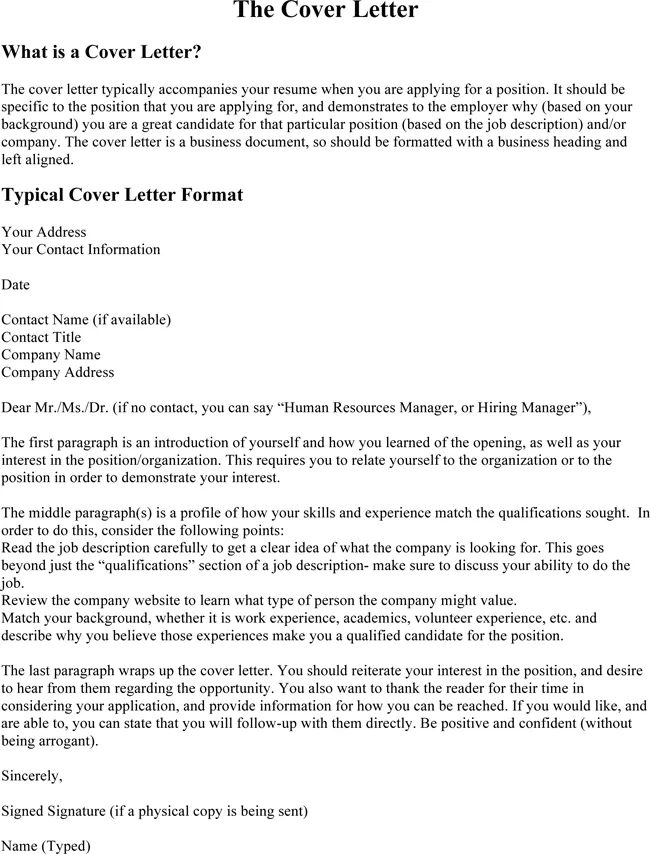
Cover Letter Best Examples
A cover letter is a crucial component of any job application, serving as your first impression and providing an opportunity to showcase your personality, skills, and enthusiasm for the role. It complements your resume by offering a narrative that highlights your qualifications and explains why you are the perfect fit for the position. Knowing how to craft a compelling cover letter is essential in today’s competitive job market. This guide provides best cover letter examples to help you master the art of writing effective cover letters, from understanding their purpose to avoiding common pitfalls and includes examples for various industries and experience levels. These examples will guide you through the process, ensuring you create a cover letter that grabs attention and increases your chances of landing an interview.
Understanding the Purpose of a Cover Letter
The primary purpose of a cover letter is to introduce you to a potential employer and express your interest in a specific job. It’s your chance to tell a story, highlighting why you’re a good fit for the company and the role. Unlike a resume, which presents a factual overview of your skills and experience, a cover letter allows you to demonstrate your personality, writing skills, and genuine interest in the opportunity. It also allows you to interpret the job description and explain how your skills align with what the employer is seeking. Furthermore, it allows you to showcase your communication skills, your ability to connect with the company culture, and the unique value you bring to the table. It’s a vital tool for making a positive first impression.
Highlighting Key Skills and Experiences

A well-written cover letter effectively highlights the key skills and experiences that align with the job requirements. Begin by reviewing the job description carefully, identifying the essential qualifications and keywords. Then, select specific examples from your background that demonstrate these skills in action. Use the STAR method (Situation, Task, Action, Result) to provide concrete examples of how you have successfully applied your skills in previous roles. For example, if the job requires project management skills, describe a project you led, the challenges you faced, the actions you took, and the positive outcomes achieved. Quantify your accomplishments whenever possible, using numbers and data to show the impact of your contributions. This not only validates your claims but also shows the value you can bring to the new position, making you a strong candidate.
Formatting a Cover Letter
Formatting plays a crucial role in making your cover letter easy to read and professional. The layout should be clean and uncluttered, with sufficient white space to avoid overwhelming the reader. Start with your contact information, the date, and the employer’s information. Use a standard business letter format, with a clear salutation (e.g., “Dear Mr./Ms. [Last Name]”) and closing (e.g., “Sincerely”). Keep the font consistent throughout the document, using a readable font like Times New Roman, Arial, or Calibri at a size of 11 or 12 points. Maintain consistent margins (typically 1 inch) on all sides. The overall presentation is just as vital as the content, as it reflects your attention to detail and professionalism, influencing the reader’s impression of your application.
Choosing the Right Font and Size
Selecting an appropriate font and size is essential for ensuring your cover letter is both readable and professional. Stick to standard, easy-to-read fonts such as Times New Roman, Arial, or Calibri. These fonts are universally accepted and widely available. Keep the font size between 11 and 12 points for optimal readability. Larger fonts can appear unprofessional, while smaller fonts may strain the reader’s eyes. Ensure consistent formatting throughout the document, including your contact information, headings, and body text. Avoid using decorative or overly stylized fonts, which can distract from the content. By choosing a clean, legible font and appropriate size, you make it easy for the hiring manager to focus on your qualifications, creating a positive impression.
Cover Letter Structure

A well-structured cover letter is easy to follow and effectively conveys your message. Typically, a cover letter consists of several key parts, each serving a specific purpose. The structure includes a header with your contact information, a salutation, an introductory paragraph, several body paragraphs, a closing paragraph, and a call to action. This structure helps to organize your thoughts, making your cover letter more compelling and easier to read. Each section must contribute to your overall narrative, highlighting your skills, experiences, and your enthusiasm for the role. Properly structured letters demonstrate your organizational skills and enhance your chances of making a favorable impression on the hiring manager, increasing your chances of an interview.
Header Information
The header of your cover letter should include your contact information, such as your name, phone number, email address, and optionally, your LinkedIn profile URL. This information should be clearly and professionally presented, often aligned to the left or right of the page. The goal is to ensure that the hiring manager can quickly and easily contact you. Always double-check the accuracy of your contact information. Following your contact details, include the date. Then, include the hiring manager’s or the company’s contact information, if available, including their name, title, company name, and address. This personalized touch shows you have paid attention to detail and taken the initiative to research the company and the role, thus making a positive impression.
Recipient’s Details
Directly under the date in your cover letter, include the recipient’s details. If you know the name of the hiring manager or the person to whom you are addressing your letter, include their full name, title, and company name. If the specific name is not known, use the title of the hiring manager, such as “Hiring Manager.” Always address the recipient with a professional title such as “Mr.”, “Ms.”, or “Dr.”, if applicable. If you are unsure of the correct title or name, research the company’s website or LinkedIn. Addressing the cover letter to a specific person shows that you have taken the time to research the company and the role, which indicates your enthusiasm and attention to detail. If the hiring manager’s name is not available, use a professional salutation to maintain a professional tone.
Salutation

The salutation sets the tone for your cover letter and is one of the first things the hiring manager will read. If you know the hiring manager’s name, use a formal salutation like “Dear Mr./Ms. [Last Name]”. Be sure to spell the name correctly. If you’re unsure of the recipient’s name, use a general salutation like “Dear Hiring Manager.” Avoid overly casual salutations like “Hi” or “Hello.” After the salutation, use a comma. The salutation should be followed by a brief space before the body of the letter. A professional salutation demonstrates your respect and attention to detail, which enhances your chances of making a positive first impression. The salutation should be clear, professional, and reflect a tone appropriate for a professional setting.
Body Paragraphs
The body paragraphs of your cover letter are where you elaborate on your qualifications and express your interest in the job. Divide the content into several paragraphs, each focusing on a specific point. Structure the body paragraphs to align with the job description, highlighting how your skills and experiences match the employer’s needs. Focus on demonstrating your achievements and quantifying your results whenever possible. Use the STAR method to provide context for your accomplishments, illustrating how you addressed challenges and achieved positive outcomes. Keep your language concise and avoid jargon. The body paragraphs should showcase your ability to communicate effectively and convincingly present your qualifications. Each paragraph should build upon the previous one, creating a cohesive and compelling narrative that supports your application.
Opening Paragraph
The opening paragraph sets the tone for your cover letter and is crucial for capturing the reader’s attention. Start by stating the specific position you’re applying for and where you found the job posting. Then, briefly express your enthusiasm for the role and the company. Make a strong first impression by highlighting a key skill or experience that aligns with the job requirements. This is your chance to immediately demonstrate why you are a suitable candidate. Keep the opening concise and engaging. Avoid generic phrases like “I am writing to express my interest.” Instead, aim for an impactful opening that grabs the reader’s attention, making them want to read more. This opening paragraph creates a positive first impression, piquing the hiring manager’s interest.
Middle Paragraphs

The middle paragraphs form the core of your cover letter, allowing you to delve deeper into your skills, experiences, and accomplishments. Structure these paragraphs to align with the key requirements of the job description. Use specific examples and the STAR method (Situation, Task, Action, Result) to illustrate your abilities. Highlight how your past experiences have prepared you for the role. Quantify your achievements whenever possible, such as “increased sales by 20%” or “managed a team of 10 employees.” Address any gaps in your work history and explain why you are the best candidate for the job. The middle paragraphs must showcase the most relevant details, helping your qualifications, making your cover letter compelling and ensuring the hiring manager understands the value you can bring to the role.
Closing Paragraph
The closing paragraph should summarize your interest in the position and reiterate your qualifications. Reiterate your enthusiasm for the opportunity and mention why you are a good fit for the role. Avoid simply repeating what you have already said. Instead, emphasize your unique value proposition and what you can bring to the company. If you have not mentioned it earlier, briefly thank the hiring manager for their time and consideration. Include a call to action, such as indicating your availability for an interview and expressing your eagerness to discuss your qualifications further. Keep the closing paragraph concise, confident, and memorable, leaving a lasting positive impression on the reader.
Call to Action
A call to action is an essential element of your closing paragraph. Clearly state your interest in the position and invite the hiring manager to take the next step. This could involve expressing your availability for an interview or offering to provide additional information. Make it easy for the hiring manager to move forward by including your contact information and a clear expression of your interest in the role. Avoid passive language and opt for a proactive tone, demonstrating your enthusiasm. A strong call to action encourages the hiring manager to reach out, increasing your chances of advancing in the application process and securing an interview. By doing so, you increase your chances of securing the job.
Formatting Tips

Following formatting tips ensures that your cover letter is polished and professional. Choose a clean and readable font, like Arial, Calibri, or Times New Roman, and maintain a consistent font size (11 or 12 points) throughout the document. Use single spacing for the body text, and double space between paragraphs to improve readability. Set 1-inch margins on all sides of the document. Align the text to the left. Use bolding, italics, or underlines sparingly and strategically, such as for headings or to emphasize key points. Ensure that your cover letter is the appropriate length, typically one page. A well-formatted cover letter reflects your attention to detail, showcasing your professionalism and enhancing the overall impact of your application.
Proofreading and Editing
Proofreading and editing are critical steps in ensuring your cover letter is error-free and polished. Always thoroughly proofread your cover letter for any grammatical errors, spelling mistakes, and punctuation issues. Read the letter aloud to catch any awkward phrasing or sentence structure. Use grammar-checking tools, but do not rely on them entirely. Have a friend, family member, or career advisor review your letter. Ensure that your cover letter is easy to read, well-organized, and free from any typos or mistakes. By taking the time to proofread and edit, you demonstrate attention to detail and increase your chances of making a positive impression on the hiring manager. A flawless cover letter reflects your professionalism, increasing your chances of landing an interview.
Example Cover Letters for Different Industries
Cover letters can be tailored to a variety of industries, each with unique requirements and expectations. When applying for jobs in marketing, highlight your creative abilities and data-driven mindset. In finance, emphasize your analytical skills, attention to detail, and experience with financial modeling. For information technology roles, demonstrate your technical proficiency and experience with relevant technologies. Healthcare applications should emphasize your compassion, patient care experience, and understanding of medical protocols. And in customer service, showcase your communication skills, problem-solving abilities, and dedication to customer satisfaction. Each industry requires a tailored approach that emphasizes the skills and experiences most relevant to the specific field. Below, you will find cover letter examples that will help you in various industries.
Cover Letter for Marketing

When writing a cover letter for a marketing position, emphasize your creativity, communication skills, and experience with digital marketing tools. Start by highlighting your passion for marketing and your understanding of the company’s brand. Showcase your accomplishments, using metrics to demonstrate the impact of your campaigns. Mention your experience with SEO, social media management, content creation, or other relevant skills. Tailor your cover letter to the specific job description, highlighting how your skills align with the requirements of the role. Show your understanding of marketing strategies and your ability to drive results. Demonstrating your ability to create and implement successful marketing campaigns is key to securing an interview.
Cover Letter for Finance
A cover letter for a finance position should showcase your analytical skills, attention to detail, and experience with financial modeling and reporting. Emphasize your understanding of financial principles, accounting practices, and the ability to analyze financial data. Highlight any certifications or relevant qualifications, such as a CPA or CFA. Mention your experience with financial software and your ability to manage budgets, prepare financial statements, or conduct financial analysis. Tailor your cover letter to the specific job description. Demonstrate your ability to ensure financial accuracy and contribute to the financial success of the organization. Your skills, and qualifications, make you a strong candidate for the position.
Cover Letter for Information Technology
When applying for an IT position, your cover letter should highlight your technical skills, experience with specific technologies, and problem-solving abilities. Start by stating your expertise in relevant areas, such as software development, cybersecurity, or network administration. Showcase your experience with programming languages, operating systems, and other technologies. Mention your ability to troubleshoot technical issues, manage projects, and work in a team environment. Highlight your certifications. Show your ability to adapt to new technologies. Illustrating your technical proficiency and your ability to contribute to the company’s technological goals enhances your chances of landing an interview.
Cover Letter for Healthcare
A cover letter for a healthcare position should emphasize your compassion, communication skills, and patient care experience. Start by highlighting your passion for healthcare and your commitment to providing high-quality patient care. Showcase your experience with specific medical procedures, patient assessment, and electronic health records. Mention your ability to work in a team and communicate with patients and their families effectively. Tailor your cover letter to the specific job description. Demonstrate your understanding of medical ethics and your dedication to patient safety. Your ability to provide compassionate care, your qualifications, and the value you bring to the role will increase your chances of success.
Cover Letter for Customer Service
When applying for a customer service position, your cover letter should highlight your communication skills, problem-solving abilities, and dedication to customer satisfaction. Start by emphasizing your passion for helping others and your ability to communicate effectively. Showcase your experience with resolving customer issues, handling complaints, and providing excellent service. Mention your experience with customer relationship management (CRM) software. Tailor your cover letter to the specific job description. Demonstrate your ability to work well under pressure and your commitment to providing outstanding customer experiences. Your ability to create positive customer experiences and your passion for exceptional service will increase your chances of success.
Avoiding Common Cover Letter Mistakes
Avoiding common cover letter mistakes can significantly increase your chances of making a positive impression on the hiring manager. One of the most common mistakes is using generic cover letters, which fail to connect with the specific job or company. Another is including typos and grammatical errors, which demonstrate a lack of attention to detail. Lack of personalization, such as not addressing the letter to a specific person or mentioning the company’s name, can make your letter appear insincere. Ignoring the job description by not tailoring your letter to the requirements of the role is another major error. By avoiding these common pitfalls, you ensure your cover letter stands out positively, making you a more competitive candidate.
Generic Cover Letters
Generic cover letters are impersonal and fail to capture the hiring manager’s attention. Avoid using generic templates that are not tailored to the specific job or company. Each cover letter must be customized to the specific role you are applying for. The goal is to showcase your genuine interest and demonstrate how your skills and experience align with the job requirements. Generic language, such as “I am writing to express my interest,” and a lack of specific details about the company or role, can undermine your application. Focus on highlighting specific accomplishments, showcasing your understanding of the company’s values, and illustrating how your skills can contribute to their success. A personalized cover letter makes you stand out from other applicants.
Typos and Grammatical Errors
Typos and grammatical errors can damage your credibility and make you look unprofessional. Ensure that your cover letter is free from errors. Proofread carefully for spelling mistakes, grammatical errors, and punctuation issues. Read your letter aloud to check for awkward phrasing or sentence structure. Always use a grammar-checking tool, but do not rely on it entirely. Have a friend, family member, or career advisor review your letter to catch any mistakes you may have missed. Double-check all the details, including the recipient’s name, company name, and job title. A polished and error-free cover letter reflects your attention to detail, demonstrating that you value professionalism and are committed to providing quality work.
Lack of Personalization
A lack of personalization can make your cover letter seem impersonal and insincere. Avoid using generic salutations like “Dear Sir/Madam” or addressing the letter to the wrong person. If possible, research the hiring manager’s name and address your letter to them directly. Mention the company’s name and tailor the content to the specific job you are applying for. Highlight your interest in the company and explain why you are excited about the role. Demonstrating that you have researched the company and understand its mission indicates a genuine interest and increases your chances of making a positive impression. Personalizing your cover letter shows that you have put in the effort.
Ignoring the Job Description
Ignoring the job description is a serious error that can lead to your application being overlooked. The job description provides a clear roadmap of the skills, experience, and qualifications the employer is seeking. Tailor your cover letter to address the specific requirements outlined in the job description. Highlight the relevant skills and experiences that match the employer’s needs. Use keywords from the job description in your cover letter to demonstrate that you have the qualifications the employer is looking for. Failing to address the key requirements and not highlighting your specific abilities in your cover letter undermines your application. Reviewing the job description shows that you have taken the time to carefully understand the requirements of the role.
Cover Letter Examples for Resume
The cover letter should complement your resume by providing additional context and showcasing your personality. Use your cover letter to tell a story about your career journey. Highlight key accomplishments and experiences that align with the job requirements. When creating examples, tailor the content based on the experience of the applicant. Each example will include opening and closing paragraphs, as well as tailored information that will aid the applicant’s application and increases the chances of getting an interview. Below are examples for a recent graduate, career changer, experienced professional, and a job-specific example.
Example 1: Recent Graduate
Dear Hiring Manager,
I am writing to express my interest in the Marketing Assistant position at [Company Name], as advertised on [Platform]. As a recent graduate with a degree in Marketing from [University Name], I am eager to apply my skills and contribute to your team’s success.
During my studies, I gained hands-on experience through various marketing projects. For example, I led a social media campaign that increased engagement by 30%. My coursework covered digital marketing, market research, and brand management. I am proficient in marketing tools and understand how to leverage social media platforms for lead generation. I am eager to support your marketing team.
I am eager to apply my skills and am confident I can contribute to your team. Thank you for your time, and I look forward to hearing from you soon.
Sincerely, [Your Name]
Example 2: Career Changer
Dear Hiring Manager,
I am writing to express my interest in the [Position] position at [Company Name], which I learned about on [Platform]. While my background is in [Previous Field], I am eager to transition my skills to a role in [New Field].
In my previous role at [Previous Company], I developed strong organizational and communication skills. These skills are transferable. For example, I led a project that streamlined operations, resulting in a 15% increase in efficiency. My experience with [relevant software] and the ability to manage multiple tasks simultaneously will be beneficial. I am eager to contribute my skills to your team.
I am enthusiastic about this career change and eager to learn more. Thank you for your consideration, and I look forward to the opportunity to discuss my application further.
Sincerely, [Your Name]
Example 3: Experienced Professional
Dear Hiring Manager,
I am writing to express my interest in the [Position] position at [Company Name]. With over ten years of experience in [Industry], I am well-equipped to contribute to your team. I am keen to help your company
Throughout my career, I have consistently exceeded expectations in [Relevant Area]. In my previous role at [Previous Company], I led a team and increased revenue by 25% within one year. I am skilled in strategic planning, team management, and data analysis, and have a proven track record of success. My experience with different markets is key to leading your company.
I am confident in my ability to contribute to your company’s success. Thank you for your consideration. I look forward to the opportunity to discuss how my skills can benefit your organization.
Sincerely, [Your Name]
Example 4 For a Specific Job
Dear Hiring Manager,
I am writing to express my interest in the Project Manager position at [Company Name], as advertised on [Platform]. I have been particularly impressed by [Company’s recent project or initiative].
During my previous role at [Previous Company], I successfully managed projects. For example, I oversaw the development of [Project Name]. This resulted in a 20% reduction in costs. I am proficient in project management methodologies, including Agile and Scrum, and am skilled in risk assessment and stakeholder management. My ability to deliver projects on time and within budget will be a key benefit to the company.
I am excited about the opportunity to join your team. Thank you for your consideration, and I look forward to hearing from you soon.
Sincerely, [Your Name]
Final Tips for Writing a Great Cover Letter
Writing a great cover letter requires attention to detail, careful preparation, and a focus on highlighting your qualifications. Tailor your cover letter to each specific job. Research the company and the role. Demonstrate your enthusiasm for the opportunity. Always proofread your cover letter. Maintain a professional tone. Use keywords from the job description. Keep your cover letter concise and focused. A great cover letter is not merely a formality but a powerful tool that helps you make a strong first impression, showcasing your value and increasing your chances of securing an interview and landing your dream job. Following these tips will increase your chances of success.