Understanding the Academic Advisor Role
An academic advisor plays a pivotal role in a student’s academic journey. They are not just facilitators of course selection, but also mentors, guides, and confidantes. Understanding the depth of this role is the first step in crafting a compelling cover letter. Advisors provide personalized guidance to students, helping them navigate the complexities of higher education. This includes everything from choosing the right courses to understanding degree requirements, exploring career options, and connecting with campus resources. A strong advisor supports students in achieving their academic goals and fostering their overall personal and professional development. Highlighting your comprehension of this multifaceted role is crucial.
Key Responsibilities of an Academic Advisor
Academic advisors shoulder a variety of responsibilities. Foremost is providing academic advising, which involves course selection, degree planning, and ensuring students meet graduation requirements. Advisors often assist students in understanding academic policies and procedures, as well as connecting them with relevant resources, such as tutoring services, counseling, and career centers. Another key responsibility is student support. This involves mentoring students, offering encouragement, and helping them overcome academic challenges. Advisors frequently monitor student progress, identify at-risk students, and intervene when necessary. Additionally, advisors may participate in orientation programs, workshops, and other initiatives designed to support student success. Showcasing how your skills and experience align with these responsibilities in your cover letter is paramount.
Essential Skills for Success in Advising

To excel as an academic advisor, a diverse skill set is necessary. Excellent communication skills, both written and verbal, are essential for conveying information clearly and effectively. Interpersonal skills, including empathy, active listening, and the ability to build rapport, are crucial for establishing strong relationships with students. Problem-solving skills are needed to help students navigate challenges and find solutions. Organizational skills, such as time management and attention to detail, are vital for managing advising caseloads and maintaining accurate records. Knowledge of academic policies, degree requirements, and university resources is also important. Highlight how you have demonstrated these skills in your past experiences, and how they make you a strong candidate for the advisor position.
Crafting Your Cover Letter
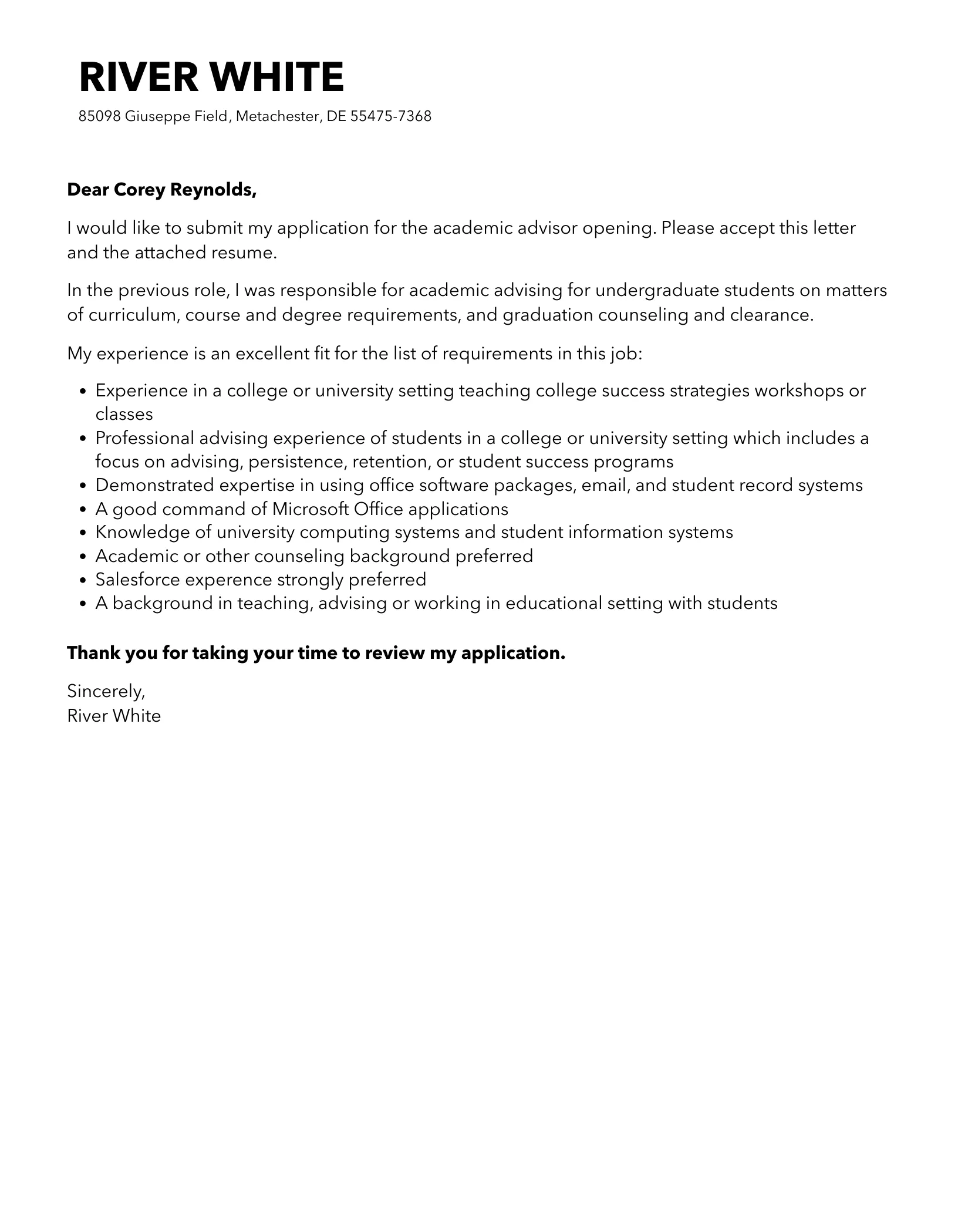
A well-crafted cover letter is essential for making a strong first impression. It’s your opportunity to introduce yourself and your qualifications to the hiring committee, demonstrating why you’re the perfect fit for the academic advisor position. Your cover letter should be tailored to the specific job description and the institution you’re applying to. Generic letters simply won’t do. Instead, focus on highlighting the skills and experiences that make you a strong candidate. The letter should be professional, concise, and easy to read. Proofread it carefully for any errors in grammar and punctuation before submitting it.
Header and Contact Information
Your header should include your full name, address, phone number, and email address. It is essential to make it easy for the hiring manager to contact you. Ensure your contact information is up-to-date and professional. Below your contact information, include the date and the hiring manager’s name, title, and the institution’s address. If you’re unsure of the hiring manager’s name, research the department or institution’s website or contact the human resources department. This attention to detail shows your commitment to the application.
Personalized Salutation

Begin your cover letter with a personalized salutation. Using the hiring manager’s name, if known, is a great way to make a positive first impression. If you cannot find the hiring manager’s name, using a general salutation like ‘Dear Hiring Committee’ or ‘Dear [Department Name] Search Committee’ is acceptable. Avoid generic salutations such as ‘To Whom It May Concern,’ as it shows a lack of effort. A personalized salutation immediately grabs the reader’s attention and demonstrates your interest in the position.
Opening Paragraph: Grab Attention
The opening paragraph is your chance to capture the reader’s attention and make a strong first impression. State the position you are applying for and how you learned about the opportunity. Then, briefly highlight your key qualifications and express your enthusiasm for the role and the institution. This should be a concise statement of your suitability for the position. Focus on your passion for supporting student success. Show your personality, and make the reader want to learn more about you. This initial paragraph sets the tone for the rest of the letter.
Highlighting Relevant Experience
The body of your cover letter should focus on demonstrating your relevant experience, skills, and accomplishments. This is where you provide specific examples that illustrate how you meet the requirements of the position. Use the job description as a guide, and align your experiences with the listed responsibilities and qualifications. Provide compelling evidence of your abilities, using the STAR method (Situation, Task, Action, Result) to describe your experiences and achievements. Focus on what you’ve done, the outcomes you achieved, and how those align with the needs of the institution. This section is crucial for showing your value as a potential academic advisor.
Showcasing Skills and Accomplishments

In this section, delve deeper into your skills and accomplishments. Provide specific examples from your previous experiences that demonstrate your abilities. For example, if the job description requires strong communication skills, provide an instance where you successfully communicated complex information to students or stakeholders. If the position requires problem-solving skills, provide an example of how you identified and resolved a student’s academic challenge. Quantify your accomplishments whenever possible. Use action verbs to make your descriptions dynamic and engaging. This section allows you to showcase your unique strengths and how you can contribute to the institution’s success.
Quantifying Achievements
Whenever possible, quantify your achievements to provide concrete evidence of your impact. Instead of saying that you ‘improved student retention rates,’ state that you ‘increased student retention rates by 15% within one year.’ Similarly, instead of saying that you ‘provided academic support to students,’ state that you ‘supported over 100 students in achieving their academic goals.’ Using numbers provides tangible evidence of your contributions and highlights the value you bring to the position. Quantifiable results demonstrate that you are results-oriented and have a proven track record of success.
Demonstrating Knowledge
Demonstrate your knowledge of academic advising principles, best practices, and the challenges students face. Discuss how you stay current with trends in higher education and academic advising. Highlight your understanding of student development theory, academic policies, and university resources. Showcase your ability to apply this knowledge in practical situations, such as helping students navigate course selection, understand degree requirements, and access support services. Demonstrate that you are well-prepared to provide informed and effective guidance to students. It is vital to convey your commitment to continuous learning and professional development in the field.
Addressing the Specific Requirements

Carefully review the job description and address the specific requirements outlined. Tailor your cover letter to the position by highlighting how your skills, experience, and qualifications align with the job requirements. Avoid using a generic cover letter. Instead, customize it to demonstrate your understanding of the specific needs of the institution. Use the job description as a checklist to ensure that you cover all essential points. Address each requirement individually to show how you meet or exceed the expectations.
Researching the Institution
Demonstrate your interest in the institution by researching its mission, values, and programs. Reference the institution’s specific goals and values to show that you understand its culture and are a good fit. Mention any specific programs or initiatives that align with your interests or experience. Mentioning specific faculty, programs, or initiatives demonstrates your interest in and knowledge of the institution. Show that you’re not just looking for a job but also for a place to grow and contribute. This shows that you’ve done your homework and are truly interested in joining their community.
Tailoring Your Letter
Tailor your cover letter to the specific position and institution you’re applying to. Avoid using a generic template. Instead, personalize your letter to reflect the unique needs and values of the institution. Focus on the key responsibilities outlined in the job description, and highlight the skills and experiences that are most relevant. Research the institution’s mission and values. Demonstrate how your values align with theirs. This level of personalization will make your application stand out from the competition and demonstrate your sincere interest in the opportunity.
Closing the Letter

Your closing paragraph should express your enthusiasm for the position and reiterate your interest in the opportunity. Reiterate your qualifications and explain why you believe you’re the best fit for the role. The closing paragraph offers you an opportunity to summarize the key points, and express your commitment. Clearly state your interest in the position and express your gratitude for the hiring manager’s time and consideration. This is your last chance to leave a positive impression.
Expressing Enthusiasm and Availability
Reiterate your enthusiasm for the position and express your eagerness to learn more about the opportunity. State your availability for an interview and how you can be reached. Thank the hiring manager for their time and consideration. Let them know that you’re looking forward to hearing from them soon. This professional and enthusiastic closing leaves a lasting impression.
Professional Closing and Signature
Use a professional closing such as ‘Sincerely,’ ‘Best regards,’ or ‘Thank you.’ Follow your closing with your typed name. If submitting a physical cover letter, leave space for your handwritten signature above your typed name. Double-check your cover letter for any grammatical errors or typos. Use professional fonts such as Times New Roman, Arial, or Calibri. Ensure your cover letter is well-formatted and easy to read. Proofread your letter carefully before submitting it.