Why You Need An Acting Resume Cover Letter
In the competitive world of acting, a strong cover letter is your secret weapon. It’s not just an optional extra; it’s a crucial component that can significantly boost your chances of landing an audition. Think of your acting resume as the foundation, detailing your experience and skills. The cover letter, on the other hand, is the opportunity to connect with casting directors and show them why you’re the perfect fit for the role. It humanizes your resume, providing context and showcasing your personality. Without a cover letter, you risk being perceived as just another applicant. It gives you a platform to express your enthusiasm, tailor your application, and demonstrate your professionalism. A well-crafted cover letter is your chance to make a memorable first impression and stand out from the crowd, increasing the likelihood of getting that all-important audition call. This is your chance to highlight why you are perfect for the role.
Crafting a Compelling Opening
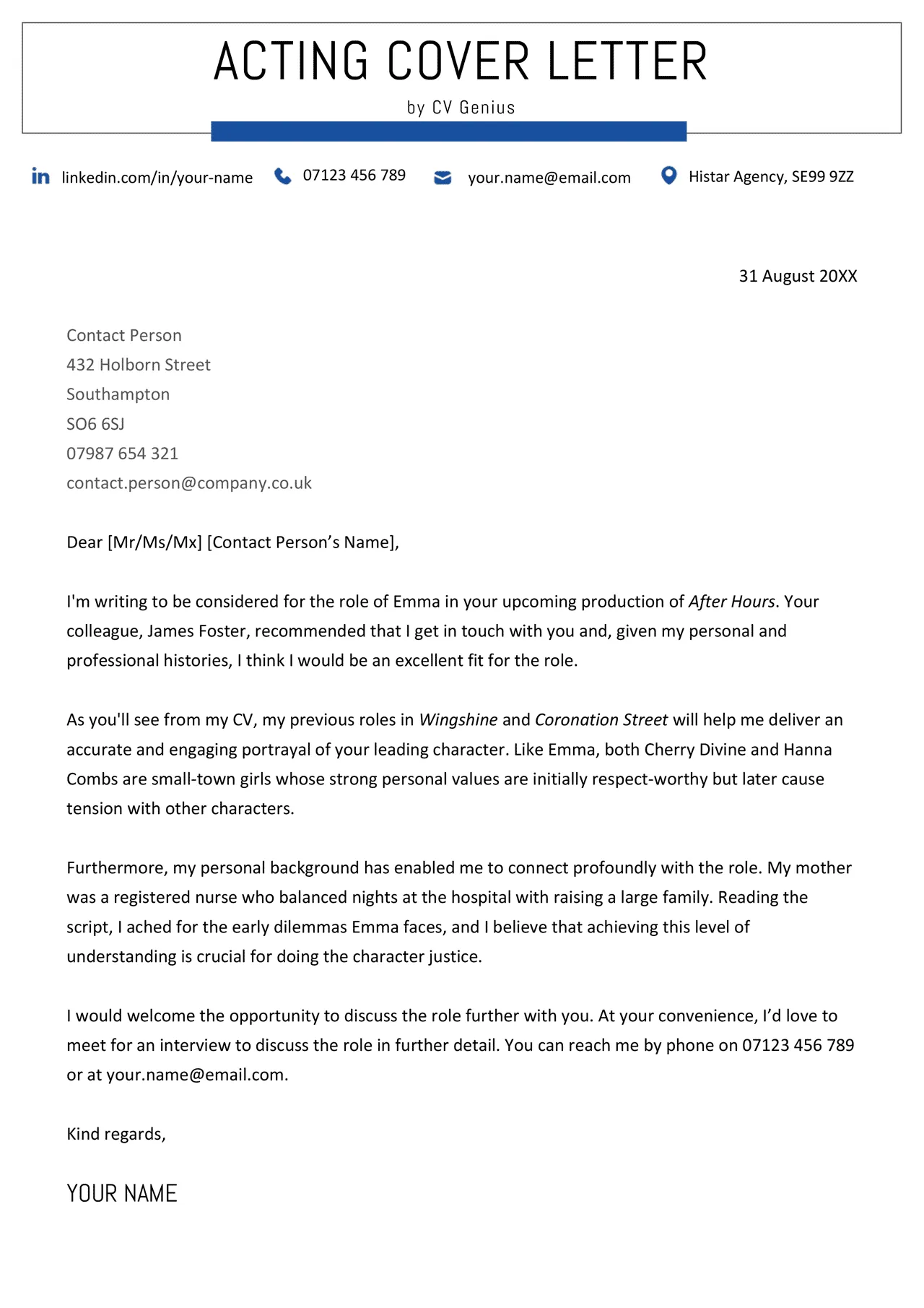
The first few lines of your cover letter are critical. They need to grab the casting director’s attention immediately and make them want to read more. Avoid generic openings like ‘Dear Sir/Madam’. Instead, research the casting director’s name and address them directly. Start with a powerful statement that reflects your understanding of the role or the project. Mention where you saw the casting notice and, if possible, reference something specific that caught your eye. A compelling opening sets the tone for the rest of your letter. Consider highlighting a unique skill or a specific aspect of your experience that aligns with the role’s requirements. Make it clear that you are genuinely enthusiastic about the opportunity and that you’ve put thought into why you’re a good fit. The goal is to create an immediate connection and encourage the reader to delve deeper into your application. This also shows that you are professional and that you pay attention to detail.
Highlighting Your Acting Experience

While your resume provides a detailed overview of your acting experience, the cover letter allows you to elaborate on your most relevant achievements. Focus on roles and projects that align with the specific requirements of the casting notice. Provide a brief description of your role, emphasizing any skills or experiences that are particularly relevant. Quantify your achievements whenever possible. Did a particular performance receive positive reviews? Mention it. Did a role lead to further opportunities? Highlight that as well. Use this section to show how your past experiences have prepared you for the current opportunity. Explain how your skills and training make you an ideal candidate. The cover letter isn’t just about listing credits; it’s about demonstrating how your experience makes you the best choice for the role, showing that you have what it takes to be successful in the part and why you would be an asset to the project.
Showcasing Your Unique Skills and Qualities
Beyond your acting experience, this is the place to showcase your unique skills and qualities that set you apart. Are you proficient in a particular dialect, skilled in a specific sport, or do you have any special talents? Mention these in a way that’s relevant to the role. Casting directors often look for actors with diverse skills, and highlighting these can make you more memorable. Don’t just list your skills; provide context. Briefly explain how you’ve used these skills in the past. For example, if you’re fluent in a foreign language, mention how you used it in a previous performance. If you have a particular physical skill, describe how it has enhanced your acting. The goal is to create a complete picture of you as an actor and demonstrate your versatility. Showing that you can bring something unique to the table is very important and may give you the advantage over your competition.
Tailoring Your Letter to the Role
Generic cover letters are a surefire way to end up in the rejection pile. Always tailor your letter to the specific role and project. Read the casting notice carefully and identify the key requirements and qualities the casting director is looking for. Then, adjust your cover letter to address these directly. Highlight the aspects of your experience, skills, and personality that best match the role. If the notice mentions a specific character trait, make sure to emphasize how you embody that trait. Demonstrate that you understand the project and the role’s requirements. This level of personalization shows the casting director that you’ve taken the time to understand the opportunity and are genuinely interested in being part of the project. Tailoring your letter demonstrates your commitment and your understanding of what is required. The more you tailor it, the more chance you have of being invited to an audition.
Addressing the Casting Director

Addressing the casting director correctly is crucial for making a positive impression. Always try to find out the casting director’s name and address them directly. A personalized salutation shows that you’ve done your research and are taking the application seriously. If you can’t find the casting director’s name, use a formal greeting like ‘Dear Casting Team.’ Avoid generic greetings like ‘To Whom It May Concern’ or ‘Dear Sir/Madam.’ Throughout the letter, maintain a professional yet personable tone. Show respect for the casting director’s time and attention. Avoid being overly casual or informal. Make sure your tone reflects your enthusiasm and your commitment to the role, while keeping it professional. This shows the casting director that you value their time and are serious about the opportunity. Taking the time to address the letter properly can make a big difference in the impression you make and increase the chance of moving forward.
Formatting and Presentation Tips
The presentation of your cover letter is just as important as its content. Always use a professional font, such as Times New Roman or Arial, and keep the font size between 10 and 12 points. Ensure your letter is easy to read and well-organized. Use clear headings, bullet points, and paragraphs to break up the text. Keep the letter concise, ideally one page in length. Avoid excessive use of bold or italics. Use a professional email address, and make sure your email signature includes your name, contact information, and any relevant links, such as your website or online portfolio. Proofread your letter carefully before submitting it. Formatting errors and typos can detract from your professionalism and reduce your chances. Always send it as a PDF to maintain the formatting and to prevent any unwanted surprises. Keep your letter clean and well-organized, allowing the casting director to immediately focus on the important parts of your message.
Proofreading and Editing Your Letter
Proofreading and editing your cover letter is essential. Errors in grammar, spelling, or punctuation can undermine your credibility and make you appear unprofessional. After you’ve written the letter, take a break and then reread it with fresh eyes. Check for any typos, grammatical errors, or awkward phrasing. Consider asking a friend, colleague, or mentor to review your letter. They can often catch errors that you might miss. Make sure the tone is consistent and that your writing flows smoothly. Pay attention to the length of your sentences and paragraphs. Keep it concise and easy to read. Edit out any unnecessary words or phrases. Ensure that your letter accurately reflects your skills and experience. A polished cover letter demonstrates your attention to detail and your commitment to professionalism, making it more likely to be noticed by the casting director. This could very well be the deciding factor.
Expressing Your Enthusiasm and Availability

Your enthusiasm for the role should be evident throughout your cover letter. Make it clear that you are genuinely interested in the project and excited about the opportunity to audition. Use passionate language to convey your enthusiasm, but avoid going overboard. Balance your enthusiasm with professionalism. Mention your availability for auditions and any potential conflicts. Be clear about your willingness to commit to the project if you are offered the role. Indicate how quickly you can provide materials such as headshots and self-tapes, if needed. A clear expression of your enthusiasm and availability can significantly increase your chances of getting an audition. Casting directors want to work with actors who are passionate, dedicated, and ready to commit. Demonstrating this makes you stand out as someone they will want to work with.
Adding a Strong Call to Action
Conclude your cover letter with a strong call to action. This is your opportunity to encourage the casting director to take the next step. Clearly state what you want them to do. Ask for an audition, offer to provide additional materials, or express your willingness to discuss the role further. Make it easy for them to respond. Provide your contact information again in the closing, including your phone number and email address. Thank them for their time and consideration. End with a professional closing such as ‘Sincerely’ or ‘Best regards.’ A strong call to action ensures that you leave a lasting impression and encourage the casting director to take the next step. By making it easy for them to contact you, you increase your chances of being invited to audition and ultimately landing the role. The final message should be clear, concise, and leave the reader wanting more.